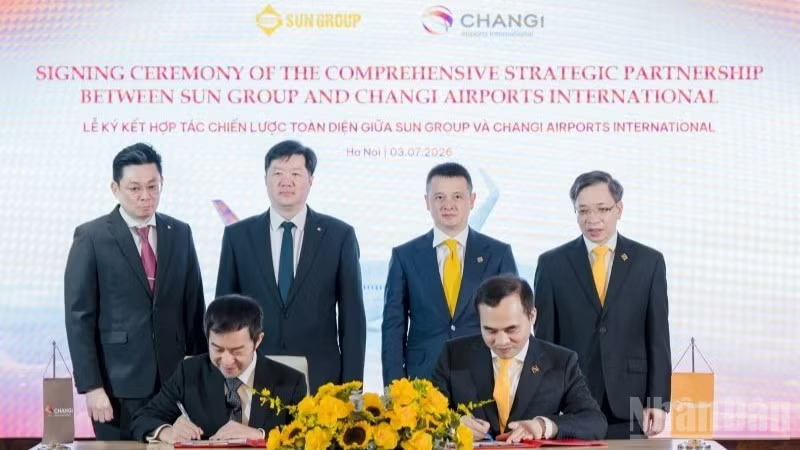
Sun Group and Changi Airports International Forge Strategic Aviation Infrastructure Partnership
Infrastructure
2026年7月3日
3
Nhan Dan
Relations
🇻🇳Vietnam🇨🇳China🇸🇬Singapore

Sun Group and Changi Airports International Forge Strategic Aviation Infrastructure Partnership

AI サマリー

Vietnam's Sun Group and Singapore's Changi Airports International have signed a comprehensive Memorandum of Understanding for strategic cooperation in airport development and operation within Vietnam. This partnership marks a significant step towards expanding Vietnam's aviation infrastructure.

Sun Group, a leading Vietnamese real estate and tourism developer, and Changi Airports International Pte. Ltd. (CAI) of Singapore have officially signed a Memorandum of Understanding (MOU) for comprehensive strategic cooperation in the development and operation of airports in Vietnam. The agreement, signed on July 3, aims to further deepen the existing relationship between the two entities. Sun Group has been actively investing in domestic infrastructure development, particularly in the aviation sector, in recent years, and this partnership with CAI is seen as part of that strategy. CAI is renowned for the success of Singapore Changi International Airport and possesses extensive experience in airport operations and consulting worldwide. This collaboration is expected to contribute to the modernization and efficiency of Vietnam's aviation infrastructure. With its rapid economic growth, Vietnam is experiencing a surge in air travel demand, leading to challenges such as insufficient capacity and aging facilities at existing airports. The government has prioritized the expansion of airport infrastructure, encouraging active participation from private enterprises. The collaboration between a prominent domestic company like Sun Group and CAI, with its international expertise, is anticipated to aid in addressing these challenges. While specific details of the partnership have not been disclosed, it is likely to encompass the development of new airports, renovation and expansion of existing ones, and the sharing of operational expertise. Within Vietnam's one-party system, alignment with national development plans is crucial, and the impact of this partnership on Vietnam's future aviation policies will be closely watched.

多角的分析

経済的影響

ベトナムの急速な経済成長は、航空需要の増加という形でインフラへの圧力を高めている。サン・グループとCAIの提携は、民間資本と国際的な専門知識を導入することで、このボトルネックの解消を目指すものだ。特に、地方空港の近代化や新規空港建設は、地域経済の活性化と物流効率の向上に寄与し、ベトナムのサプライチェーン強化に不可欠である。これは、ベトナムが製造業ハブとしての地位を確立する上で、重要な経済的推進力となる。

投資家心理

今回の提携は、ベトナムの航空インフラ分野への投資機会の拡大を示唆している。CAIのような国際的な実績を持つオペレーターが関与することで、プロジェクトの信頼性が高まり、さらなる海外からの直接投資(FDI)を呼び込む可能性がある。サン・グループは過去にも大規模プロジェクトを手掛けており、その実行力は投資家にとって魅力となるだろう。ただし、ベトナムの規制環境や土地利用権に関するリスクは、引き続き慎重な評価が必要である。

社会的影響

航空インフラの拡充は、国民の移動の自由度を高め、観光産業の発展を促進する。特に地方空港の整備は、都市部への集中を緩和し、地域間の格差是正に繋がる可能性がある。一方で、大規模インフラ開発は、環境への影響や地域住民の移転問題を引き起こす可能性もあるため、開発プロセスにおける透明性と住民参加が、社会的な受容性を高める上で不可欠となる。

市民の声

航空便の増加や空港の利便性向上は、ハノイやホーチミンといった大都市圏だけでなく、地方に住む市民の移動手段を改善する。これにより、国内旅行がより身近になり、家族との交流や地域経済への貢献が期待できる。しかし、空港建設に伴う騒音問題や、開発地域周辺の生活環境の変化は、直接的な影響を受ける市民にとっては懸念材料となりうる。

背景・歴史的文脈

ベトナムは、1986年のドイモイ政策以降、市場経済化を進め、インフラ開発を国家戦略の柱としてきた。特に航空分野では、需要の急増に対応するため、ノイバイ国際空港(ハノイ)やタンソンニャット国際空港(ホーチミン)の拡張・近代化が図られてきたが、依然として混雑は深刻である。政府は、官民連携(PPP)方式による空港建設・運営を推進しており、サン・グループのような国内大手デベロッパーと、シンガポール・チャンギ国際空港のような国際的な成功事例を持つオペレーターとの連携は、この流れの中で重要な意味を持つ。過去には、中国企業との大型インフラ投資契約も報じられており、ベトナムは多様な国際パートナーとの関係構築を進めている。

原文ソース

Nhan Dan

原文を読む