Heavy Rains Cause Flooding in Cambodia's Battambang Province, Damaging Infrastructure and Crops
Environment
2026年7月4日
3
Kampuchea Thmey Local

Heavy Rains Cause Flooding in Cambodia's Battambang Province, Damaging Infrastructure and Crops

AI サマリー

Two consecutive days of heavy rainfall from July 3-4 have caused flash floods in Samlot district, Battambang province, Cambodia, submerging roads, bridges, and crops. Authorities are urging residents to remain vigilant.

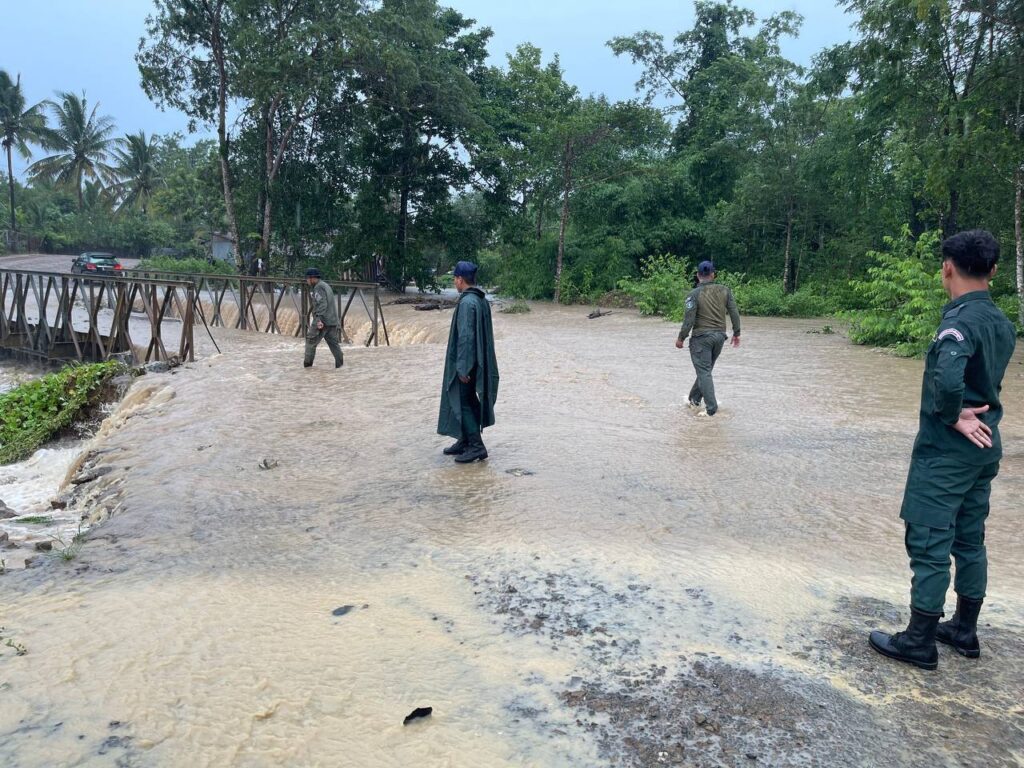
Flash floods have occurred in several areas of Samlot district, Battambang province, in western Cambodia, following two consecutive days of heavy rainfall from July 3 to 4. The flooding has impacted roads, bridges, and agricultural crops. Authorities are urging residents living along rivers, streams, and canals to exercise increased caution. The Samlot district administration issued a notification to residents after continuous heavy rains caused water levels to rise, leading to the submersion of homes, roads, bridges, and agricultural crops in some areas. According to local officials, the flash flood inundated a section of the O'Thmock bridge in Tatok commune, as water overflowed from a spillway and flowed into low-lying areas. The O'Kambaor bridge in Dontuok village, Tasanh commune, was also affected, with water flowing over the bridge and a strong current observed. The district authorities have called on residents living along the Sangke River, particularly in the downstream areas of Ratanamondul, Banan, Sangke, Battambang city, and Ek Phnom districts, to be vigilant as water levels may continue to rise if heavy rainfall persists. As of now, the flash floods have not caused any casualties. Authorities are continuing to monitor the situation and are prepared to intervene if the circumstances change. Source: Kampuchea Thmey Local

多角的分析

経済的影響

今回の洪水は、バッタンバン州の農業セクターに直接的な打撃を与えた。同州はカンボジアの米どころであり、農作物の被害は食料供給と農家の収入に影響を及ぼす。インフラ、特に道路や橋の損壊は、物流コストの増加や復旧作業に多額の費用を要するため、地域経済の回復を遅らせる可能性がある。長期的には、気候変動による異常気象の頻発化が、農業生産性とインフラの脆弱性をさらに高めるリスク要因となる。

投資家心理

短期的な投資環境としては、インフラ復旧に関連する建設資材やサービスへの需要増加が見込まれる可能性がある。しかし、農業への打撃は農村部の購買力を低下させ、消費財市場に影響を与えるリスクがある。また、インフラの脆弱性は、サプライチェーンの混乱を招く可能性があり、物流関連企業にとってはリスク要因となる。投資家は、自然災害リスクへの耐性を持つインフラプロジェクトや、農業保険、代替作物開発など、リスク軽減策を講じる企業に注目する必要がある。

社会的影響

洪水は、サムロート地区の住民の生活に直接的な影響を与えている。浸水により、交通網が寸断され、日々の移動や物資の輸送が困難になっている。農作物の被害は、農家の生計を脅かし、食料安全保障への不安を引き起こす。特に、インフラの脆弱な地域では、災害からの復旧に時間がかかり、住民の生活再建への道のりは険しいものとなる。当局による早期の支援と、地域社会のレジリエンス強化が求められる。

市民の声

今回の洪水は、バッタンバン州の農村部、特にサムロート地区の住民の生活に直接的な影響を与えている。道路や橋が寸断されたことで、日々の移動や市場へのアクセスが困難になり、農作物の被害は農家の収入源を奪い、食料への不安を増大させている。復旧作業の遅れは、生活再建への道のりをさらに険しくする可能性がある。住民は、当局の支援を待ちつつ、地域コミュニティ内での助け合いを模索している。

背景・歴史的文脈

カンボジアは、メコン川流域に位置し、モンスーン気候の影響を強く受けるため、洪水は比較的頻繁に発生する自然災害である。特に雨季(5月から10月)には、集中的な豪雨や河川の増水による被害が各地で報告されている。近年、気候変動の影響とされる異常気象の頻度と激しさが増しており、過去の教訓やインフラ整備の遅れも相まって、洪水被害は深刻化する傾向にある。2020年にも、カンボジア全土で広範囲な洪水が発生し、多数の死者と甚大な被害が出た。今回のバッタンバン州での洪水も、こうした背景を踏まえると、単なる一時的な現象ではなく、より長期的な視点での対策が求められる事象と言える。

原文ソース

Kampuchea Thmey Local

原文を読む