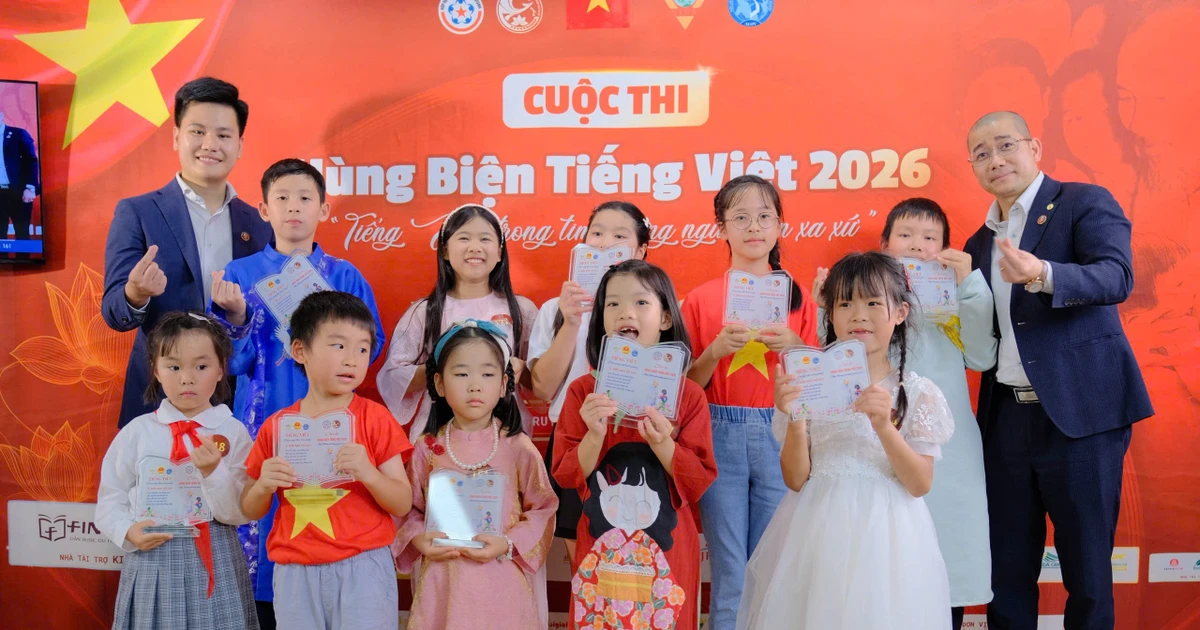
Vietnamese Speech Contest in Japan Fosters Love for Mother Tongue Among Youth
The Vietnamese Speech Contest 'Vietnamese Language in the Hearts of Overseas Vietnamese' held in Japan provided an opportunity for young Vietnamese abroad to foster love for their mother tongue and national identity. Winners passionately shared their experiences and cultural pride in Vietnamese.
The Vietnamese Speech Contest 2026, themed 'Vietnamese Language in the Hearts of Overseas Vietnamese,' was held in Saitama, Japan. Organized by the Vietnamese Association in Saitama with sponsorship from the Vietnamese Embassy in Japan, the Institute for Social Affairs Research, and the Association for Liaison with Overseas Vietnamese, the event aimed to spread the love for the Vietnamese language and cultivate national identity among young Vietnamese abroad. The overarching message of the contest was: 'Where there is Vietnamese, there is home.' The final round took place on the afternoon of July 12th at the Sunshine Traditional Museum in Japan, with an online connection to the Digital Content and Media Center of the Vietnam News Agency in Hanoi. According to the organizing committee, the competition served not only as a platform for language proficiency but also as an opportunity for participants to express their love for their homeland, national pride, and their commitment to preserving their mother tongue. Contestants were evaluated on content, language, public speaking skills, demeanor, and critical thinking ability during their speeches and Q&A sessions. The finals captivated audiences not only with the participants' fluent Vietnamese but also with their heartfelt stories about family, homeland, culture, and their aspirations to maintain Vietnamese in a multilingual environment. The judging panel recognized the confidence, spirit, and emotional depth displayed by the young Vietnamese generation in Japan. Pham Dinh Thuong, Chairman of the Vietnamese Association in Saitama and Head of the Organizing Committee, stated, 'When a child can still call 'grandparents,' 'parents' in Vietnamese; when a family still converses together in their mother tongue; when overseas Vietnamese proudly speak Vietnamese in community activities, then the homeland continues to exist in each person's heart.' He expressed the association's hope that the contest would provide a meaningful arena for participants, especially the youth, to practice their Vietnamese, deepen their understanding of national culture, history, and traditions, and nurture pride in their roots. The contest received 54 entries from participants across various regions of Japan. Following selection rounds, 35 contestants advanced to the semi-finals, with 10 outstanding individuals competing in the final round. In Category A, Trinh Quynh Nhu secured the first prize, with Doan Van Khoi taking second and Kim Tra My third. In Category B, Nguyen Pham Huyen My won first prize, Nguyen Van Khang received second prize (and the 'Most Impressive Speech' award), and Bui Trung Dung came in third. Nguyen Mei was awarded a consolation prize in recognition of her effort and active participation. The success of the Vietnamese Speech Contest 2026 highlights the enduring significance of the Vietnamese language in the lives of the Vietnamese community in Japan. When young people confidently share stories of their homeland in their mother tongue, they are not only learning the language but also preserving cultural memories, nurturing their identity, and promoting Vietnam's image to the international community. The event also demonstrates the ongoing support from Vietnamese organizations, experts, businesses, and the community, both within and outside Vietnam, for the preservation of the Vietnamese language, contributing to the realization of the goal of maintaining national cultural identity among overseas Vietnamese.
多角的分析
This event, while primarily cultural, has indirect economic implications. The promotion of Vietnamese language and culture abroad can foster stronger business ties and tourism between Vietnam and Japan. A shared linguistic and cultural understanding can reduce transaction costs and build trust in business dealings, potentially leading to increased investment and trade opportunities in the long run. Furthermore, such initiatives can indirectly support the Vietnamese diaspora's economic integration and contribution to host countries.
For investors looking at Vietnam, events like this highlight the strength of Vietnamese cultural identity and the diaspora's connection to their homeland. This indicates a stable and cohesive expatriate community, which can be a positive factor for businesses operating in or with Vietnam. It suggests a potential pool of talent and a market segment that values Vietnamese products and services. While not a direct investment driver, it contributes to the overall positive perception of Vietnam's soft power and cultural appeal.
The contest directly addresses the social challenge of cultural assimilation faced by overseas Vietnamese youth. By creating a platform to celebrate and practice their mother tongue, it helps them maintain a strong connection to their heritage, preventing the erosion of cultural identity across generations. The event fosters a sense of belonging and pride among the participants and their families, reinforcing community bonds. The message 'Where there is Vietnamese, there is home' resonates deeply with individuals living away from their birth country, offering a powerful emotional anchor.
For Vietnamese citizens, especially those living abroad, this contest represents a vital effort to keep their heritage alive. It provides a tangible way for younger generations to connect with their roots, which is crucial for maintaining family ties and cultural continuity. The success of such events can inspire similar initiatives in other countries, strengthening the global Vietnamese community's cultural resilience and pride in their language and traditions. It also serves as a reminder of the importance of language in national identity, a point often emphasized in Vietnam's own cultural preservation efforts.
背景・歴史的文脈
ベトナムは、海外に住むベトナム人(Viet Kieu)との関係を重視しており、彼らの民族的アイデンティティの維持を支援する政策を長年実施している。特に、言語や文化の継承は、ベトナム共産党が掲げる「民族的アイデンティティの維持・促進」という方針の根幹をなす。1980年代後半以降の「Đổi Mới(ドイモイ)」政策による経済開放と並行して、海外ベトナム人との関係改善が進み、彼らの帰国やベトナムへの投資が奨励されてきた。このような文化・言語振興活動は、海外ベトナム人コミュニティの結束を強め、ベトナムとの繋がりを維持することで、ベトナムのソフトパワー向上にも寄与している。
原文ソース
Nhan Dan