General articles are free for 24 hours after publish.
Kakapo, World's Heaviest Parrot, Nears Extinction Due to Invasive Predators
The Kakapo, a unique nocturnal and flightless parrot native to New Zealand, was critically endangered due to invasive predators but is now showing signs of population recovery thanks to intensive conservation efforts.
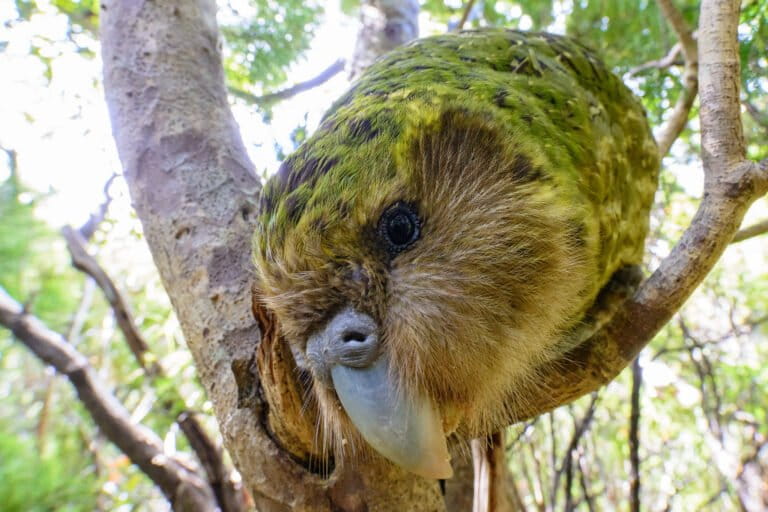
The Kakapo (Strigops habroptilus), a unique endemic bird species of New Zealand, is known as the world's heaviest parrot and was once critically endangered. This bird is nocturnal, flightless, and adult individuals can weigh up to 4 kilograms, characteristics reflected in its name, which means 'night parrot' in Māori. It is classified as Critically Endangered by the IUCN Red List, the highest category before a species is declared extinct in the wild. Currently, the Kakapo population survives solely through intensive human management on predator-free islands. This is a stark contrast to its past when the bird was widely distributed across mainland New Zealand. Being flightless, the Kakapo relies on its strong legs to walk long distances and climb trees, using its short wings like a parachute to glide down. Its moss-green plumage with yellow and brown speckles provides perfect camouflage on the forest floor, where its only natural predators were birds of prey from the air. It has an owl-like face with sensory whiskers around its beak, earning it the nickname 'owl parrot.' Among birds, it possesses one of the sharpest senses of smell, which it uses to locate food sources in the darkness of night. The Kakapo is also one of the longest-lived birds in the world, with an estimated lifespan of 60 to 80 years. The Kakapo's endangered status was primarily caused by introduced invasive species, particularly small mammals like cats and stoats. These predators posed a devastating threat to the ground-dwelling, flightless Kakapo. Consequently, Kakapo conservation has become a symbolic case in New Zealand's biodiversity protection efforts. A dedicated team of experts implements 24-hour monitoring, artificial insemination, and breeding programs in predator-free environments. These endeavors have led to a gradual recovery in Kakapo numbers, with the species slowly making a miraculous comeback from the brink of extinction.
Original source
Mongabay Indonesia