General articles are free for 24 hours after publish.
Kangkong Farmers Struggle as Floodwalls Rise Along Guiguinto River
Kangkong farmers in Guiguinto, Philippines, face livelihood threats due to river rehabilitation projects. Salinity and prolonged construction shutdowns are reducing harvests, with insufficient compensation leaving farmers in a difficult situation.
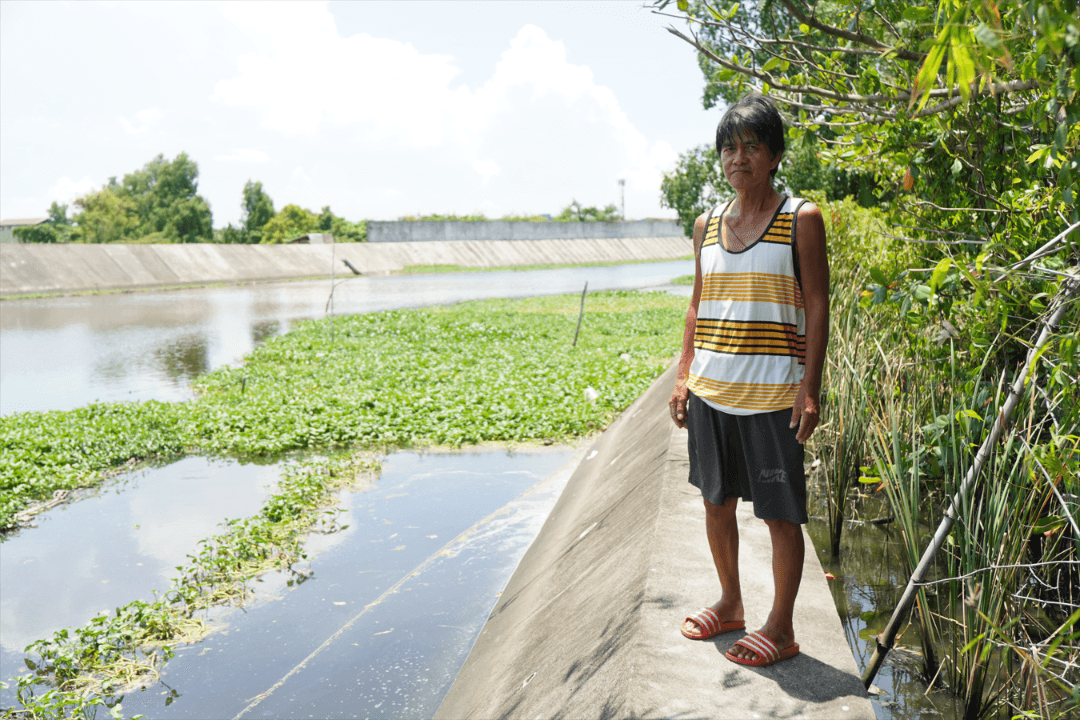
In Guiguinto, Bulacan, a community of kangkong farmers, known as mangangangkong, are fighting to stay afloat as concrete floodwalls rise along the Guiguinto River. The Guiguinto River, stretching nearly five kilometers, serves as the municipality's largest floating vegetable patch, sustaining generations of these farmers. However, they face annual challenges from saltwater intrusion from Manila Bay, which halts harvests. Furthermore, flood control projects are clearing sections of the river for months at a time, disrupting their livelihood. Cesar dela Cruz, 62, has been a mangangangkong for over three decades. He left factory work, enticed by the river's earning potential. Kangkong seeds are planted in beds of straw tied between bamboo stakes, ready for harvest in two to three weeks. On a good day, a farmer can harvest up to 30 bundles, earning farmers as much as ₱1,500 daily. However, during the dry spell from March to May, saltwater creeps upstream, turning kangkong yellow and stunting its growth. Harvests dwindle or stop altogether until the first rains in June. Farmers must rely on their earnings from the harvest season to survive these lean months. "We just endure," Dela Cruz said. "When the income is low, we just endure because the colder season eventually comes. That's when we make up for it. The price goes up a bit too." The Guiguinto River also serves as the municipality's main drainage channel, collecting floodwaters from neighboring towns like Plaridel and Balagtas before emptying into Manila Bay through Bulakan. During heavy rains, however, the river overflows, flooding adjacent communities. Municipal disaster records from 2023-2025 estimate that flooding affects at least roughly 11,300 households. To keep the water from spilling into the community, the municipal government began constructing concrete embankments along sections of the Guiguinto River as early as 2016. Every year, a fragment of the riverbank would be fenced off to build parts of the floodwall. Local residents would seek out information from the workers to know which section would soon have to be cleared. "The problem with the floodwall here is that it's built in bits and pieces. Every year, there's construction, but you never know where they'll build next," Dela Cruz said. Procurement records from the Department of Public Works and Highways (DPWH) show that, from 2023 to 2025, embankment contracts for portions of the Guiguinto River had reached more than ₱40 million each. Since 2017, DPWH has awarded multiple embankment contracts along the Guiguinto River to L.R. Tiqui Builders, Alpha & Omega General Contractor & Development Corp., and SYMS Construction Trading — companies that have previously been linked to Bulacan’s flood control controversies. Whenever construction reached their plots, the mangangangkong would dismantle their bamboo stakes and leave the river behind. A single project could keep them away for up to nine months, Dela Cruz said. During this period, the kangkong farmers appealed to the contractor for financial assistance. Each of them received ₱5,000 to help offset the months they were unable to harvest. For Dela Cruz, this barely covers the interruption caused by the project to their livelihood. "They gave us something, so we endured for nine months. But what we received wasn’t enough. Just imagine, we went nine months like that," he remarked. Other mangangangkong crossed into the neighboring rivers of Balagtas, where they can continue with their harvest. Around the same period, the municipal government of Guiguinto also ordered farmers to limit their plots to two meters wide. Dela Cruz said local officials believed that the crops were obstructing the river’s flow and worsening the floods. The mangangangkong initially complied with the directive. But as their harvests dwindled, they appealed to the municipal government to reconsider the restriction. "But when we followed their order, we barely earned anything. Kangkong has to be harvested every day. That’s the only way you can make enough t
Original source
Rappler Philippines