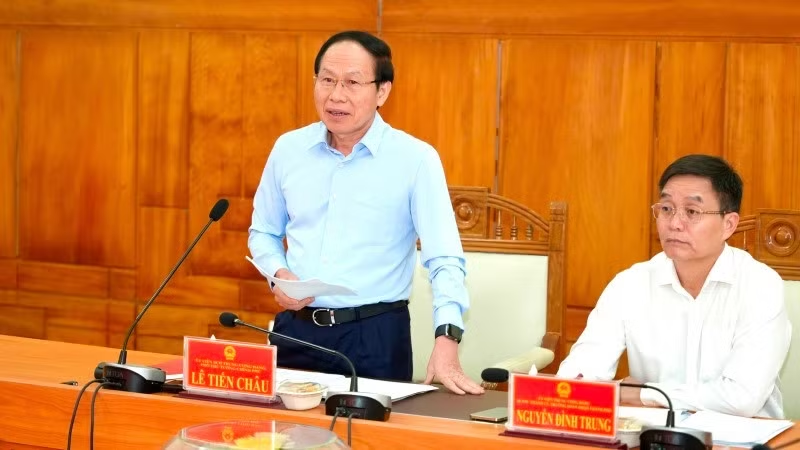
Vietnam's Deputy PM Urges Hue to Leverage Advantages for Substantive Growth
Vietnam's Deputy Prime Minister Le Tien Chau has stressed the need for Hue city to transform its unique advantages, including world heritage sites, the Chan May-Lang Co Economic Zone, and a deep-water port, into tangible outcomes, jobs, budget revenue, and substantive growth drivers. This initiative is part of Vietnam's broader efforts to unlock regional potential amidst ongoing economic expansion.
Deputy Prime Minister Le Tien Chau has emphasized the critical importance for Hue city to transform its numerous special advantages into substantive growth drivers. Hue possesses unique assets such as its world heritage sites, the Chan May-Lang Co Economic Zone, a deep-water port, Phu Bai International Airport, and Hue University, along with specific mechanisms and policies. The Deputy Prime Minister underscored that it is essential to link these potentials to tangible products, employment, budget revenue, and genuine growth. Vietnam is currently maintaining its economic growth momentum, with positive trends observed across most sectors. The government is promoting strategies to maximize the strengths of each region to foster sustained economic development. For areas with significant historical and cultural value like Hue, innovative approaches are required to connect its heritage not only to tourism but also to new job creation and regional economic revitalization. Specifically, the integration of cultural heritage with modern industrial development, accelerated infrastructure improvements, and the effective utilization of special economic zones are expected to be key. The Deputy Prime Minister also urged Lao Cai province to adopt a mindset of breakthrough action and make strong efforts to achieve double-digit growth. This reflects Vietnam's broader objective to correct economic disparities between regions and ensure balanced national growth. His inspection of projects such as the construction of boarding schools in Hue also suggests an understanding that investment in educational infrastructure contributes to the development of human capital for the future. Under Vietnam's one-party system, the government prioritizes economic growth as a key objective, aiming to develop a socialist-oriented market economy. In line with this policy, local governments are implementing development plans tailored to their regional characteristics, guided by directives from the central government. The effective utilization of Hue's potential could offer a solution to challenges Vietnam faces, such as concerns about slowing economic growth and regional development imbalances. Source: Nhan Dan
多角的分析
ベトナム政府は、経済成長の持続と質的向上を目指し、地域ごとの潜在力活用を重視している。フエ市が持つ文化遺産や地理的優位性を、単なる観光資源に留まらず、雇用創出や財政収入増加に直結させることは、地方経済の活性化と国内経済全体の底上げに不可欠である。特に、チャンメイ・ランコー経済区のような開発ポテンシャルの高い地域への投資誘致と、それを支えるインフラ整備が今後の焦点となる。これは、ベトナムが製造業中心からサービス業や高付加価値産業へのシフトを目指す中で、地域分散型の成長モデルを模索する動きとも連動している。
フエ市への投資は、その豊かな文化遺産と地理的利点を活かした観光・サービス業、そしてチャンメイ・ランコー経済区における港湾・物流関連産業への機会を提供する。副首相の発言は、政府がこうした地域開発を後押しする政策的支援を継続する意向を示唆しており、投資家にとって魅力的な環境整備が進む可能性を示唆している。ただし、具体的なプロジェクトの実行力や、インフラ整備の進捗、そして地域経済の持続的な成長ポテンシャルを見極めることが重要となる。中国との関係性や地政学リスクも、広範な投資判断において考慮すべき要因である。
フエ市が持つ世界遺産は、地元住民にとって誇りであると同時に、その保全と持続可能な活用が地域社会の生活に直接影響を与える。副首相の「利点を結果に変える」という指示は、観光客増加による雇用機会の創出や、地域特産品の開発・販売促進などを通じて、住民の収入向上や生活水準の改善に繋がることが期待される。一方で、急激な開発が文化景観や生活環境に与える影響、そして開発の恩恵が地域住民全体に行き渡るかどうかが、社会的な課題として問われる可能性がある。フエ大学との連携による人材育成も、地域社会の発展に寄与するだろう。
フエ市民にとって、世界遺産や美しい景観は生活の一部であり、それらが観光客の増加や地域経済の活性化に繋がることは、雇用機会の増加や収入向上といった直接的な恩恵をもたらす可能性がある。特に、チャンメイ・ランコー経済区の発展は、新たな産業とそれに伴う職を創出するかもしれない。しかし、開発が進むにつれて、交通渋滞の悪化や、地域文化・景観の変化、不動産価格の高騰といった懸念も生じうる。副首相の指示が、単なる経済指標の向上だけでなく、市民生活の質の向上にどう繋がるかが、今後の注目点となる。
背景・歴史的文脈
ベトナムは1986年のドイモイ(刷新)政策以降、市場経済を導入し、目覚ましい経済成長を遂げてきた。しかし、その成長はハノイやホーチミンなどの大都市に集中する傾向があり、地方間の経済格差が課題となっている。フエ市は、ベトナム帝国時代の古都として豊かな文化遺産を持つ一方、工業化やインフラ整備では他の地域に遅れをとっていた。近年、ベトナム政府は、地方の潜在力を最大限に引き出し、地域経済の活性化と格差是正を図るため、各地方に特化した開発政策を推進している。チャンメイ・ランコー経済区のような開発区の設立や、特別な政策・メカニズムの導入は、この流れの一環であり、フエ市が持つ歴史的・地理的優位性を経済成長に結びつけるための政府の戦略的意図が伺える。
原文ソース
Nhan Dan