Vietnam Communist Party Central Committee Concludes 3rd Plenum Amid Growth Targets and Implementation Challenges
Economy
2026年7月24日
7
BBC Vietnamese
Relations
🇻🇳Vietnam🇨🇳China

General articles are free for 24 hours after publish.

Vietnam Communist Party Central Committee Concludes 3rd Plenum Amid Growth Targets and Implementation Challenges

Share
AI Summary

The 14th Central Committee of the Communist Party of Vietnam concluded its 3rd plenum, acknowledging progress in the first half of 2026 but highlighting significant implementation challenges. Issues such as the disconnect between authority and responsibility, resource scarcity, and bureaucracy were identified as key obstacles to growth. The plenum also addressed disciplinary actions against high-ranking officials and revisions to party regulations.

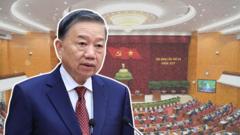
The 14th Central Committee of the Communist Party of Vietnam concluded its 3rd plenum after four days of work. According to General Secretary and President To Lam, while the resolutions of the 14th Party Congress and the initial effectiveness of the machinery arrangement in the first six months of 2026 were acknowledged, implementation remains the biggest bottleneck. He stated, "The deep-seated cause is that authority in some places is not linked with responsibility; decentralization is not sufficiently linked with resources, data, tools, cadre capacity, and control; resources remain fragmented; growth is not based on productivity and internal strength; and forecasting and prevention in some fields, sectors, and localities have not kept pace with fluctuations." What else is noteworthy? On the first day of the plenum, the Party Central Committee decided to discipline a high-ranking party member. Former Secretary of the Bac Giang Provincial Party Committee, Bui Van Hai, was stripped of all his party positions. Previously, in May, the Central Inspection Commission proposed that the competent authorities consider and discipline Mr. Bui Van Hai. According to the conclusion of this body, Mr. Hai "violated the regulations of the Party and the laws of the State in performing his assigned duties and responsibilities, in the prevention and fight against corruption, waste, and negativity; violated the regulations on what party members are not allowed to do and on exemplary responsibility; causing very serious consequences, negatively affecting the prestige of party organizations and the locality, agency, and unit of work, to the extent that disciplinary action must be taken." Stripping all party positions is the second most severe disciplinary measure among the four levels of party discipline: reprimand, warning, dismissal, and expulsion. According to precedent, cases likely to face criminal prosecution will be expelled from the Party. On July 21, the Party Central Committee discussed regulations on what party members are not allowed to do, replacing Regulation No. 37-QD/TW dated October 25, 2021, of the 13th Central Committee of the Party. Amendments and supplements to the regulations on implementing the Party Charter were also a working item. The revision has been mentioned for a long time. The draft report summarizing 15 years of implementing the Party Charter, released in January 2026, noted that the organization of learning and disseminating the Party Charter and the Central Committee's regulations and guidelines was not timely in some places, and in some cases, it was perfunctory. There were even cases where cadres and party members did not have a firm grasp of the Party Charter. According to statistics, the Central Committee has issued regulations on implementing the Party Charter three times; issued regulations on party inspection, supervision, and discipline three times; and directed the piloting of some new policies. Meanwhile, the Secretariat has issued guidelines on specific issues of implementing the Party Charter twice. In his closing speech, Mr. To Lam stated that the Party plans to amend the Party Charter at the 15th Congress in 2031. "The Central Committee unanimously assessed the situation in the first six months of the year, determined the key tasks and solutions for the last six months of the year; and is determined to strive for growth of 10% or more, while maintaining macro stability, controlling inflation, ensuring major balances, employment, income, and social security," Mr. To Lam declared in his closing speech. This growth rate will be a significant challenge for Vietnam. In the first six months of the year, the growth rate was 8.18%, the highest year-on-year increase in over ten years. However, the Government has had to set a target of developing the economy by 11.9% in the remainder of the year to achieve double-digit growth this year. This is an extremely ambitious goal, especially as Vietnam's growth is assessed as not heavily relying on internal strength. The Government's upcoming efforts are taking place in the context of the second half of the year's economic management being expected to face many challenges, with rising energy prices, a strengthening US dollar, and excess inflation narrowing the room for demand stimulus. The Organisation for Economic Co-operation and Development (OECD) forecasts Vietnam's growth at around 6.2% in 2026. Credit rating agency Fitch forecasts the Vietnamese economy to grow by 7.4% in 2026, with growth in the second half of the year slowing down significantly due to reduced investment and exports facing the risk of increased tariffs, especially from the US. On July 24, the US announced a group of 60 partners that will be subject to new trade tariffs, including Vietnam, related to Section 301 of the US Trade Act of 1974 concerning forced labor. According to the final decision, Vietnam is among the countries that will be subject to a 12.5% tariff. Mr. To Lam affirmed that the political system's machinery is operating stably after the arrangement and is initially effective. "However, the biggest bottleneck is still the implementation phase. The deep-seated cause is that authority in some places is not linked with responsibility; decentralization is not sufficiently linked with resources, data, tools, cadre capacity, and control; resources remain fragmented; growth is not based on productivity and internal strength; and forecasting and prevention in some fields, sectors, and localities have not kept pace with fluctuations," he added. Furthermore, he also stated that the two-tier local government model has shown its superiority, suitability, and efficiency, but at the same time, the quality of operation is uneven, especially at the grassroots level. Operational quality is an issue that has been raised many times after mergers but has not yet been resolved. There are many reasons for this situation, including unsuitable cadre qualifications and an excessive workload. Some other consequences such as the loss of talent or surplus public headquarters have not been thoroughly resolved. For example, in Quang Tri province alone, nearly 600 public offices and houses have been abandoned after mergers. The scale of waste would be enormous if calculated nationwide. Meanwhile, Vietnam continues to consider merging many commune-level units. On July 22, the Party Central Committee approved the policy of establishing two centrally-governed cities: Quang Ninh and Bac Ninh. According to development orientation, Quang Ninh will build a green, smart urban model; restructure its space towards integrating urban, coastal, island, border, and heritage areas into a unified development ecosystem. Meanwhile, Bac Ninh is oriented to develop into a green, smart, modern city with the cultural identity of Kinh Bac. The plan for both is to take science, technology, innovation, and digital transformation as new growth drivers. After administrative unit rearrangement, Quang Ninh province currently has 22 communes and 30 wards and 2 special economic zones. Bac Ninh has 45 wards and 54 communes. Currently, Vietnam has 7 centrally-governed cities, the latest being Dong Nai as of April 30. This city currently contributes about 5% of the country's GDP. Source: BBC Vietnamese

0

Original source

BBC Vietnamese

原文を読む