General articles are free for 24 hours after publish.
Arsenic Contamination Persists in Northern Thailand's Rivers, Posing Long-Term Health and Environmental Risks
Arsenic contamination exceeding legal limits has been detected in major rivers across Chiang Mai and Chiang Rai provinces in northern Thailand. The slow spread of heavy metals through the environment and food chain makes control difficult, raising concerns about long-term health impacts and ecological damage. Residents are expressing growing distrust due to the authorities' slow response.
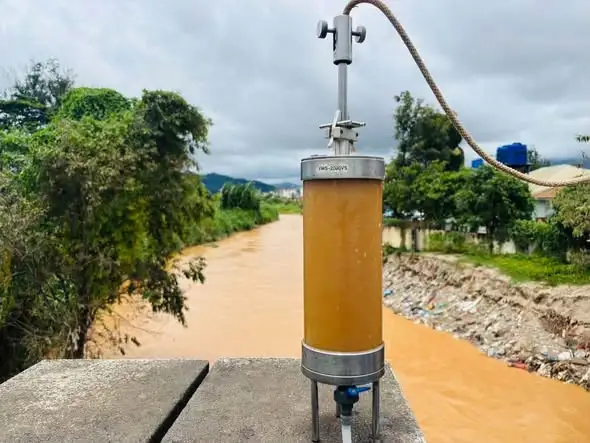
Arsenic contamination in rivers across Chiang Rai and Chiang Mai provinces in northern Thailand continues to exceed legal limits, according to an academic researcher. The slow, gradual spread of heavy metals through the environment, food chain, and human bodies makes the situation difficult to control and predict. The Pollution Control Department released the results of its 22nd water-quality monitoring campaign for the Kok River and its tributaries, the Sai River, Ruak River, and Mekong River in Chiang Mai and Chiang Rai. Officials conducted the latest round of testing from August 3 to 7, 2026, to monitor water quality and contaminants at 22 locations. The department used the surface-water quality standard for arsenic, which sets the limit at no more than 0.010 milligrams per liter (mg/L). Tests found arsenic levels above the limit in parts of all four rivers. The Sai River also recorded lead levels above the standard at three locations. Arsenic exceeded the standard at six monitoring points: Arsenic and lead exceeded the standards at three locations: The standard for lead in surface water is no more than 0.05 mg/L. Other tested heavy metals remained within the standards at every monitoring location. Arsenic exceeded the standard at two locations: One location recorded arsenic above the standard: Residents can follow water-quality monitoring results and updates on the situation at the Pollution Control Department website: www.pcd.go.th Dr. Suebsakul Kitnukorn, an academic researcher at Mae Fah Luang University, said he recently discussed the issue with an international doctoral student. He explained that the contamination reflects the gradual accumulation of heavy metals in the environment, food chain, and human body. According to Dr. Suebsakul, the effects develop slowly and spread across different areas, which makes them difficult to monitor, control, and predict. Aquatic ecosystems are also being damaged as rivers gradually lose aquatic plants and animals. He added that the government’s slow and limited response has led many residents to question the authorities and lose trust in official measures. This quiet water crisis is causing a gradual collapse of the natural river ecology. Local waterways are slowly losing their important aquatic plants and native fish populations. Sadly, the government’s official response has been just as slow and uncomfortably silent. Consequently, frustrated citizens are starting to question the authorities and completely lose their trust.
Original source
Chiang Rai Times