General articles are free for 24 hours after publish.
Philippines Pursues Indian Investment and Rail Support
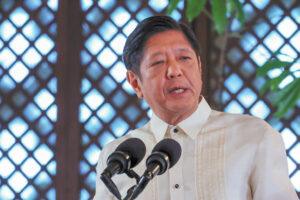
Philippine President Ferdinand Marcos, Jr. has sought Indian support for major rail projects and investments from businesses in New Delhi. Several companies have expressed interest in fresh capital and expansion, signaling potential job creation.
PRESIDENT Ferdinand R. Marcos, Jr. sought Indian investments and support for major Philippine rail projects during meetings with businesses and organizations in New Delhi, with some companies expressing interest in fresh capital and expansion in the Philippines, Malacañang said. “Some of them committed to invest fresh capital in the Philippines, some of them committed to expand their businesses in the Philippines,” Presidential Communications Secretary Dave M. Gomez said in a recorded briefing released on Sunday. “The bottom line there, many quality jobs will be added, courtesy of the Indian business sector.” Mr. Gomez said Mr. Marcos had held six or seven meetings, including with three major Indian organizations involved in railways and disaster resilience and four other large businesses. The President told Indian business executives that the Philippines remains an investment destination, citing its workforce as one of its advantages. “As the President said, we have a very young workforce that is tech-capable and tech-savvy,” Mr. Gomez said. An Indian rail organization is also looking at supporting three major Philippine rail projects: the Mindanao Railway, the Cebu mass rail transit system and the expansion of the Philippine National Railways to Tutuban, he said. The Philippines also joined the Coalition for Disaster Resilient Infrastructure (CDRI) on Saturday as its 71st member. The global partnership helps countries boost infrastructure against disasters and climate-related risks. Mr. Gomez said the CDRI could help the Philippines make roads, bridges and ports more resilient to disasters. “They will help us to build infrastructure like roads, bridges, especially ports to be disaster resilient,” he said. The coalition will also share experience and financing approaches for disaster-resilient infrastructure projects. Investing in resilience during the planning and construction of infrastructure could generate higher returns over time, Mr. Gomez said. “Their point is that if you invest now in disaster resilience in your infrastructure projects, the ROI [return on investment] will be greater in the future,” he said. He cited a potential return of “10 or 12 times” on disaster-resilient infrastructure investments, although he did not provide details on the basis of the estimate. Mr. Gomez said the administration was pursuing “economic diplomacy,” with Mr. Marcos using foreign trips to seek investments and engage foreign business groups. “He’s meeting with the private sector to attract investments to the Philippines. Ultimately, it will create more quality jobs for Filipinos,” he said. Mr. Marcos was also set to attend the open session of the 18th BRICS Summit on Sunday and hold a meeting with Indian Prime Minister Narendra Modi, Mr. Gomez said. The President is also expected to meet other world leaders, including Russian President Vladimir V. Putin and Chinese Premier Li Qiang. Mr. Marcos is attending the summit as chairman of the Association of Southeast Asian Nations (ASEAN), which the Philippines leads. He is expected to outline ASEAN priorities during the BRICS session. Mr. Gomez said the President’s participation reflects his foreign policy approach of being “a friend to all and an enemy to none.” — Erika Mae P. Sinaking
Original source
BusinessWorld Nation