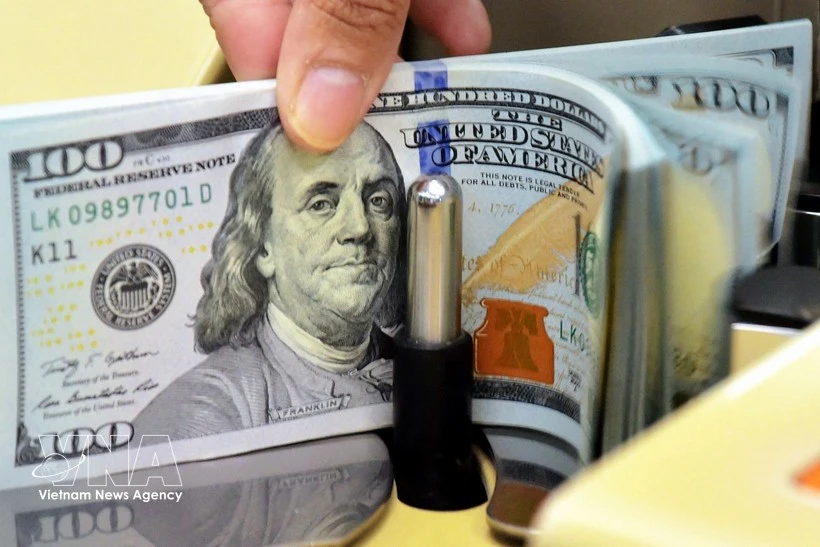
Vietnamese Dong Continues Upward Trend Against USD Amid Economic Growth Push
Economy
2026年7月15日
5
VietnamPlus English
Relations
🇻🇳Vietnam🇨🇳China🇺🇸United States

Vietnamese Dong Continues Upward Trend Against USD Amid Economic Growth Push

AI サマリー

The Vietnamese Dong has shown an upward trend against the US Dollar. The government is focusing on eight key priorities to achieve its annual growth target and maintain inflation below 4.5%, despite rising external risks from the Middle East conflict and unpredictable natural disasters. Efforts are also underway to enhance export competitiveness and attract investment.

The Vietnamese Dong (VND) continues to show a gradual upward trend against the US Dollar. As of July 15, the trading band for commercial banks stands at +/- 5%, with the ceiling rate at VND 26,486 per USD and the floor rate at VND 23,964 per USD. This fluctuation is considered to reflect the authorities' stance on maintaining the stability of the Vietnamese economy and its international competitiveness. The government has announced its focus on implementing eight key priorities to achieve its full-year economic growth target and keep average inflation at around 4.5%, despite facing increasing external risks from the Middle East conflict and unpredictable natural disasters. Several forecasts suggest that inflation can remain below 4.5% this year if international oil prices continue to retreat. Extending domestic fuel tax incentives through the year-end, along with stable electricity prices, healthcare fees, and exchange rates, would offer additional economic relief. Applying agreements to international border gate pairs is crucial for reducing logistics costs, boosting competitiveness, expanding market access, attracting investment, and fostering socio-economic development in both countries. The 2025 business landscape indicates that the enterprise sector is expected to continue demonstrating resilience amid fluctuations in both domestic and international business environments. Vietnam's coffee industry is increasingly complying with the EU's "Deforestation-free" regulation (EUDR), with coffee already compliant with EUDR requirements being sold at a premium of around USD 50 per tonne. Once the regulation is fully enforced, opportunities for Vietnam's coffee industry are expected to expand even further. Furthermore, digital transformation, artificial intelligence (AI), product traceability, and e-commerce are increasingly reshaping Vietnam's agricultural sector, helping farmers and businesses improve product quality, meet stricter market requirements, and enhance competitiveness. The Cai Mep Ha Free Trade Zone (FTZ) is emerging as a strategic project expected to become the city's gateway to global markets and a new growth engine in a new era of development. The Communist Party of Vietnam has adopted a resolution calling for a shift in development mindset, positioning FDI as a key driver of growth model transformation, with a focus on quality, value addition, and continuous improvement of the economy's intrinsic capacity and self-reliance. Many experts and businesses believe this policy provides a timely strategic boost, helping Vietnam capitalize on the ongoing global supply chain realignment. Source: VietnamPlus English

多角的分析

経済的影響

ベトナムドンが対ドルで上昇傾向にあることは、同国の経済安定化への意欲と、インフレ抑制に向けた政府の努力を示唆している。政府は年間成長目標(2026年GRDP二桁成長目標をホーチミン市が掲げるなど、全体としても高成長を目指す)とインフレ抑制(4.5%以下)を両立させるため、財政・金融政策を総動員している。燃料税インセンティブの延長や、電力・医療費の安定化は、国内需要を刺激し、インフレ圧力を緩和する狙いがある。一方で、中東情勢や自然災害といった外部リスクは、エネルギー価格の変動を通じてインフレに影響を与えうるため、政府は引き続き警戒を怠らない必要がある。国際国境ゲート間の協定適用は、物流コスト削減を通じて輸出競争力を高め、貿易収支の改善に寄与すると期待される。これは、ベトナムがサプライチェーン再編の恩恵を最大限に受けるための重要な施策である。

投資家心理

ベトナムドンの安定化傾向は、海外からの投資家にとってリスク低減要因となる。為替レートの安定は、投資リターンの予測可能性を高めるため、直接投資(FDI)や証券投資にとって好ましい環境を提供する。政府は、FDIを成長モデル変革の鍵と位置づけ、質の高い投資を誘致する方針を明確にしている。これは、単なる資本流入だけでなく、技術移転や国内産業の高度化を促進する投資を重視する姿勢の表れである。カインメハFTZのような戦略的プロジェクトや、EUDR対応を進めるコーヒー産業への投資は、成長ポテンシャルが高い分野として注目されるだろう。ただし、外部リスクへの対応能力や、国内産業の自律性向上といった長期的な構造改革の進捗が、投資判断における重要な要素となる。

社会的影響

ベトナムドンの安定は、市民の購買力維持に間接的に貢献する。インフレ抑制策が奏功し、生活必需品の価格が安定することは、特に低所得者層の生活を支える上で重要である。政府が掲げる成長目標達成に向けた8つの優先事項には、経済成長だけでなく、社会経済開発の促進も含まれており、これは雇用創ちや所得向上につながる可能性がある。しかし、EUDRのような国際的な規制への対応は、コーヒー農家などの生産者に新たな負担を強いる可能性もある。デジタル変革やAIの導入は、農業生産性の向上に貢献する一方で、労働市場の変化やスキルの再習得といった課題も生じさせる。ベトナムの一党体制下では、政策決定は中央集権的に行われるが、その影響は地方の農村部や特定の産業に従事する人々の生活に直接及ぶため、政策の実施においては、社会的な影響への配慮が求められる。

市民の声

ベトナムドンが対ドルで安定し、上昇傾向にあることは、国民にとって直接的な購買力の向上に繋がるわけではないが、物価の安定に寄与する可能性がある。政府のインフレ抑制目標(4.5%以下)達成に向けた努力は、食料品や日用品などの価格上昇を抑え、家計の負担を軽減することに繋がる。特に、燃料税インセンティブの延長は、ガソリン価格の安定を通じて、輸送コストやそれに伴う物価上昇を緩和する効果が期待できる。しかし、国際的な紛争や自然災害によるリスクは、エネルギー価格の高騰を通じて、間接的に生活費を押し上げる可能性も否定できない。ベトナムの経済成長は、国民全体の所得向上に寄与するが、その恩恵が均等に行き渡るか、また、国際的な規制強化(EUDRなど)が、コーヒー農家のような一次産業従事者の生活にどのような影響を与えるかは、注視が必要である。ベトナムの若年層は、デジタル化の恩恵を受けやすい一方、将来の雇用やスキルアップに関する不安を抱える可能性もある。

背景・歴史的文脈

ベトナムは1986年のドイモイ(刷新)政策以降、市場経済化を進め、一党体制下で急速な経済成長を遂げてきた。特に、製造業の発展と輸出拡大に注力し、グローバルサプライチェーンにおける重要な一翼を担うようになった。しかし、その成長は、外国からの直接投資(FDI)への依存度が高く、また、中国への経済的依存も依然として大きい。近年、米中貿易摩擦や地政学的な緊張の高まりを受け、ベトナムはサプライチェーンの多様化と国内産業の強化を図るため、FDIの質的向上や、国内の「内なる力」の育成を重視する政策へとシフトしている。今回のベトナムドンの動向や政府の経済政策は、こうした構造的な背景と、外部環境の変化に対応しようとするベトナムの戦略を反映している。

原文ソース

VietnamPlus English

原文を読む