General articles are free for 24 hours after publish.
Chairman of Anti-Corruption Commission says to build public trust by upholding ethics within civil servants and organizations
It is necessary to build public trust by upholding ethical standards within civil servants and organizations, said Chairman U Soe Thein of the Anti-Corruption Commission. The Anti-Corruption Commission and the Union Civi
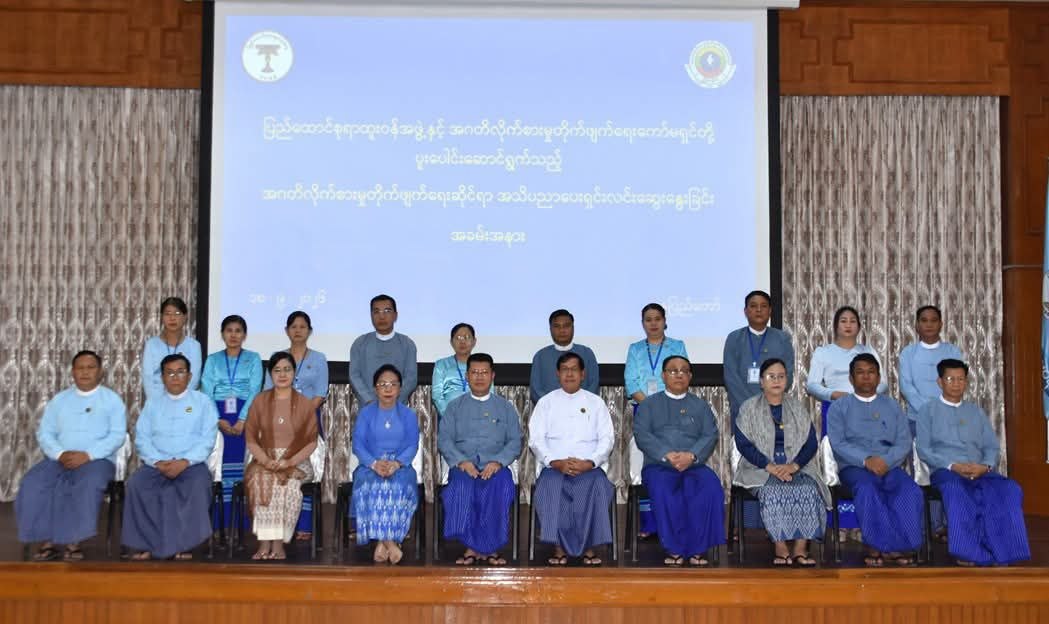
It is necessary to build public trust by upholding ethical standards within civil servants and organizations, said Chairman U Soe Thein of the Anti-Corruption Commission. The Anti-Corruption Commission and the Union Civil Service Board jointly organized an awareness and discussion event on corruption prevention this morning (September 18) at the assembly hall of Office No. 17 of the Union Civil Service Board in Nay Pyi Taw, where the Chairman of the Anti-Corruption Commission made these remarks. At the event, Chairman U Soe Thein of the Anti-Corruption Commission stated that the fight against corruption is important in shaping good governance, and it is necessary to build public trust by upholding ethical standards within civil servants and organizations. Civil servants must strive to improve the country's image by respecting and adhering to ethical rules and regulations in their duties. If each civil servant takes the initiative, the public service sector will become one that is free from corruption, with high integrity and accountability in public administration, and respected by the public, said the Chairman of the Anti-Corruption Commission. Civil servants are the bridges between the state and the people. Only by staying away from corruption and adhering to rules and ethics can civil servants gain the trust of the people, said the Chairman of the Anti-Corruption Commission. Furthermore, Chairman U Tin Maung Win of the Union Civil Service Board stated that corruption damages the character of individuals, reduces fair competition and personal qualities, and hinders national development due to the decline in organizational capacity. It affects good public services, erodes public trust in the government, and corrupts the entire national governance, economy, and socio-cultural system. Chairman U Tin Maung Win of the Union Civil Service Board also said that civil servants need to be upright and steadfast in providing public services, be responsible and accountable, and act transparently and impartially without favoritism. Corruption can occur in various forms in different sectors. If corruption is committed, it will be punishable under the Anti-Corruption Law and will also lead to a decline in social reputation, so civil servants need to be aware of this and avoid it. As it causes the loss of human rights and fundamental rights, the fight against corruption is being undertaken collaboratively internationally as a major responsibility, said the Chairman of the Union Civil Service Board. He urged the officials and employees of the Union Civil Service Board to deepen their knowledge and understanding of corruption prevention, share it with their surroundings and organizations, and participate in the anti-corruption efforts. Following that, Director Daw Nan Yadanar Htun from the Anti-Corruption Commission Office explained and lectured on corruption prevention, and Director U San Tint explained and lectured on the Anti-Corruption Law. Attendees asked questions about what they wanted to know regarding corruption, and officials from the Anti-Corruption Commission Office responded. Subsequently, a meeting was held with members of the Union Civil Service Board's Corruption Prevention Unit (CPU), led by Anti-Corruption Commission member U Lun Bo, to discuss experiences encountered in prevention efforts, strengths, weaknesses, and analyses and presentations. The event was attended by Chairman U Tin Maung Win and members of the Union Civil Service Board, Anti-Corruption Commission Chairman U Soe Thein, commission member U Lun Bo and officials, as well as the Permanent Secretary, Director-General, and officials and employees of the Union Civil Service Board.
Original source
Eleven Media