DNA Identification Concludes Decades-Long Search for Fallen Soldiers in Vietnam
Technology
2026年7月6日
5
Nhan Dan

DNA Identification Concludes Decades-Long Search for Fallen Soldiers in Vietnam

AI サマリー

Vietnam is advancing the identification of fallen soldiers missing for over half a century through DNA testing. This allows many bereaved families to fulfill their long-cherished wish of reuniting with their loved ones' remains, helping to heal the scars of war.

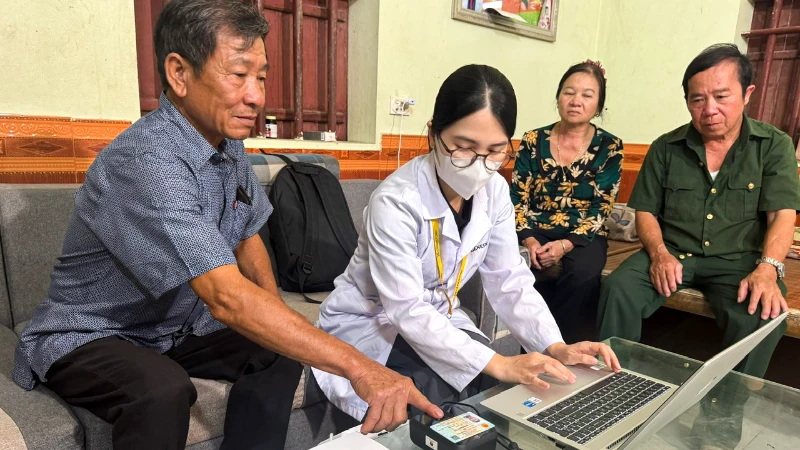
The advancement of DNA identification technology in Vietnam is shedding light on the identities of soldiers missing for over half a century. This technology has confirmed the remains of fallen soldiers after decades of searching, bringing immense joy and relief to many bereaved families. In Bắc Giang province, the family of fallen soldier Lương Bá Nho, residing in Tiền Phong commune, Yên Dũng district, had held onto a faded photograph and memories of his departure for over 50 years, never abandoning their search. Nho enlisted in 1970 at the age of 19 and tragically died of malaria during a march in Cambodia. For years, his family suffered from not knowing his exact burial site. His mother, before her passing, expressed a fervent wish to find her son and bring him back to his homeland. Nho was born in 1951 into a family with a revolutionary tradition. After graduating high school, he studied at Bắc Ninh Industrial School. In 1970, at just over 19 years old and in his second year of university, he voluntarily enlisted. That Tet holiday was the last time he was able to return home. He stayed with his family for only one day before departing. The farewell on a chilly, drizzling morning at 7 AM saw only a few younger siblings escorting him to the edge of the village. His younger brother vividly remembers his elder brother carrying a backpack and a 15kg basket of stones, which their father had personally woven to help him build strength before marching. Since that farewell, the family received no further news except for a Tet greeting letter. In this letter, filled with love for his homeland, he spoke of the "green mountains and forests" where his parents toiled to raise their children by selling vegetables, crabs, and fish at the market. He promised to return to care for his parents and look after his siblings once the country was unified. However, this promise could never be fulfilled. On September 7, 1970, fallen soldier Lương Bá Nho died of malaria while marching through Cambodia. A cousin, who was also a comrade, carried him to the hospital and personally handled his funeral arrangements. Shortly thereafter, the family received the death notification. At that time, his younger brother, Lương Bá Doanh, was only 14 years old and could not forget the image of his parents crying uncontrollably upon hearing the devastating news. For over half a century, the family did not know his exact resting place. Before passing away in 1993, his mother tearfully urged her children: "You must find your brother and bring him back to his homeland to be reunited with his parents in the afterlife." This dying wish became the aspiration of many generations within the family. Despite facing many hardships in life, they never stopped searching. The family repeatedly visited Military Region 7 and Military Region 9 to inquire for information. In 2017, all five siblings continued their search based on the guidance of old comrades. By 2023, upon learning that some fallen soldiers were being relocated to the Đức Cơ Martyrs' Cemetery in Gia Lai, the family contacted the authorities to cross-reference the list, but the identity could not be confirmed. A turning point came in 2024 when the Ministry of Public Security launched a national program to collect DNA samples from relatives of fallen soldiers. Two younger brothers directly participated in providing blood samples, holding onto a faint hope after decades of waiting. Through DNA identification conducted by the Department of Police for Administrative Management of Social Order in coordination with the Department of Police for Administrative Management of Social Order (PC06) of Bắc Ninh province, the identity of the fallen soldier was confirmed to match the DNA sample of his relatives. The identification results brought overwhelming happiness. The remains being reinterred at the Đức Cơ Martyrs' Cemetery were indeed those of fallen soldier Lương Bá Nho. After more than half a century of arduous searching, the wishes of his parents and the entire family had finally come true. Overcome with emotion upon receiving the results, his younger brother shared, "We always dreamed of seeing him again. Now, what seemed impossible has become a reality. Thank you to those who did not give up with our family." Not only the family of fallen soldier Lương Bá Nho, but also the family of fallen soldier Đậu Duy Đào (from Giang Sơn Đông commune, Đô Lương district, Nghệ An) received similar joy when DNA identification results confirmed the identity of their lost relative after decades. Mr. Đậu Duy Thanh, the fallen soldier's younger brother, recounted that from the moment he enlisted, his elder brother harbored a spirit of willingness to contribute to the Fatherland. Because he did not meet the required weight for conscription, he added two stones to his backpack to qualify. Just one year later, the family received the death notification. Amidst the many difficulties of wartime, the memorial service was held simply, and the location of his death and his grave remained unknown for many years. The desire to find their relative was always present, but due to a lack of information and family circumstances, they never had the opportunity to pursue it. In 2025, the family was invited by the Provincial Police to participate in a DNA sample collection program for identifying fallen soldiers. Mr. Đậu Duy Thanh stated that initially, the entire family was concerned about the cost of the procedure. Upon learning that the program was entirely free, they willingly cooperated. The subsequent DNA identification results confirmed that the relative's sample matched the remains of fallen soldier Đậu Duy Đào. After years without any clues, the family finally knew where their loved one rested. "We are deeply moved and overjoyed to hear the news. On behalf of the family, I would like to thank the police force and relevant authorities for helping to correctly identify the soldier's DNA, allowing our family to find our relative's grave," Mr. Đậu Duy Thanh said, his voice choked with emotion. These DNA identification results not only help to restore the names of those who fell for the Fatherland but also bring an end to the decades-long search for countless families. After more than half a century of waiting, these "delayed reunions" have, to some extent, soothed the lingering pain of war in the hearts of those left behind. Source: Nhan Dan

多角的分析

経済的影響

DNA鑑定技術の導入は、戦没者遺骨の身元確認という人道的側面が強調されていますが、その裏には、遺族の精神的負担軽減による社会全体の安定化、そして戦没者追悼や歴史認識といった国家的な取り組みへの貢献という経済的・社会的な効果も期待できます。また、このような技術開発・導入は、ベトナムの科学技術分野の発展を示すものであり、将来的な他分野への応用や、関連産業の育成にも繋がる可能性があります。

投資家心理

本件は直接的な投資機会を提供するものではありませんが、ベトナム政府が人道的な課題や社会インフラ(戦没者墓地管理など)に対して、最新技術を積極的に導入・活用する姿勢を示していると捉えられます。これは、ベトナムが社会の安定と国民の福祉向上に配慮する国であるという投資環境の評価に間接的に寄与する可能性があります。長期的には、このような技術導入が、医療やバイオテクノロジー分野への投資を呼び込む土壌となり得ます。

社会的影響

ベトナム戦争をはじめとする過去の戦争の傷跡は、多くの遺族に深い悲しみと未解決の苦悩を残しています。DNA鑑定による身元確認は、これらの遺族にとって、長年の精神的な苦痛に終止符を打ち、故人との繋がりを取り戻すための重要なプロセスです。特に、地方部では、戦没者の遺骨の所在不明が家族間の世代間の課題となることもあり、今回の進展は、地域社会における癒しと和解を促進するでしょう。また、この技術は、失踪者捜索など、他の社会的な課題にも応用される可能性があります。

市民の声

長年、愛する家族の行方を知らず、遺骨もどこにあるか分からないまま過ごしてきた多くのベトナム国民にとって、今回のDNA鑑定による身元確認は、まさに長年の悲願の達成です。特に、戦争を経験した世代やその子孫にとっては、家族の絆を再確認し、故郷への想いを新たにする機会となります。この技術が無料で提供されていることは、経済的な負担なく、多くの国民が恩恵を受けられることを意味し、政府への信頼を高める要因ともなり得ます。

背景・歴史的文脈

ベトナム戦争(1955年〜1975年)では、数百万人の兵士と民間人が犠牲となり、多くの遺体が未確認のまま、あるいは行方不明のままとなっています。戦後、ベトナム政府は、戦没者の遺骨の収集・確認・追悼に継続的に取り組んできました。特に、近年では、DNA鑑定技術の導入により、これまで困難であった身元確認が可能になり、多くの遺族に希望をもたらしています。この取り組みは、国民の愛国心を醸成し、国家の結束を強化する側面も持ち合わせています。

原文ソース

Nhan Dan

原文を読む