General articles are free for 24 hours after publish.
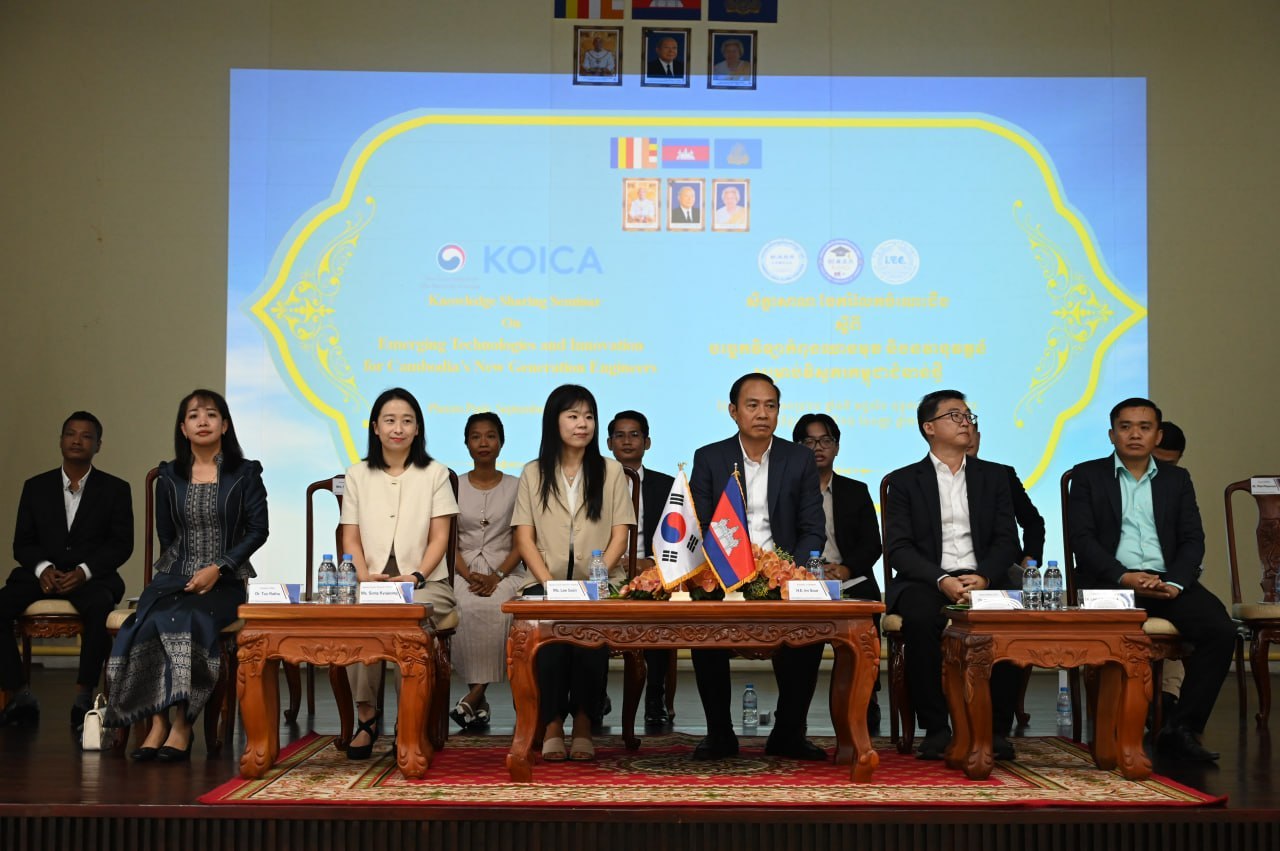
Cambodia Hosts Tech Innovation Seminar for Next-Gen Engineers with KOICA Support
Cambodia and the Korea International Cooperation Agency (KOICA) jointly organized a seminar on "Cutting-Edge Technology and Innovation" for next-generation engineers. The event aims to boost Cambodia's digitalization and sustainable development.
A seminar on "Cutting-Edge Technology and Innovation for the New Generation of Cambodian Engineers" was held on September 16, 2026, at the Cambodia Academy of Technology (ITC), with the support of the Korea International Cooperation Agency (KOICA) Cambodia Office. The event was jointly organized by the Cambodia-Korea Alumni Association (CAMKAA), the Khmer Students Association from the Republic of Korea (KAAC), the KOFIH Global Alumni Association (KGA), and the Institute of Technology of Cambodia (ITC). Approximately 150 participants, including students, researchers, government officials, former trainees, and technology stakeholders, attended to share and learn about cutting-edge technologies that hold significant potential for strengthening Cambodia's digitalization and sustainable development. Ms. Lee Sejin, Deputy Country Director of KOICA Cambodia, highlighted the growing importance of science, technology, and innovation for economic growth and sustainable development. She emphasized the crucial role of higher education institutions like ITC in equipping future engineers, scientists, and researchers with the knowledge, skills, and innovative mindset necessary for the Fourth Industrial Revolution. In parallel, H.E. Im Sour, President of CAMKAA and Deputy Secretary-General of the Council for the Development of Cambodia (CDC), stated that the future of Cambodia's technological development lies in the hands of the new generation of youth. He stressed the need for young Cambodians to possess competence, research knowledge, creativity, and the courage to experiment with new ideas. H.E. Im Sour expressed his hope that the seminar would not only serve as a platform for knowledge sharing but also as a starting point for new ideas, research, projects, collaborations, and innovations that can contribute to Cambodia's socio-economic development. The seminar featured specialized presentations by Cambodian researchers and experts, including former trainees supported by KOICA and former recipients of the Korean Government Scholarship Program (GKS). Dr. Vally Dona presented on research programs in robotics, unmanned aerial vehicles (drones), and artificial intelligence (AI). Associate Professor Dr. Sreiv Tharith shared insights into Korea's technology ecosystem and research. Mr. Oun Vantharith discussed technology entrepreneurship, startups, innovation, and job opportunities. Mr. Pheal Phirun and Dr. Ai Songhuang explored artificial intelligence (AI) and digital technology in education. Dr. Lay Ngabchong presented on the digital transformation of health claim verification to enhance efficiency and public service delivery. The program also highlighted the long-standing partnership between Korea and Cambodia in human resource development and KOICA's Capacity Building and Advancement for Tomorrow (CIAT) program. Alumni associations such as CAMKAA, KAAC, and KGA continue to strengthen professional networks and share knowledge gained through international education and training, thereby expanding the impact of Korea-Cambodia cooperation to the broader Cambodian community. The seminar reaffirmed a shared commitment to innovation, knowledge transfer, and human capital development, supporting Cambodia's efforts to prepare a new generation of engineers, researchers, and technology leaders. The future, it was emphasized, is not something to wait for, but something that Cambodia's young engineers can help plan, build, and create. By: Rithy, Source: KOICA
Original source
AKP Khmer