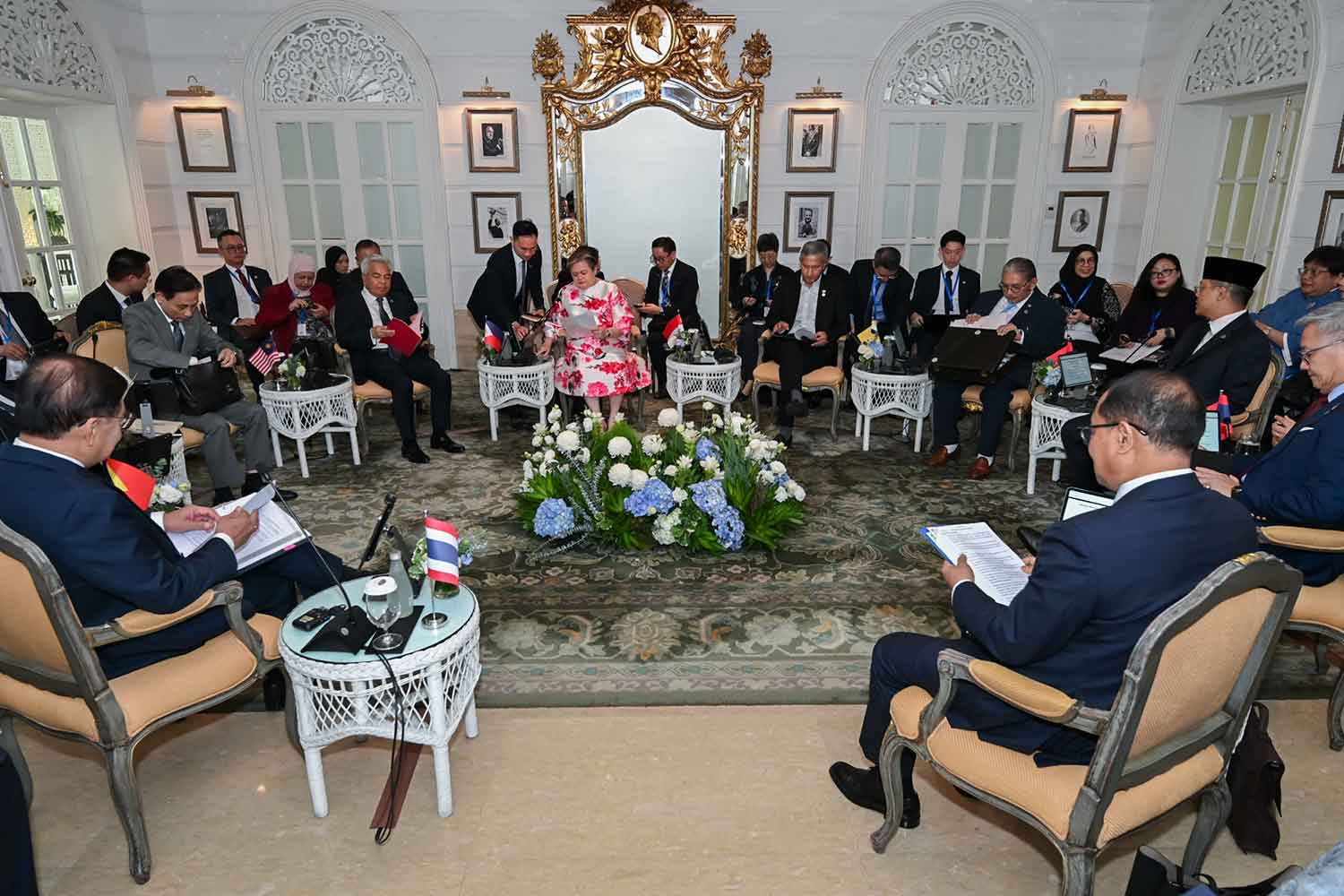
ASEAN Foreign Ministers Press Myanmar for Progress on Five-Point Consensus
ASEAN foreign ministers renewed pressure on Myanmar to advance the bloc's Five-Point Consensus (5PC) during talks in Bangkok, with the detention of political prisoners, including Aung San Suu Kyi, a key concern. ASEAN reaffirmed its calibrated engagement approach, emphasizing the need for dialogue to be accompanied by action.
ASEAN foreign ministers renewed pressure on Myanmar to advance the bloc's Five-Point Consensus (5PC), with the detention of political prisoners, including former leader Aung San Suu Kyi, remaining a concern during talks in Bangkok. The issue was raised during an informal meeting between Asean foreign ministers and Myanmar's foreign minister, the first such in-person engagement since 2021. The Asean ministers used the meeting to press Myanmar for measurable progress on reducing the violence, expanding humanitarian access and advancing political dialogue, while reaffirming that the 5PC, a roadmap for peace in Myanmar, remains Asean's primary framework. Theresa P Lazaro, Secretary of Foreign Affairs of the Philippines, who chaired the meeting on Sunday, said Asean ministers welcomed the opportunity to engage directly with Myanmar but said dialogue must be accompanied by action. She said Asean had called for "actions towards the cessation of hostilities, especially against civilians and civilian infrastructure", while also urging positive developments concerning Aung San Suu Kyi as an important element of a constructive and inclusive national political dialogue. Ms Lazaro said Asean ministers had taken note of steps reported by Myanmar, including prisoner releases and the transfer of Aung San Suu Kyi to a designated residence. However, Ms Lazaro said further progress was still needed in three key areas: ending the violence, promoting inclusive dialogue among all stakeholders and improving humanitarian access. The meeting also addressed transnational issues affecting the region, including online scams, human trafficking and illicit drug trafficking, which Myanmar said it was working to combat. Thai Foreign Affairs Minister Sihasak Phuangketkeow described the discussions as frank and constructive, and defended Asean's approach of "calibrated engagement" with Myanmar. Mr Sihasak said engagement was intended to help implement, rather than replace, the 5PC. "We clearly spelt out what our expectations are going forward," he said, outlining five priorities: expanding humanitarian assistance, reducing violence against civilians, promoting inclusive dialogue among stakeholders, encouraging national reconciliation and creating a more conducive political environment through the further release of political prisoners and positive developments regarding Aung San Suu Kyi. He said Asean was not abandoning its principles during the meeting, but was seeking a practical strategy to achieve them. "This is but the first step; we have to continue to build upon this process of engagement. It is not a one-off event," Mr Sihasak said. Addressing questions about Aung San Suu Kyi's welfare, Ms Lazaro said Myanmar had assured the Asean ministers she was in good health and receiving appropriate care. Nevertheless, Asean proposed that the special envoy, Ms Lazaro, be granted an opportunity to meet Aung San Suu Kyi directly. Mr Sihasak said such access would allow Asean to independently verify Myanmar's assurances regarding her health condition. The former Myanmar leader was last seen in public during a brief court appearance on May 24, 2021. While no timeline was set for evaluating Myanmar's progress, Asean ministers indicated that developments would be reviewed ahead of the next Asean summit.
多角的分析
ミャンマーの国内紛争と政治的不安定は、同国の経済活動に深刻な影響を与え続けている。ASEAN諸国との貿易や投資の停滞は、地域経済全体の成長潜在力を抑制する要因となっている。特に、人道支援アクセスの改善が遅れることは、長期的な復興と経済再建の障害となる。ASEANが「段階的関与」を通じて経済的安定化を促すことは、地域全体のサプライチェーンの安定化にも繋がる可能性があるが、その効果はミャンマー国内の政治的進展にかかっている。
ミャンマー情勢の不透明感は、投資家にとって依然として最大の懸念材料である。ASEAN外相会議での進展が見られなかったことは、短期的な投資意欲を抑制するだろう。特に、アウン・サン・スー・チー氏の処遇や政治囚解放の遅れは、法の支配や人権尊重といった、外国投資家が重視する要素への懸念を深める。ASEANの「段階的関与」は、リスクを管理しながら市場へのアクセスを模索する動きとも解釈できるが、本格的な投資再開には、より明確で持続的な平和と安定が不可欠となる。
ミャンマー国内の紛争は、市民生活に甚大な影響を与えている。人道支援アクセスの遅延は、食料、医療、避難場所へのアクセスを困難にし、多くの人々が苦境に立たされている。また、アウン・サン・スー・チー氏のような政治的指導者の処遇は、国民の政治的権利や自由への希求を象徴しており、その動向は社会全体の希望や不満に直結する。ASEANが、市民や民間インフラへの攻撃停止を求めることは、現場の生活者の安全確保に向けた重要な一歩となるが、その実効性が問われている。
ミャンマー国内の市民にとって、ASEAN外相会議の結果は、日々の生活の安定に直接的な影響を与えるものではない。しかし、アウン・サン・スー・チー氏の解放や、紛争の終結に向けた具体的な進展は、彼らの将来への希望に繋がる。特に、人道支援アクセスの改善は、食料や医療へのアクセスが困難な地域に住む人々にとって、生死に関わる問題である。ASEANの「段階的関与」が、紛争の激化を防ぎ、将来的な平和構築への道筋をつけることを、市民は静かに、しかし強く願っている。
背景・歴史的文脈
ミャンマーでは、2021年2月の軍事クーデター以降、国軍と少数民族武装組織、および民主派勢力との間で激しい紛争が続いている。これに対し、ASEANは同年4月に「五か条合意(5PC)」を採択し、即時停戦、建設的対話、ASEAN特使の仲介、人道支援、特使によるミャンマー訪問を求めた。しかし、軍事政権は5PCの履行に消極的であり、暴力は収まっていない。今回のバンコクでの会合は、ASEANがミャンマーの状況打開に向けて、対話と行動を促すための継続的な努力の一環である。
原文ソース
Bangkok Post