Long Thanh Airport to Get Direct Metro Link from Vung Tau Coast
Infrastructure
2026年7月7日
5
VnExpress International

Long Thanh Airport to Get Direct Metro Link from Vung Tau Coast

AI サマリー

Ho Chi Minh City's urban railway authority has proposed extending Metro Line 3 to connect the Vung Tau coast with Long Thanh International Airport. This aims to improve connectivity between coastal areas and major transport hubs, advancing Vietnam's extensive rail network plans.

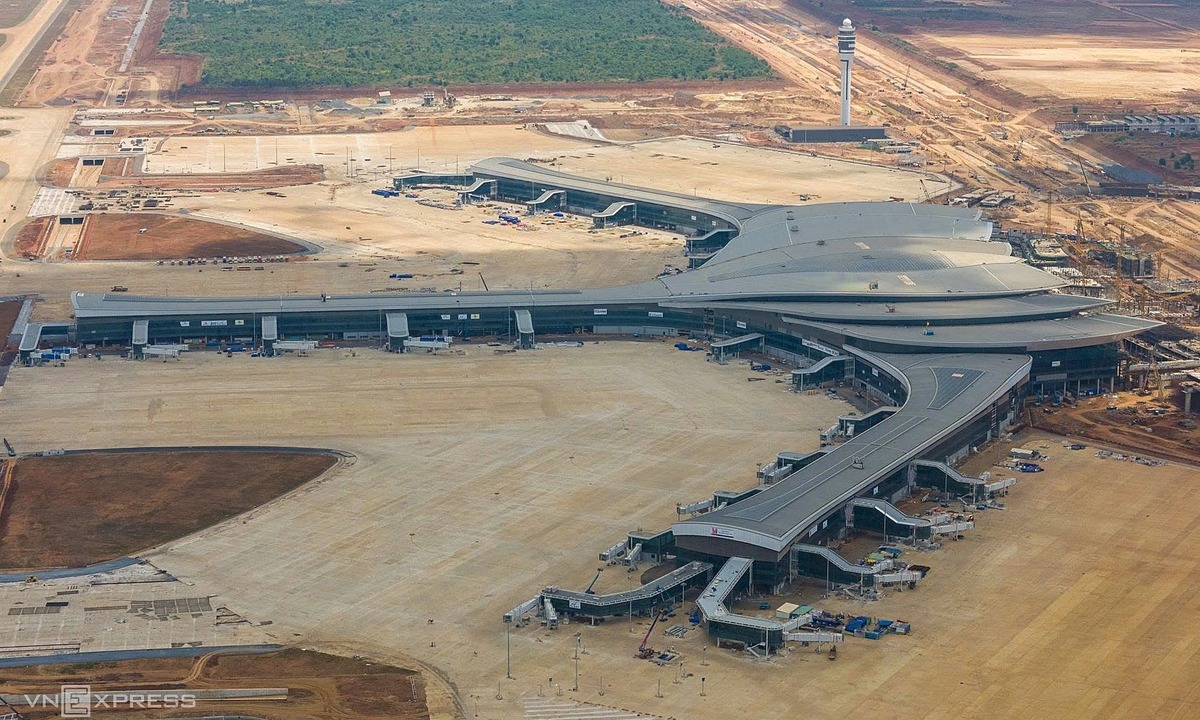
The Ho Chi Minh City Management Authority for Urban Railways has requested the city government to study the extension of Metro Line 3, originally planned to link central Vung Tau with Ba Ria and Phu My, to Long Thanh International Airport. The proposed roughly 40-km line would currently terminate at National Highway 51 near the Dong Nai border, with no connection to other rail networks. The authority argues that ending the line there would be a waste of investment and would leave the coastal region disconnected from the country's main transport hubs. Long Thanh Airport, slated to open commercially by late 2024, is envisioned as Vietnam's largest airport and is already planned as a hub for three major railway lines: the North-South high-speed line, the Thu Thiem-Long Thanh line, and an extension of the Ben Thanh-Suoi Tien metro. Integrating Line 3 into this network would provide travelers from Vung Tau, Ba Ria, and Phu My with a direct, one-seat ride to both the airport and downtown Ho Chi Minh City. Currently, reaching Long Thanh from the coast requires driving on highways like National Highway 51, which is already experiencing significant traffic strain. From central Vung Tau, Line 3 would follow Road 3/2, pass the Chi Linh tourism area, then run along the Vung Tau-Binh Chau road, the coastal road, and Road 55. As the extension would cross into Dong Nai Province, the authority has stated that an agreement between the two regions on funding and construction responsibilities is needed before the study can proceed. This proposal is part of a broader push for rail development since Vietnam redrew its administrative map. Following the merger of Binh Duong and Ba Ria-Vung Tau provinces into Ho Chi Minh City in 2025, the city absorbed their transit plans. The metro network is now envisioned to comprise 27 lines spanning over 1,000 km, reaching from the beaches of Vung Tau to the industrial belts of Binh Duong. The former Ba Ria-Vung Tau territory alone is slated to host three of these lines: a 20-km loop around inner Vung Tau, a 65-km coastal route to Binh Chau, and Line 3. All are scheduled for completion after 2030. Seven lines are prioritized for completion by 2030. Three of these have already broken ground: Ben Thanh-Tham Luong, Ben Thanh-Thu Thiem, and Ben Thanh-Can Gio. The remaining four are still in the preparation phase: Thu Thiem-Long Thanh, Binh Duong New City-Suoi Tien, the first phase of Metro Line 6 (from Tan Son Nhat to Phu Huu), and Thu Dau Mot-Tao Dan. The Binh Duong New City-Suoi Tien line is the most advanced among this group. It is approximately 33 km long, entirely elevated, and will traverse seven wards. It will start at station S1 in central Binh Duong New City and end at Suoi Tien Bus Station, connecting directly to Metro Line 1. The line is planned with 19 stations and a depot in Binh Duong. The railway authority has signed contracts with Vietnam's TEDI and Japan's Nippon Koei for the feasibility study and technical design, aiming to commence construction this year. Previously, a consortium led by Becamex and Thaco had proposed building this line as a public-private partnership (PPP) for over VND64.3 trillion (approximately US$2.45 billion), including site clearance. This proposal was paired with transit-oriented development along the route to maximize land value in the former Binh Duong area.

多角的分析

経済的影響

このメトロ延伸計画は、ロンタン国際空港へのアクセス向上だけでなく、ベトナム南部の経済回廊を強化する潜在力を持つ。特に、ブンタウ地域の観光資源とドンナイ省の工業地帯、そしてホーチミン市の経済圏を鉄道で結ぶことは、物流コストの削減と地域間経済格差の是正に寄与するだろう。PPP方式での建設は、ベトナム政府がインフラ開発において民間資金を積極的に活用しようとする姿勢を示しており、経済成長の持続性を高める上で重要である。ただし、建設コストの増大や、計画通りの需要が見込めるかどうかが経済的持続性の鍵となる。

投資家心理

ロンタン空港周辺およびメトロ沿線の不動産開発は、投資家にとって大きな魅力となる可能性がある。特に、空港への直接アクセスが可能になれば、空港関連ビジネスや物流、観光産業への投資が活発化すると予想される。ベトナムのインフラ投資は、政府主導で進められることが多いが、PPP方式の導入は、海外からの直接投資を呼び込む機会ともなり得る。しかし、建設期間の長期化や、計画変更のリスクも考慮する必要がある。

社会的影響

メトロ3号線の延伸は、ブンタウやバリア地域の住民にとって、ホーチミン市中心部やロンタン空港へのアクセスを劇的に改善する。これにより、通勤、通学、観光、医療サービスへのアクセスが容易になり、生活の利便性が向上する。特に、沿岸部の住民が主要な経済活動の中心から切り離される懸念が解消されることは、地域住民の生活の質向上に直結する。一方で、建設工事による一時的な騒音や交通規制、そして将来的な沿線開発に伴う都市景観の変化などが、地域社会に影響を与える可能性も考えられる。

市民の声

メトロ3号線の延伸は、ブンタウやバリア地域の住民にとって、ホーチミン市中心部やロンタン空港へのアクセスを劇的に改善する。これにより、通勤、通学、観光、医療サービスへのアクセスが容易になり、生活の利便性が向上する。特に、沿岸部の住民が主要な経済活動の中心から切り離される懸念が解消されることは、地域住民の生活の質向上に直結する。一方で、建設工事による一時的な騒音や交通規制、そして将来的な沿線開発に伴う都市景観の変化などが、地域社会に影響を与える可能性も考えられる。

背景・歴史的文脈

ベトナムは、経済成長を支えるインフラ整備を国家戦略として位置づけている。特に、ホーチミン市を中心とした南部地域は、経済活動の集積地であり、交通網の強化は喫緊の課題である。2025年のビンズン省とバリア・ブンタウ省のホーチミン市への編入は、広域的な都市圏形成と一体的な交通計画の必要性を高めた。ロンタン国際空港は、ベトナムの航空輸送能力を飛躍的に向上させる国家プロジェクトであり、そのハブ機能を最大限に活かすためには、鉄道網との連携が不可欠である。メトロ3号線の延伸計画は、こうしたベトナムの国家戦略と地域開発計画が交差する地点に位置づけられる。

原文ソース

VnExpress International

原文を読む