Dak Lak Province Targets Over 10% Growth by 2026 with Key Initiatives
Dak Lak Province in Vietnam's Central Highlands is pushing key initiatives for practical and sustainable economic growth, aiming to achieve an average annual growth rate exceeding 10% by 2026. Focus areas include attracting investment, promoting digitalization, and developing green industrial parks.
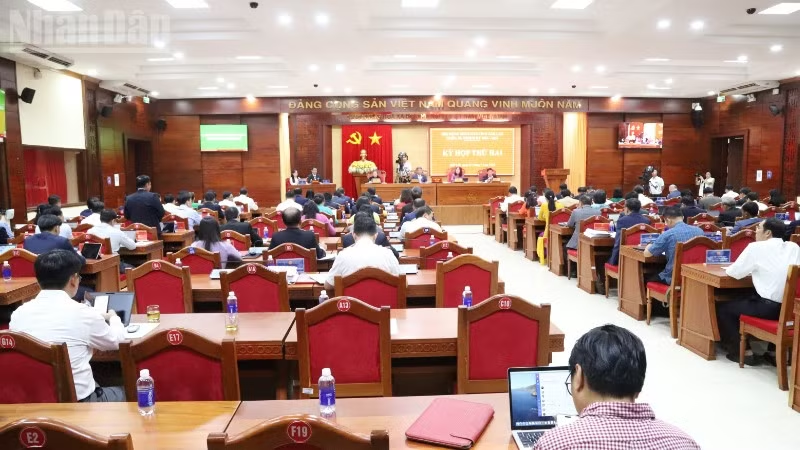
Dak Lak Province, located in Vietnam's Central Highlands, has solidified its commitment to focusing on key initiatives for practical, effective, and sustainable economic growth, aiming to achieve an ambitious annual average growth rate of over 10% by 2026. Ms. Cao Thi Hoa An, Chairwoman of the Provincial People's Council, has instructed the Provincial People's Committee to execute specific tasks and targets for achieving this growth objective. As part of these efforts, Dak Lak Province has announced adjustments to its regional development plan for the period 2021-2030, with a vision extending to 2050. Concurrently, a list of 257 investment projects seeking capital has been unveiled, signaling an intention to attract domestic and foreign investment. Furthermore, the province is accelerating the promotion of digital transformation and the development of a sustainable business ecosystem. This aims to leverage digital technologies essential for modern economic growth and build environmentally conscious business models. Specifically, the development of green industrial parks and clusters linked with deep processing industries and inter-regional logistics will be prioritized. This strategy seeks to enhance the added value of regional resources and improve logistics efficiency, thereby strengthening the overall economic competitiveness. Dak Lak Province has clearly stated its commitment to supporting the development and growth of businesses, cooperatives, and individual business households. This can be seen as a comprehensive approach to strengthen the local economic foundation and contribute to job creation and income improvement. Under Vietnam's one-party system, local governments play a crucial role as implementers of economic policy objectives set by the central government. This announcement from Dak Lak Province demonstrates specific growth strategies and investment attraction measures at the local level, underscoring the importance of regions in Vietnam's overall economic growth strategy. Particularly for the Central Highlands region, which has historically lagged in development, such proactive growth strategies are expected to contribute to reducing regional disparities and improving the livelihoods of its residents.
多角的分析
ダクラク省の成長率10%超という目標は、ベトナム全体の経済成長目標(2026年までに年平均約6.5-7%)を大きく上回る野心的なものである。これは、同省がコーヒー、カカオ、ゴムなどの農産物加工、観光、再生可能エネルギーといった潜在力の高い分野に注力し、外資導入を積極的に行うことで、経済構造の高度化と付加価値向上を目指す戦略を示唆している。グリーン工業団地や深層加工産業への投資は、従来の一次産品輸出依存から脱却し、サプライチェーンの上流・中流への進出を図る試みであり、国際市場での競争力強化に繋がる可能性がある。
257件の投資プロジェクトリストの公表は、投資家にとって具体的な機会提示となる。特に、グリーン工業団地や深層加工、物流といったインフラ・製造業関連への重点投資は、長期的な視点での安定したリターンを求める投資家にとって魅力的である。しかし、目標達成には、投資環境の整備、許認加工の迅速化、人材育成が不可欠であり、これらの進捗が投資判断の鍵となる。ベトナム政府による一貫した政策支援と、法制度の透明性・予見可能性の向上が、外国直接投資(FDI)のさらなる呼び込みに繋がるだろう。
ダクラク省の成長戦略は、地域経済の活性化と雇用創ちを通じて、住民の生活水準向上に寄与することが期待される。特に、協同組合や個人事業主への支援は、地方の零細企業や農家が経済成長の恩恵を受けやすくするための配慮と言える。一方で、工業化の進展に伴う環境負荷や、都市部への人口集中といった社会的な課題も生じうる。グリーン工業団地の開発は環境配慮の姿勢を示すが、実効性のある環境規制と監視体制の構築が、持続可能な発展のために不可欠となる。また、デジタル化の推進は、情報格差の是正や、新たな雇用機会の創出に繋がる可能性があるが、デジタルリテラシーの向上も同時に求められる。
ダクラク省の成長目標は、住民にとっては雇用機会の増加や所得向上に繋がる可能性がある。特に、農産物加工や物流分野での新たな産業の発展は、地域住民にとって身近な雇用を生み出すだろう。しかし、工業化の進展は、土地利用の変化や環境への影響も伴うため、地域住民の意見を反映した開発計画の策定が重要となる。また、デジタル化の推進は、情報へのアクセスを改善し、教育や医療サービスへのアクセス向上に繋がる可能性もあるが、高齢者やデジタル機器に不慣れな層への配慮も必要となる。
背景・歴史的文脈
ベトナムは1986年のドイモイ(刷新)政策以降、市場経済化を進め、目覚ましい経済成長を遂げてきた。特に近年は、米中貿易摩擦などを背景に、サプライチェーンの移転先として注目され、外国直接投資(FDI)が拡大している。ダクラク省は、ベトナム中部高原に位置し、コーヒーをはじめとする農産物の主要生産地である。しかし、他の沿海部地域と比較して開発が遅れており、インフラ整備や産業構造の高度化が課題となっている。今回の成長目標は、こうした地域格差の是正と、ベトナム全体の持続可能な成長を目指す中央政府の政策と連動したものである。一党体制下では、地方政府は中央の指示に基づき、具体的な経済目標達成に向けた施策を実行する役割を担う。
原文ソース
Nhan Dan