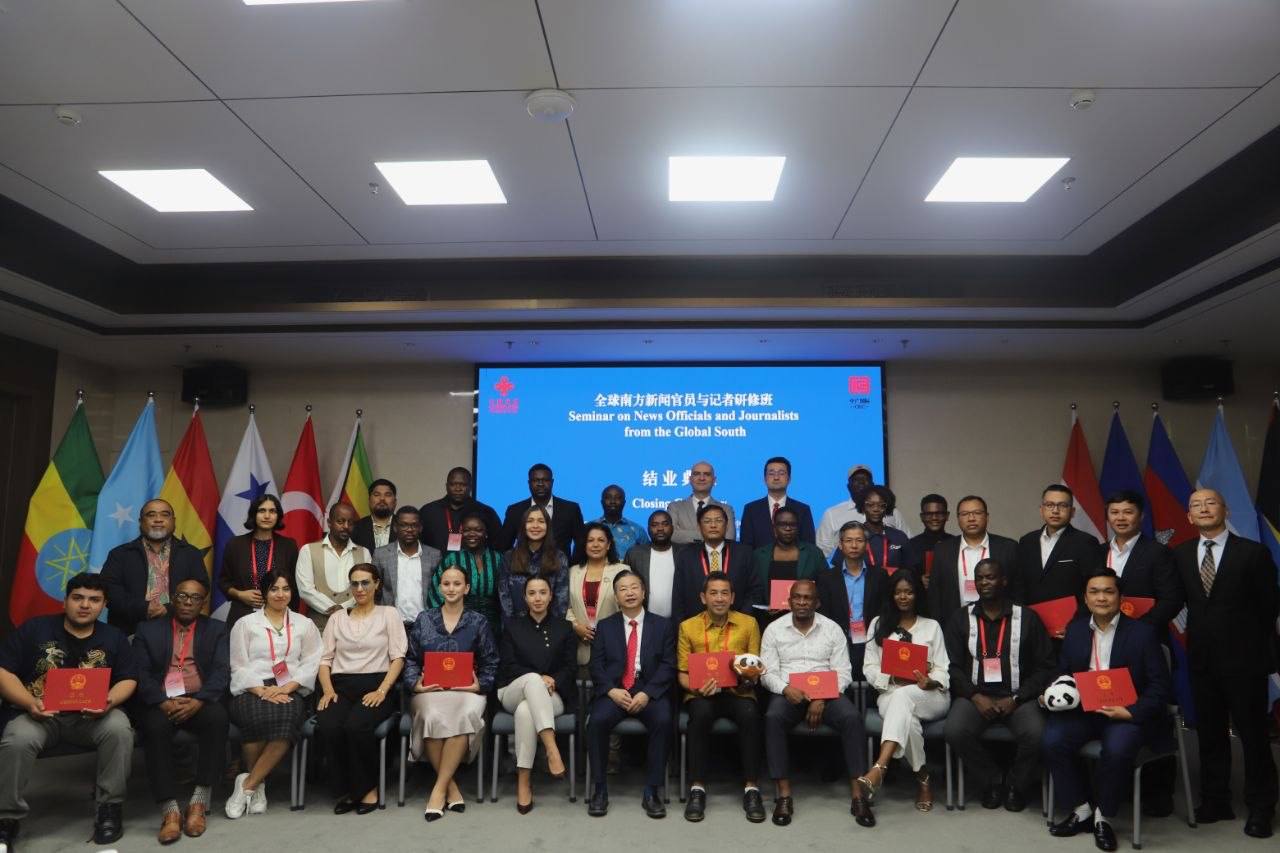
China-Hosted Media Workshop Concludes Successfully for Global South Participants, Including Cambodia
A 14-day media workshop for officials and journalists from Global South countries in China has successfully concluded, yielding significant results in enhancing media technology capabilities and strengthening cooperation. Cambodian participants reported gaining valuable insights into media modernization and Chinese cooperation.
BEIJING, July 6, 2026 -- A 14-day workshop for media officials and journalists from Global South countries, held in the People's Republic of China, concluded successfully on July 6, 2026, yielding significant results. The workshop aimed to enhance media technology capabilities and strengthen cooperation among Global South nations, with a particular focus on deepening collaboration between Cambodia and China. At the closing ceremony, He Dongbo, Deputy Head of the Party Committee and Deputy General Manager of CBIC, stated that the 14-day period served as a crucial classroom for in-depth study of China's media modernization. He noted that participants in Beijing explored the factors behind China's development, while in Yinchuan, they visited Baijitan National Park, showcasing ecological wonders, and witnessed the success of poverty alleviation efforts in Minning Town. Furthermore, attendees gained insights into technology-driven industrial development at Zhuse Technology and Lingji Digital Technology, and discussed in-depth media development at Ningxia Television Station. He Dongbo emphasized that the course also served as a platform for generating ideas in information dissemination for Global South countries. He added that all participants reached a consensus that in the context of global changes, journalists from the Global South share a common responsibility to break the monopoly of Western discourse and jointly build a fair and colorful information order. CBIC remains committed to promoting cultural exchange and media cooperation between China and foreign countries. Representing the Cambodian participants, Chuon Chanphearun, Deputy Director General of the General Department of Information and Audiovisual, expressed profound gratitude to the Chinese government and the organizing committee for the valuable opportunity and warm hospitality. He affirmed that the workshop provided knowledge and experience beyond expectations, particularly enhancing understanding of the rapid development of China's media industry, including digital systems, artificial intelligence (AI) technology, and professional media management. Beyond academic studies, the delegation visited key sites such as ZOOXER TECH to learn about advanced AI-powered autonomous camera technology, and Beijing Langyuan Station, observing the transformation of a former textile warehouse into a modern AIGC center. The Cambodian delegation, along with others, also toured the Great Wall and visited the Ningxia Hui Autonomous Region to explore China's rich civilization, culture, and historical heritage. He Dongbo expressed strong hope that participants will apply the knowledge and experience gained from the workshop in their respective institutions to modernize media and promote more effective and responsible information dissemination, thereby further strengthening the friendship and cooperation between China and the Global South countries. Source: AKP Khmer
多角的分析
本研修は、中国がグローバルサウス諸国に対し、メディア技術やデジタルインフラ分野での協力深化を通じて経済的影響力を拡大しようとする戦略の一環と解釈できる。特にAIやデジタル技術への投資は、これらの技術が将来的な経済成長の基盤となることを示唆しており、中国はこれらの分野で主導権を握ることで、グローバルサウス諸国との経済的結びつきを強固にし、新たな市場とサプライチェーンを構築しようとしていると考えられる。カンボジアのような国々にとっては、最新技術へのアクセスは経済発展の加速に繋がる可能性があるが、同時に中国への技術的依存度を高めるリスクも孕んでいる。
中国がグローバルサウス諸国とのメディア分野での連携を強化する動きは、投資家にとって新たなビジネスチャンスを示唆する。特に、AI、デジタルプラットフォーム、コンテンツ制作などの分野で、中国企業とグローバルサウス諸国の企業との合弁事業や技術提携が活発化する可能性がある。カンボジアのような国々では、インフラ整備やデジタル人材育成への投資が期待できる一方、政治的リスクや情報統制の強化といった側面も考慮する必要がある。中国によるメディア分野への関与拡大は、地域全体の情報流通構造に影響を与え、投資環境の評価に影響を及ぼす可能性がある。
この研修は、グローバルサウス諸国のメディア関係者が中国のメディア発展モデルを学ぶ機会を提供し、情報発信における西側メディアへの依存を減らし、より多様な視点を構築しようとする動きを反映している。カンボジアの参加者は、AI技術やデジタルメディアの活用法を学ぶことで、国内のメディアの質的向上を目指すだろう。しかし、中国のメディア発展モデルには、情報統制やプロパガンダといった側面も含まれるため、参加者がこれらの技術をどのように倫理的かつ公共の利益のために活用するかが問われる。市民レベルでは、情報へのアクセスが多様化する一方で、特定のイデオロギーに基づく情報が増加する可能性も懸念される。
研修参加者であるメディア関係者が、中国のメディア技術や発展モデルを学ぶことは、カンボジア国民のメディア消費体験に間接的な影響を与える可能性がある。例えば、AIを活用したコンテンツ制作や配信技術が導入されれば、よりパーソナライズされた情報が提供されるかもしれない。しかし、中国のメディア発展の文脈には、国家による情報管理やプロパガンダの側面も含まれるため、国民がより多様で客観的な情報にアクセスできるか、あるいは特定の情報源に偏るかが懸念される。また、中国との連携強化は、カンボジア国内のメディア環境に変化をもたらし、市民が情報に接する機会やその質に影響を与えると考えられる。
背景・歴史的文脈
中国は近年、「一帯一路」構想などを通じて、グローバルサウス諸国との経済的・政治的関係を強化している。メディア分野においても、中国は自国の発展モデルや国際的な視点を広めるため、研修プログラムやメディア協力の機会を提供してきた。2013年の「中国・アフリカメディア協力フォーラム」や、2017年の「中国・ラテンアメリカ・カリブ海メディア協力フォーラム」などがその例である。これらの取り組みは、グローバルサウス諸国が西側メディアの報道に偏らない、多様な情報源を持つことを支援する一方で、中国の国際的なイメージ向上と影響力拡大を目的としている。カンボジアは、中国との緊密な関係を維持しており、こうしたメディア協力の恩恵を受ける国の一つとなっている。
原文ソース
AKP Khmer