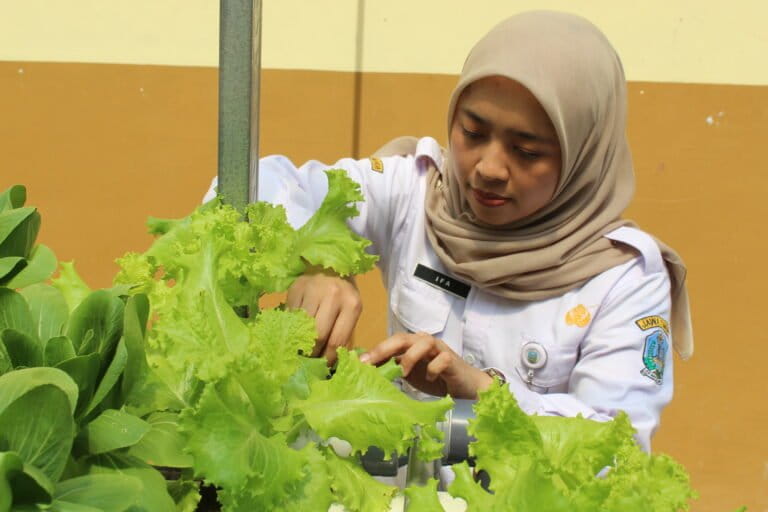
Indonesian High School Teaches Food Self-Sufficiency and Student Independence
At SMA Negeri 1 Turen high school in Malang Regency, East Java, students are learning the importance and practical skills of food self-sufficiency through hands-on experience in food production. This initiative not only fosters student independence but also contributes to meeting household food needs.
This article requires PRO
This article is outside the free access window or is a special report. PRO unlocks it and the full archive.
Related articles
- Indonesia Releases 2026 Education Sector Corruption Prevention Strategy, Cites Thesis Ghostwriting and Plagiarism
Indonesia's Corruption Eradication Commission (KPK) has launched its 2026 Education Sector Corruption Prevention Strategy (SPI Pendidikan 2026). The strategy addresses issues such as thesis ghostwriting and plagiarism, aiming to strengthen countermeasures against academic dishonesty.
- Former Lombok Islamic Boarding School Leader Named Suspect in Sexual Assault Case
A former leader of an Islamic boarding school (Ponpes) in Lombok, Indonesia, has been named a suspect in a sexual assault case. The number of alumni reporting themselves as victims has risen to 17, following the case's virality on social media.
- Explosion at Surabaya Eatery Injures 5 Employees, Facial Burns Reported
An explosion at a restaurant in Surabaya has left five employees with facial burns. Police are investigating a potential gas leak from large LPG cylinders as the likely cause. The blast also damaged surrounding buildings and vehicles.
- Indonesia Faces Concern Over Excessive University Programs, Urges Consolidation
Indonesia's Minister of Higher Education, Science, and Technology has expressed concern over the excessive number of university programs (prodi). In 2025, there were 34,711 programs, with a significant concentration in private institutions. The minister advocates for program consolidation to streamline administration and accreditation.