General articles are free for 24 hours after publish.
EVFTA in 7th Year: Vietnam's EU Market Access Expands, Challenges Remain
Seven years into the EU-Vietnam Free Trade Agreement (EVFTA), the EU has completed its tariff liberalization schedule, bringing import duties on approximately 99% of tariff lines for Vietnamese goods to zero. This is expected to enhance the competitiveness of Vietnamese businesses in the European market, though they must also adapt to increasingly stringent market standards.
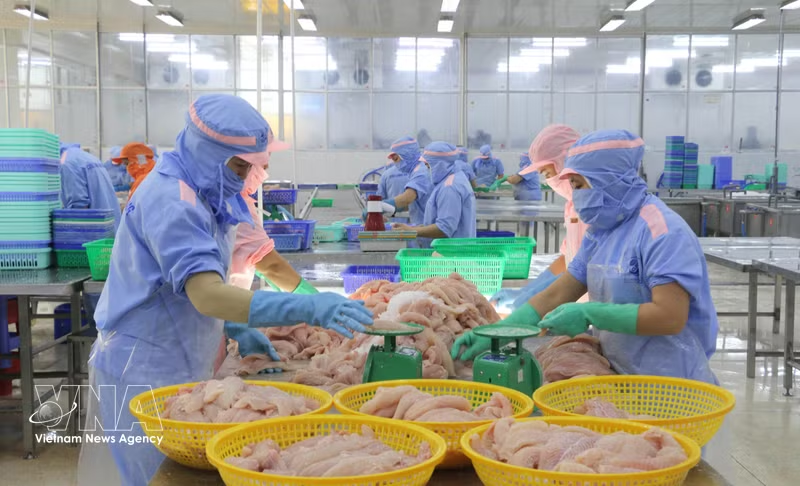
Seven years into the implementation of the EU-Vietnam Free Trade Agreement (EVFTA), the European Union has completed its tariff liberalization schedule. This move brings import duties on approximately 99% of tariff lines for Vietnamese goods to zero. The development is expected to significantly strengthen the competitiveness of Vietnamese businesses in the European market. This progression marks a crucial step in Vietnam's export-driven economic growth strategy. The EVFTA offers Vietnamese companies the opportunity to supply products to the vast EU market under more favorable terms. Specifically, the reduction and elimination of tariffs will directly translate to improved price competitiveness, particularly in sectors such as apparel, seafood, and agricultural products. However, to fully harness this opportunity, Vietnamese businesses face several challenges. The quality, safety, and environmental standards demanded by the EU market are becoming increasingly stringent each year. Enhancing production technology and strengthening quality management systems to meet these requirements are essential. Furthermore, supply chain transparency and sustainability are also gaining importance among EU buyers. The Vietnamese government is expected to promote policies that support the enhancement of domestic companies' capabilities to maximize the benefits of the EVFTA. This could include measures such as improving standardization and certification systems, providing information, and implementing training programs to assist in meeting international standards. Under Vietnam's one-party system, government-led industrial policies often serve as a key driver of economic growth. In the context of increasingly complex relations with China, increasing reliance on the EU market also carries strategic significance for Vietnam's economic risk diversification. Source: VietnamPlus English
Original source
VietnamPlus English