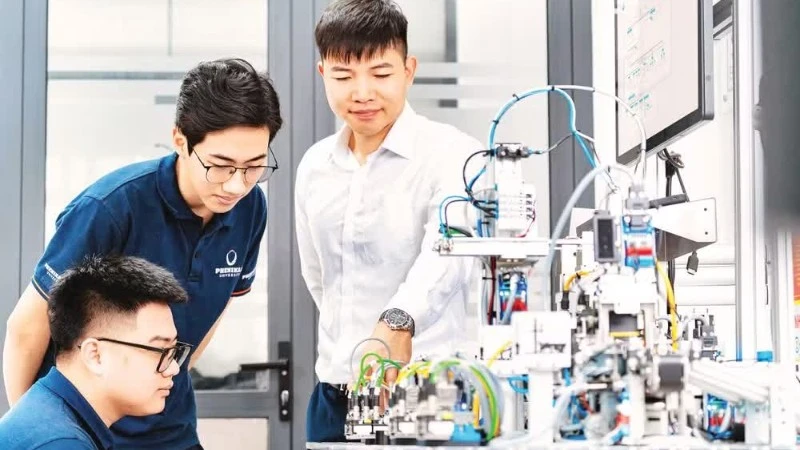
Vietnam Strengthens Ecosystem to Boost Science and Technology Firms
Technology
2026年7月3日
5
Nhan Dan

Vietnam Strengthens Ecosystem to Boost Science and Technology Firms

AI サマリー

Vietnam is facing a critical need to strengthen its support ecosystem and enhance collaboration among the state, researchers, and businesses to foster the growth of science and technology startups, which are currently small-scale with limited resources. While the government is advancing legal frameworks and establishing investment funds, developing professional technology transfer intermediaries remains a key challenge.

The challenges faced by science and technology startups in Vietnam, including limited resources and difficulties in research and development, are coming to the forefront. Experts emphasize that strengthening the ecosystem and enhancing collaboration among the state, researchers, and businesses is crucial for the development of this sector. According to the Authority for Innovation under the Ministry of Science and Technology, Vietnam has approximately 4,000 startups operating in the science, technology, and innovation fields, supported by over 30,000 high-quality employees. By 2025, it is projected that science and technology enterprises will generate revenues exceeding 196 trillion VND (approximately $8 billion USD), with the private sector accounting for 98.5% of these businesses. The Ministry of Science and Technology is advancing legal frameworks and policy mechanisms to complement the Law on Science, Technology, and Innovation. Notably, it has submitted decrees to the government, including Decree No. 268/2025/ND-CP, which legalizes criteria for recognizing innovative startups; Decree No. 264/2025/ND-CP aimed at facilitating venture capital funding; and Decree No. 271/2025/ND-CP, establishing mechanisms for research institutes and universities to form spin-off companies. Furthermore, the decentralization and delegation of authority are being promoted through Decree No. 133/2025/ND-CP, which fully assigns the procedure for recognizing high-tech enterprises to provincial People's Committees. The National Innovation System Development Strategy is being materialized through an action plan for innovation in 2025 and a roadmap towards 2030, alongside the development of innovation center networks in key localities. The science and technology market has also seen significant progress with the launch of the National Science and Technology Trading Floor and data connectivity with 19 local exchanges. However, experts point out that while the number of science and technology firms is substantial, the proportion of large-scale enterprises remains low. Mr. Hoang Duc Thao, Chairman of the Vietnam Association of Science and Technology Enterprises, highlighted the numerous innovations brought by member companies, with some achieving tens of trillions of VND in annual revenue, underscoring their economic potential. Yet, opportunities for breakthroughs are limited due to constraints in technology, capital, human resources, and networks, as well as competition among enterprises with similar objectives. While many research outcomes are confined to laboratory stages, technology firms require proven technologies that can be rapidly commercialized. The scarcity of professional technology transfer intermediary organizations hinders effective collaboration between scientists and businesses, increasing costs, time, and risks for startups accessing new technologies. Many opinions advocate for the development of professional technology transfer intermediary organizations to enhance connections between research institutes, universities, and enterprises. Establishing mechanisms to support enterprises in accessing technology, forming digital technology trading platforms, and creating risk-sharing funds for technology transfer are expected to reduce research costs and share risks during technology refinement and product commercialization. Dr. Dang Duc Anh, Acting Director of the Institute for Policy and Strategy Research (Central Committee's Policy and Strategy Department), stated that to overcome the difficulties faced by science and technology enterprises, it is necessary to strengthen collaboration among regulatory bodies, research institutes, universities, and businesses to promote the transfer and commercialization of research results. Concurrently, mechanisms are needed to support enterprises in investing in research and development, accessing preferential capital, new technologies, and high-quality human resources.

多角的分析

経済的影響

ベトナム政府は、科学技術分野のイノベーションを経済成長の新たな原動力と位置づけ、スタートアップ支援に注力している。しかし、現状では小規模企業が多く、研究開発から商業化に至るまでのバリューチェーンが未成熟である。特に、技術移転の仲介機能の弱さは、イノベーションのスピードを鈍化させる要因となっている。今後、政府による法整備や資金供給に加え、民間主導の専門的な仲介機関の育成が、経済全体の競争力強化に不可欠となるだろう。これは、ベトナムが従来の製造業中心の経済から、より付加価値の高い知識集約型経済へと移行するための試金石となる。

投資家心理

ベトナムの科学技術スタートアップ分野は、潜在的な成長性は高いものの、投資家にとってはリスクも伴う。政府はベンチャーキャピタル育成や法制度整備を進めているが、実証された技術や明確な収益モデルを持つ企業はまだ少ない。投資家は、技術の商業化可能性、経営陣の質、そして市場の成熟度を慎重に見極める必要がある。特に、政府が推進するイノベーションエコシステムの強化策が、どの程度、投資環境の改善に繋がるかが注目点となる。リスク分散のため、政府系ファンドとの連携や、段階的な投資戦略が有効と考えられる。

社会的影響

科学技術分野のスタートアップ企業の成長は、高度なスキルを持つ若年層の雇用創出に直結する。しかし、現状では、研究成果の商業化がうまくいかず、研究者や起業家が十分な機会を得られていない。特に、ハノイやホーチミンなどの都市部では、イノベーションへの意欲は高いものの、資金調達や技術移転の壁に直面している。専門的な技術移転仲介機関の不足は、大学や研究機関で生まれた知見が社会に還元されるプロセスを滞らせ、社会全体の技術リテラシー向上や新たな産業創出の機会を損なっている。地方の大学や研究機関との連携強化も、地域間の格差是正の観点から重要である。

市民の声

ベトナム国民、特に若年層は、新しい技術やイノベーションへの関心が高い。科学技術分野のスタートアップの成長は、より質の高い雇用機会の創出や、生活を豊かにする革新的な製品・サービスの提供につながることが期待される。しかし、現状では、研究開発の成果が社会に十分に還元されず、起業家や研究者が直面する困難は、一部の国民のキャリアパスや将来への希望に影響を与えかねない。政府の支援策が、実際に現場で働く人々や起業家にとって、どれだけ実効性を持つかが問われている。また、大学や研究機関と企業との連携が強化されることで、より実践的な教育や研究が進み、将来の社会を担う人材育成にも寄与することが期待される。

背景・歴史的文脈

ベトナムは1986年のドイモイ(刷新)政策以降、市場経済化を進め、製造業を中心に目覚ましい経済成長を遂げてきた。近年、政府は経済構造の高度化を目指し、科学技術・イノベーションを重視する政策へとシフトしている。2017年には科学技術・イノベーション法が制定され、スタートアップ支援やイノベーションエコシステム構築に向けた法整備が進められてきた。しかし、研究成果の商業化の遅れや、資金、人材、技術移転の課題が長年指摘されており、今回の報道は、これらの課題克服に向けた政府の具体的な取り組みと、依然として残る困難を示唆している。

原文ソース

Nhan Dan

原文を読む