General articles are free for 24 hours after publish.
Vietnam's Youth Face Evolving Labor Market Amidst Transformation: Quality Jobs and Diverse Support Crucial
Vietnam faces a significant challenge with youth unemployment rates far exceeding the national average, while over half of employed youth are in informal sectors with low social insurance coverage. The ILO emphasizes the need for quality job creation and comprehensive support amidst rapid labor market changes.
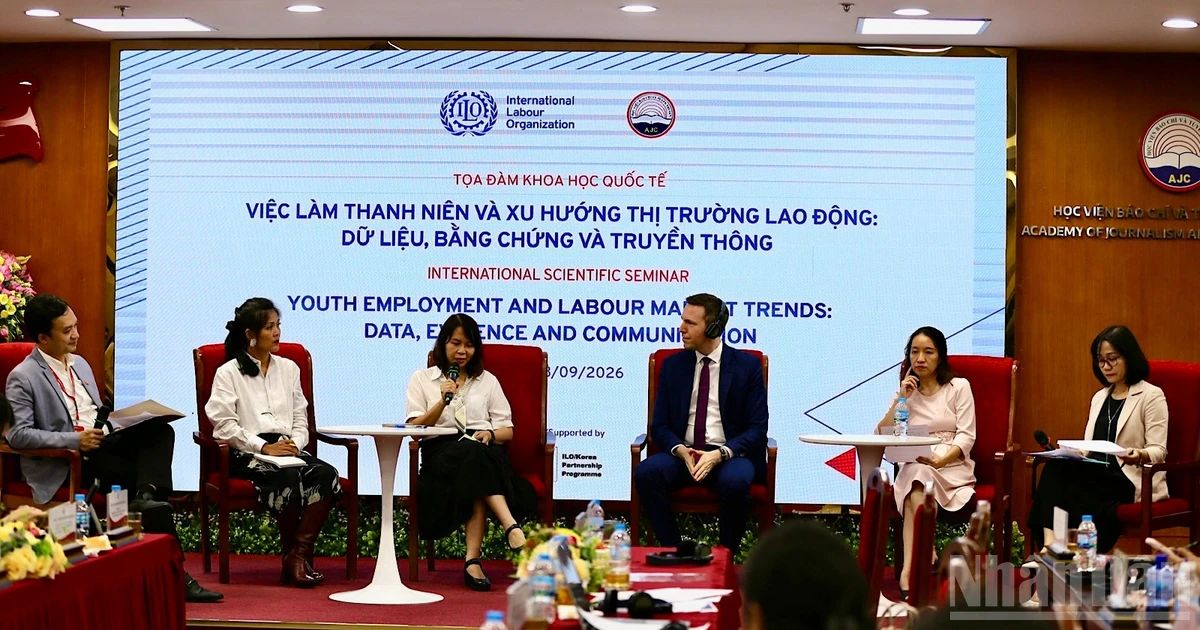
Vietnam's youth are entering a rapidly changing global labor market. Digital transformation, AI, green transition, population aging, and the reorganization of global supply chains are significantly altering recruitment needs, skill requirements, and employment opportunities. This reality poses a challenge not only in creating jobs for young people but also in helping them access productive, decent work that allows them to adapt to the increasingly complex and evolving labor market. At an event held in Hanoi on September 18, themed "Youth Employment and Labor Market Trends: Data, Evidence, and Communication," jointly organized by the International Labour Organization (ILO) Country Office in Vietnam and the Academy of Journalism and Communication (AJC), the need to view the youth employment situation from multiple perspectives beyond just unemployment rates was highlighted. According to the General Statistics Office of Vietnam, the unemployment rate for youth aged 15 to 24 in the second quarter of 2026 was 8.67%, nearly four times higher than the overall unemployment rate for the working-age population. Furthermore, even among employed youth, the quality of employment remains a concern. In 2024, 57.5% of youth employment was in the informal sector, while only 41.4% of young people participated in social insurance. This indicates that many young workers are employed in jobs lacking necessary protection, with limited opportunities for skill enhancement and career development, making them more vulnerable to economic fluctuations. The event also discussed the concept of youth not in employment, education, or training (NEET), an indicator reflecting the difficulties young people face in transitioning from education to the labor market. The green transition clearly presents both opportunities and challenges for youth employment. A study by the ILO and the Institute of Labour Science and Social Affairs (ISOL) titled "Assessing Green Jobs and Career Development Support for Youth in Vietnam" shows that only about 3% of youth in Vietnam are currently employed in green jobs, while over 30% of youth employment has the potential to be converted into green jobs. The General Statistics Office estimates that approximately 1.4 million young people in Vietnam fall into the NEET category in the second quarter of 2026. Globally, this figure reaches about 257 million, equivalent to 20% of the world's youth population, with more than two-thirds being young women, according to the ILO's "Global Employment Trends for Youth 2026" report. Ms. Sinwon Park, Officer-in-Charge of the ILO Country Office in Vietnam, emphasized, "The ILO believes that investing in youth is investing in the future. When young people have access to decent work, are equipped with relevant skills, and have equal and fair opportunities to realize their potential, the benefits extend far beyond the individual. They will contribute to building a more productive workforce, stronger businesses, a more inclusive labor market, and a more sustainable future." The event also underscored the role of journalists, media practitioners, and educational institutions in enhancing public understanding of the labor market and contributing to a more comprehensive and balanced perspective on the opportunities and challenges faced by young people. Associate Professor, Dr. Pham Minh Son, Director of the Academy of Journalism and Communication, shared that media plays a crucial role in helping the public better understand the labor market opportunities and challenges that young people are encountering. Equipping journalism students and media professionals with the knowledge and skills to effectively exploit and use labor market data is one of the Academy's important tasks, and cooperation with the ILO contributes to enhancing this capacity. The ILO Country Office in Vietnam will continue to collaborate with the Ministry of Labour - Invalids and Social Affairs, the General Statistics Office, AJC, and relevant partners to strengthen evidence-based communication on the future of employment. Source: Nhan Dan
Original source
Nhan Dan