General articles are free for 24 hours after publish.
Long Thanh Airport area eyes Asia's aviation hub status with new development goals
Vietnam has set development goals for Dong Nai Province, home to Long Thanh International Airport, aiming to transform it into Asia's premier aviation hub by 2035 and a key regional supply chain link.
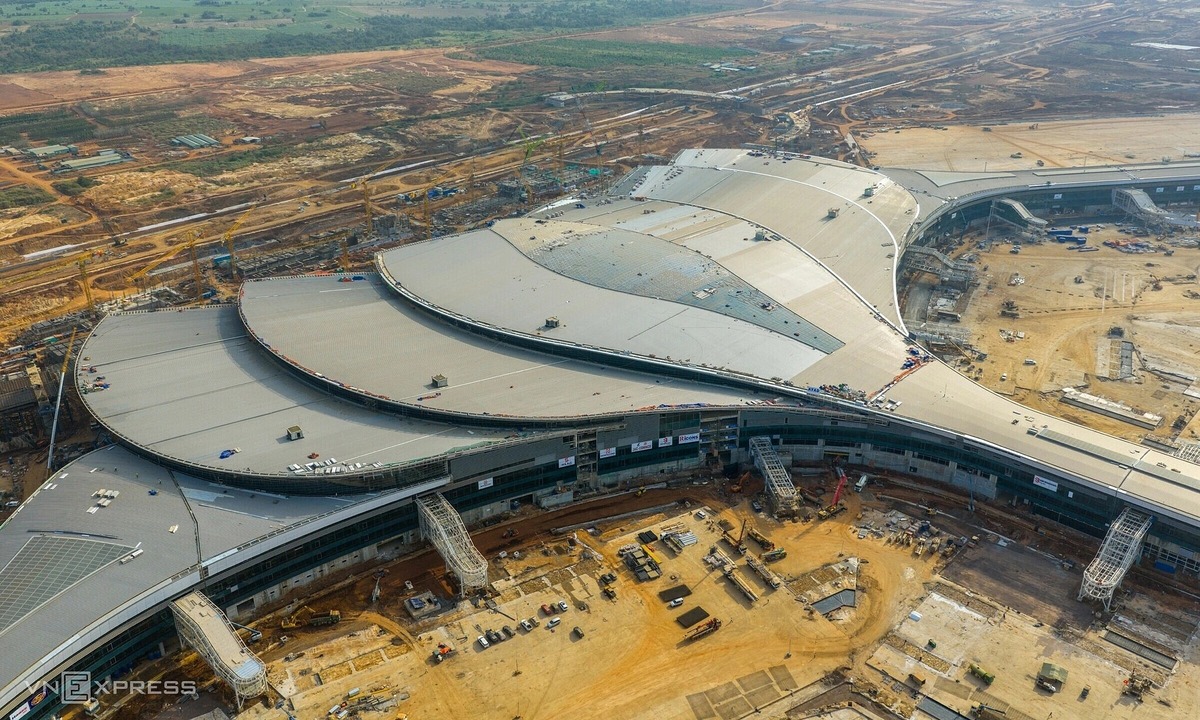
Party General Secretary and State President To Lam signed Resolution 16 on July 21 that sets development goals for Dong Nai City through 2035, with a vision extending to 2065. Long Thanh International Airport sits about 40 km east of Ho Chi Minh City and is being built at a cost of VND336.63 trillion ($12.8 billion). It is scheduled for commercial operation from Dec. 1. State operator Airports Corporation of Vietnam has said it wants Long Thanh to grow into a regional transit hub able to reclaim the long-haul connecting traffic now flowing through Singapore, Bangkok and Kuala Lumpur. The airport will open with capacity for 25 million passengers a year and is planned to reach its 100-million design ceiling only in later phases. The resolution identifies Long Thanh as Vietnam's principal international aviation gateway and transit hub, and a key link in regional and global supply chains. The Long Thanh-Nhon Trach area is to be built into an airport city of about 2.5 million people. Dong Nai targets average annual GRDP growth of at least 10% from 2026 through 2045, easing to at least 8% between 2046 and 2065. GRDP is set to reach about $44 billion in 2030, $70 billion in 2035, $150 billion in 2045 and $600 billion in 2065. Per capita figures at those milestones are $9,200, $13,000, $23,000 and $67,500. The digital economy is to account for at least 40% of GRDP by 2035. By 2035 the city is to take shape as a green, smart, riverside airport city with multiple centers. It is also to become an internationally standard base for high-tech industry, aerospace manufacturing and the aviation economy. The Politburo called for broad decentralization to the city's People's Council, People's Committee and People's Committee chairman in every area except defense, security, foreign affairs and religion. Dong Nai will study special mechanisms similar to those granted to Ho Chi Minh City. They cover investment, finance, budget, land, construction, planning, science and technology, innovation, digital transformation and high-quality human resources. The city is to develop special economic zones, free trade zones, concentrated digital technology zones, innovation zones and a higher education zone tied to the Long Thanh airport city. Investment mechanisms will target aviation, high technology, semiconductors, logistics and finance. Preferential policies will be used to attract strategic investors, core technology projects, and experts, chief engineers and chief architects from Vietnam and abroad. The resolution requires a citywide master plan built on breakthrough thinking and a 100-year horizon, organized around four strategic development corridors. Ho Chi Minh City-Bien Hoa-Long Thanh-Phuoc An Port links aviation, seaports, logistics and modern services. Bien Hoa-Dau Giay-Tan Phu-Central Highlands covers industry, agriculture, ecotourism and energy. Long Thanh-Lam Dong-south central region-Central Highlands connects aviation with seaports and the highlands. Phuoc Long-Dong Xoai-Chon Thanh-Hoa Lu-Cambodia-mainland ASEAN targets cross-border logistics and supporting industries. The Politburo also ordered policies to make Dong Nai one of the country's leaders in technology infrastructure, data centers, artificial intelligence and cloud computing. Semiconductors, quantum technology, biotechnology, new materials and digital infrastructure are named alongside them, with the aim of building a technology ecosystem competitive regionally and internationally. Under the 2065 vision, Dong Nai becomes a globally connected city ranked among the world's multifunctional airport cities, with quality of life and happiness levels among the highest in the world. Dong Nai is home to Vietnam's first industrial zone, established in May 1963 as the Bien Hoa Industrial Estate. After absorbing neighboring Binh Phuoc in July 2025, the city holds the country's largest industrial park footprint. Its zones employ close to 600,000 people and drew more than $3.3 billion in foreign investment last year. That first zone, now called Bien Hoa 1, is closing. The government approved converting it into a commercial and residential district in 2009, and land recovery is complete. Source: VnExpress International
Original source
VnExpress International