General articles are free for 24 hours after publish.
Bangkok Data Centers Under Scrutiny for Alleged Regulatory Violations
The Bangkok Metropolitan Administration and the Ministry of Digital Economy and Society are investigating data centers in Bangkok potentially operating in unpermitted areas. Enforcement action may follow if violations are confirmed.
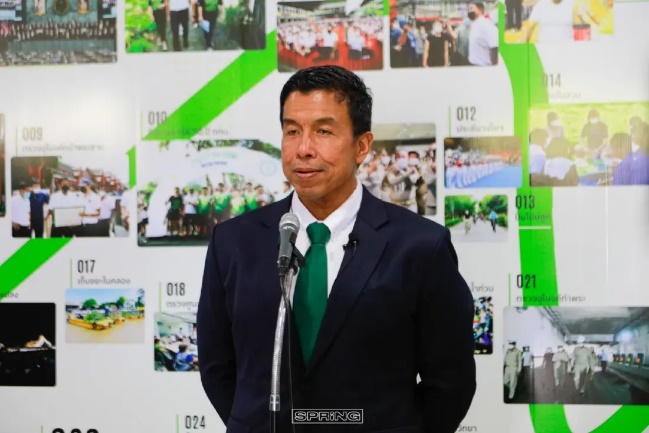
September 2, 2026 Economic News Data Center in Bangkok? Reports of data centers in Bangkok have created a lot of stir with the opposition jumping to blame the Bangkok Metropolitan Administration and also the Ministry of Digital Economy and Society (DES). Thailand’s Digital Economy and Society (DES) Ministry is investigating data centres in Bangkok that may have been built or operated in areas where such facilities are not legally permitted. DES Minister Chaichanok Chidchob, who said officials are checking the locations and their compliance with relevant regulations. The main issue is whether these data centres have obtained the necessary approvals and whether their locations comply with zoning and other legal requirements. The probe could lead to enforcement action if violations are confirmed. The revelation has prompted Bangkok Governor Chadchart Sittipunt to come out to say that he will make an announcement at 11:00 hrs today. The issue that Chadchart will talk about at Bangkok City Hall to address the controversial “data center” project in the heart of the city. Representatives from the National Economic and Social Development Council (NESDC), the Department of Energy Business, and the Ministry of Energy will also be present to clarify concerns raised by Bangkok MP Supanat Meenchai-anan of the People’s Party. These concerns include the risks associated with the data center, issues with diesel fuel storage for backup generators, environmental impact, heat generation, competition for water and electricity resources, safety concerns, legal loopholes, and the verification of proper permits. Infrastructure Development Plans for South Thailand Prime Minister Anutin Charnvirakul announced Cabinet approval for 4 ‘quick win’ economic and infrastructure projects targeting Thailand’s 5 southern border provinces following a mobile Cabinet meeting in Hat Yai. The major initiatives include a 106-billion-Baht second phase of the dual-track rail system connecting the region to Malaysia, the construction of bridges linking mainland Krabi to Lanta Island and spanning Songkhla Lake. Flood / Earthquake Insurance for 30 million households The government is set to insure as many as 30 million households across the country for up to 100,000 Baht/household. This comes as various parts of the country have been experiencing floods ravage the property and the state has to fork out compensation each time such incidents happen. Each household will have a maximum insurance coverage at 100,000 Baht, with the taxpayer covering the insurance premiums, estimated at about 15.5 billion Baht annually. In case of death, the insured will be compensated with 2 million Baht, with the initial amount to be paid within 15 days and the rest in the next 15 days. Finance Minister Ekniti Nitithanprapas announced a comprehensive 6-area economic package for 5 southern border provinces—Songkhla, Satun, Pattani, Yala, and Narathiwat—which includes 5-year business loans at a fixed 1.5% annual interest rate, alongside interest-free periods for flood-affected firms. The initiative encompasses major infrastructure and trade upgrades, such as dredging the Songkhla and Pattani ports, waiving border checkpoint overtime immigration fees, integrating customs systems, and extending Board of Investment incentives for three years. Additionally, the government plans to update regional town planning and promote local gastronomy and community tourism to spur economic recovery. Protest for more rights in south development More than 1,000 residents from the Chana Model Community gathered at the Kho Hong Town Municipality office in Songkhla on Tuesday to submit five key economic and environmental demands regarding the Chana Industrial Estate project to Prime Minister Anutin Charnvirakul ahead of a mobile Cabinet meeting. The petition was received in person by Deputy Prime Minister Phiphat Ratchakitprakarn, the proposals call for community licensing of a 1,100-megawatt power plant, a minimum 30% local hiring quota, a majority-community environmental oversight board, localized tax returns, and active participation in local CSR initiatives, backed by a warning that the community will oppose the project if their conditions are ignored. Phiphat accepted the demands on behalf of the government—noting that the power plant licensing requires further legal review—and emphasized that prioritizing local employment would boost economic development and retain youth across the southern border provinces. Airport Link and its never-ending saga with CP Group Transport Minister Phiphat Ratchakitprakarn gave an update on efforts to resolve issues concerning the Airport Rail Link project after the private party headed by CP Group, submitted a letter seeking to exercise its right to stop operating the train operations after September 30. To prevent possible disruption to passenger services, the governor of the State Railway of Thailand (SRT) is in discussions to find a way forward. One preliminary option is to negotiate an extension of train operations for about 2 to 3 months, allowing time to prepare for the transition. The SRT could then consider placing the project under the management of its subsidiary, S.R.T. Electrified Train Company Limited (SRTET). If the private party confirms that it will return the project as originally scheduled, the SRT is ready for SRTET to assume management immediately to ensure continuity of train services. State Enterprises Remit 197 billion Baht to Ministry of Finance as Vayuakij Dividends Surge During the first 11 months of fiscal year 2026, Thailand’s State Enterprise Policy Office (SEPO) announced that state enterprises remitted 197,356 million Baht in state revenue to the treasury, exceeding the target of 182,600 million Baht. Total revenue is expected to surpass 200,000 million Baht by the end of the fiscal year. Key financial drivers include a significant surge in dividends from the Vayuakij Fund, projected at nearly 20,000 million Baht, alongside higher dividend payouts from PTT Public Company Limited and other firms. The Government Lottery Office maintained its position as the top revenue contributor for the tenth consecutive year, delivering 47,388 million Baht. Other leading contributors included PTT and the Vayuakij Fund. Meanwhile, state enterprise investment budget disbursements reached 218,352 million Baht, or 92.19% of the budget framework, with SEPO aiming to reach 95.40% by the end of September 2026 to stimulate the economy. SEPO also advanced public-private partnership (PPP) initiatives, securing approval for five projects worth 14,023 million Baht during the 11-month period. These include motorway rest areas, a proton cancer therapy center at Thammasat Hospital, and a port project at Laem Chabang. SEPO is additionally exploring Green PPP guidelines to support national Net Zero objectives. The Fuel Fund Management Committee has resolved
Original source
Thai Enquirer