General articles are free for 24 hours after publish.
Vietnamese National Assembly Chairman Pays Homage to President Ho Chi Minh
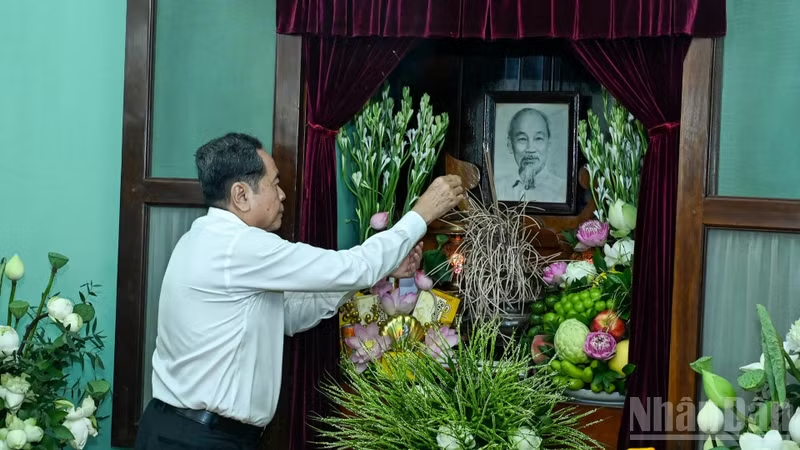
Vietnamese National Assembly Chairman Tran Thanh Man paid homage to President Ho Chi Minh ahead of the National Day. This symbolic act by the Communist Party leadership underscores respect for the leader who laid the foundation for national independence and development.
Vietnamese National Assembly Chairman Tran Thanh Man paid homage to President Ho Chi Minh at the 'House 67' in the Ho Chi Minh Mausoleum complex in Hanoi on September 2nd, ahead of the 81st anniversary of the August Revolution and the National Day. This act of remembrance underscores the significance of President Ho Chi Minh as the founding father of Vietnam. The commemoration is a way to honor the legacy of President Ho Chi Minh, a crucial leader in Vietnam's journey of independence and development. Within Vietnam's one-party system, such symbolic actions by the leadership play a vital role in maintaining national legitimacy and fostering public unity. Chairman Tran Thanh Man, a Politburo member and the head of the National Assembly, led this tribute, indicating that Vietnam's political leadership prioritizes the historical significance of the nation's founding and consistently demonstrates respect for President Ho Chi Minh as a spiritual pillar for the people. Reports also indicated that delegations from the Central Military Commission and the Ministry of National Defence, as well as Military Region 9, also paid tribute to President Ho Chi Minh. Furthermore, General Secretary and State President To Lam was reported to have paid homage to President Ho Chi Minh in Hanoi, suggesting a nationwide atmosphere of respect for the leader during this period. These commemorative events serve as an opportunity for Vietnam to reaffirm its national identity and the leading role of the Communist Party, even as the country continues its economic growth. Particularly amidst complex relations with China and the ongoing challenge of maintaining and accelerating domestic economic development, respect for past great leaders is considered a spiritual anchor for promoting national unity and confirming the path forward.
Original source
Nhan Dan