General articles are free for 24 hours after publish.
Can Tho City Expands Cultural and Trade Exchange with Japan, Seeking New Cooperation Opportunities
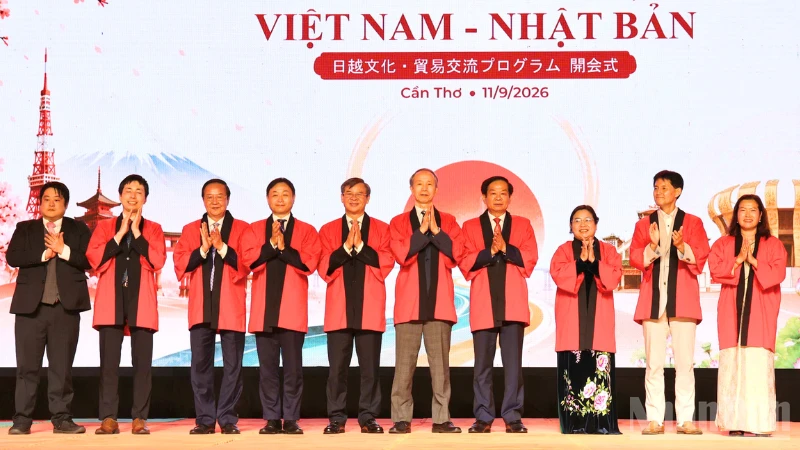
A Vietnam-Japan Cultural and Trade Exchange Program has opened in Can Tho City, Vietnam. Businesses from both countries aim to build partnerships and promote investment, while cultural exchanges deepen mutual understanding. Advancements in infrastructure development are expected to boost economic ties between the two nations.
The "Vietnam-Japan Cultural and Trade Exchange Program 2026" has opened in Can Tho City, a central hub in Vietnam's Mekong Delta region. This program provides an opportunity for businesses from both countries to find new partners, promote trade and investment, and strengthen cultural exchange and people-to-people connections. Held from September 11 to 13, the event features over 100 booths and a series of activities focused on cultural exchange, trade, and cooperation. It serves as an excellent platform for businesses to showcase products, promote brands, seek partners, and explore new collaboration opportunities. Truong Canh Tuyen, Chairman of the Can Tho City People's Committee, stated that since its inception in Can Tho in 2015, the program has, through six successful iterations, grown into a significant diplomatic, cultural exchange, and cooperation promotion activity, bridging governments, organizations, businesses, and citizens of both nations. A notable aspect of this year's program is the integration of cultural exchange with economic connectivity. Through trade activities, product promotions, business exchanges, and showcasing regional potential, Can Tho City anticipates expanding cooperation opportunities in areas where both sides possess strengths. Japan is currently one of Can Tho City's key partners, and economic relations are expanding with 13 FDI projects totaling approximately $1.655 billion USD. From January to August 2026, Can Tho's exports to Japan exceeded $142 million USD, indicating substantial room for further expansion of trade links between the two countries. Ono Masuo, Consul General of Japan in Ho Chi Minh City, praised the cooperative relationship with Can Tho, which has been cultivated across various sectors including infrastructure, agriculture-fisheries, environment, human resource training, and education. He noted the progress in highway network development in recent years, enhancing Can Tho's connectivity with Ho Chi Minh City and other southern provinces. Continued implementation of major transportation projects is expected to improve regional connectivity, thereby supporting logistics, market access, and investment attraction. The Japanese side anticipates that infrastructure projects, such as the proposed high-speed railway, will further strengthen regional linkage. Convenient transportation infrastructure is considered a crucial condition for promoting trade, logistics, investment, and tourism between Can Tho City and Japan. Beyond trade and investment, this year's program allocates space for people from both countries to learn about each other's cultures, people, and lives. Activities include introductions to traditional costumes and cuisine, alongside promotions of popular Vietnamese and Japanese culture. This aims not only to create business opportunities but also to foster greater understanding and connection between the communities of the two nations. A new highlight is a walking parade in traditional costumes, with approximately 1,000 participants. This activity contributes to spreading Vietnam-Japan friendship, demonstrating community responsibility, and supporting disadvantaged children. From an exchange activity initiated in Can Tho in 2015, the program is increasingly expanding its connecting role. By integrating culture with trade, investment, and people-to-people exchanges, it creates direct contact channels, enabling businesses and partners to better understand needs and cooperation potential. Amidst the growing relationship between Vietnam and Japan, and leveraging Can Tho's advantages in location, agriculture, fisheries, human resources, and infrastructure, the 2026 program is expected to broaden the partner network, transforming encounters into long-term business, investment, and linkage opportunities, thereby creating added value for the community.
Original source
Nhan Dan