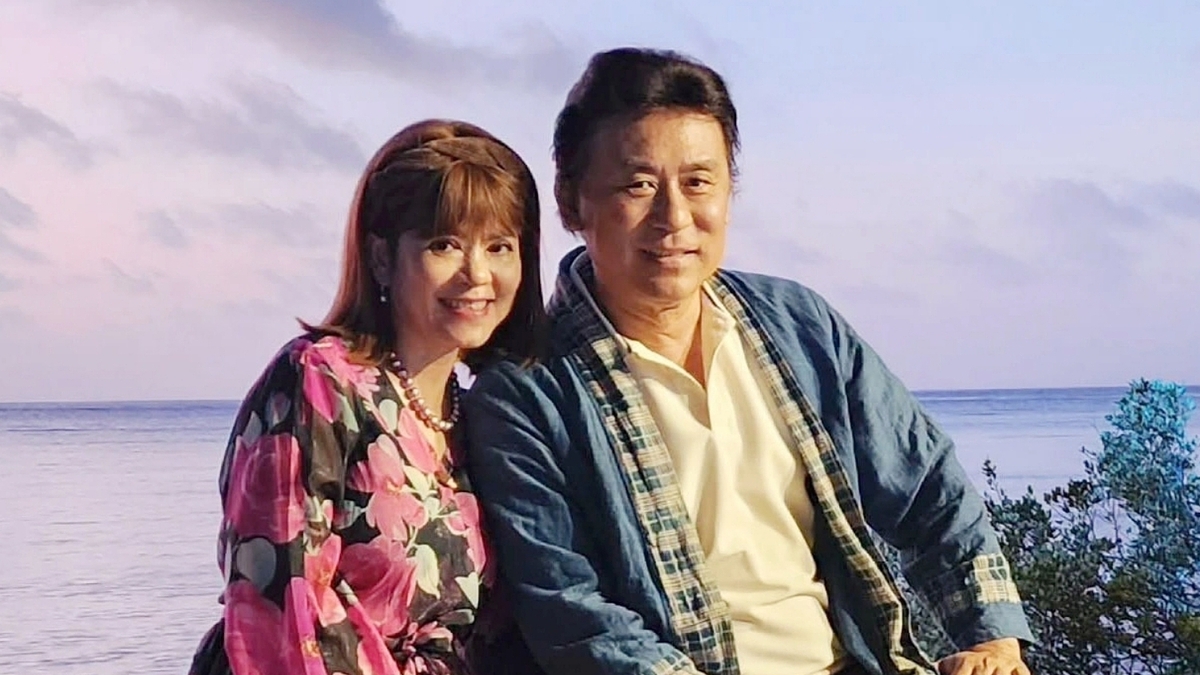
Vietnamese Actress Bach Van, Wife of People's Artist Ta Minh Tam, Passes Away at 64
Bach Van, a prominent Vietnamese actress and wife of People's Artist Ta Minh Tam, known for her roles in the 1980s theater scene, has passed away at the age of 64. She was celebrated for her authentic performances, particularly her role in 'The Sea Storm.' The Vietnamese theater community mourns the loss of a talented artist.
Bach Van, a renowned Vietnamese actress and wife of People's Artist Ta Minh Tam, who was a prominent figure on the theater stage in the 1980s, has passed away at the age of 64. Singer Ta Minh Tam announced that his wife died on July 4 in Ho Chi Minh City after a period of illness. He posted a notice on his personal page, sharing the sad news: "My beloved, diligent, and faithful life partner." Their daughter, Ta Bach Duong, bid farewell: "Mom lived a wonderful life. Now, Mom, smile and go to Buddha, free from pain. We will meet again. Thank you so much, Mom." The funeral was held at their home in Tan Thuan Ward, Ho Chi Minh City, from September 5-9. She was later buried in her hometown in Phu Tan Ward, Vinh Long Province (formerly Chau Thanh District, Ben Tre). Numerous colleagues and students, including artist Viet Anh, singer Vo Ha Tram, and actress Kha Ly, sent their condolences to the family. Director Thanh Hiep, Head of the Theory and Criticism Department at the Ho Chi Minh City Theatre Association, who had met and seen Bach Van perform on many occasions, praised her authentic portrayals. He noted that she was a highly anticipated face of the Kim Cuong Theatre troupe. "She excelled in every role, performing with charm, transforming her characters, and conveying deep inner emotions. Therefore, despite primarily playing supporting roles, she still left a lasting impression. I was most impressed by her role as a girl in distress during a storm, rescued by the youth union in the play 'The Sea Storm,'" the director said. The artist was born in 1962 and studied at the School of Theatre and Cinema Arts 2 (now Ho Chi Minh City University of Theatre and Film). From 1979 to 1980, she joined the Kim Cuong Theatre troupe, a leading theater brand established by People's Artist Kim Cuong. She often played supporting roles in plays such as 'The Abyss of Height,' 'The Sea Storm,' 'The Late Passenger,' 'Legend of Mother,' and 'She is My Child.' At that time, she was contemporary with actors Bich Lan, Phuong Dung, Minh Hanh, and Thuy Chinh. The couple met as university students while living in the same dormitory. Ta Minh Tam once shared that he was afraid he wouldn't be able to marry Bach Van because she was beautiful, talented, and had many admirers. In his memory, during their early married life, they often rode a bicycle together, with him singing and her acting. Due to difficult circumstances, Bach Van chose to step back to support her husband and care for their children. They have two daughters, one of whom, Ta Minh Anh, born in 1997, inherited her passion for music and studies piano at the Ho Chi Minh City Conservatory of Music. "She loved me very much, and conversely, I was fortunate to have a wife like her. We met when we were young and came together not out of impulsiveness or recklessness. That is what is truly precious," he once said. Artist Ta Minh Tam was born in 1960 in An Giang Province. He is a famous singer of chamber music and received the title of People's Artist in 2019. He served as the Deputy Director of the Ho Chi Minh City Conservatory of Music for the 2014-2020 term. Besides singing, he has worked as an MC, a judge for many music competitions, and acted in films such as 'White Blouse' (2002), 'Journalist' (2006), and 'Super Troublemaker' (2019).
多角的分析
This news, focusing on the passing of a cultural figure, has no direct economic impact. However, it indirectly touches upon the economic contributions of artists to Vietnam's cultural sector. The careers of artists like Bach Van and Ta Minh Tam, and the institutions they were part of (like the Kim Cuong Theatre and the Ho Chi Minh City Conservatory of Music), represent a segment of the creative economy. Their ability to pursue their art is often dependent on societal stability and economic prosperity, which Vietnam has been experiencing significant growth in.
This news has no direct relevance to investors. The passing of an artist, while a significant event in the cultural sphere, does not typically affect financial markets or investment decisions. Investors focus on macroeconomic trends, company performance, and geopolitical stability, none of which are directly impacted by this obituary.
The passing of Bach Van highlights the societal value placed on arts and culture in Vietnam. Her dedication to her craft, even in supporting roles, and her choice to prioritize family while enabling her husband's career, reflects traditional values of partnership and sacrifice. The outpouring of condolences from colleagues and students underscores the importance of artistic communities and the legacy artists leave behind. Her story also touches on intergenerational transmission of talent, with her daughter pursuing music. The narrative of artists balancing demanding careers with family life is a common theme in Vietnamese society.
For citizens, especially those who followed Vietnamese theater in the 1980s, Bach Van's passing is a personal loss, a reminder of cherished cultural memories. Her story, from her early days in student dormitories to her stage career and family life, resonates with many Vietnamese who have navigated similar challenges of balancing ambition with domestic responsibilities. The emphasis on her supportive role to her husband and her dedication to family reflects a widely shared value in Vietnamese society. Her daughter's pursuit of music also represents the aspirations of younger generations to continue artistic legacies.
背景・歴史的文脈
The news of Bach Van's passing is situated within the context of Vietnam's rich theatrical history, particularly the vibrant period of the 1980s. The Kim Cuong Theatre, where she rose to prominence, was a significant cultural institution during a time when state-sponsored arts played a crucial role in shaping national identity and providing entertainment. Her marriage to People's Artist Ta Minh Tam also places her within a prominent artistic family, illustrating the intergenerational transmission of talent and the deep roots of artistic careers in Vietnam. The narrative of her career, including her choice to prioritize family, reflects evolving societal expectations for women, even within artistic professions, and the enduring importance of familial support in achieving success.
原文ソース
VnExpress