Marcos Jr. Criticizes China's Sanctions on Defense Chief, Stresses Dialogue
Philippine President Ferdinand R. Marcos, Jr. denounced China's sanctions on Defense Secretary Gilberto C. Teodoro, Jr. as "very unhelpful," stating they escalate tensions rather than manage South China Sea disputes. He emphasized the necessity of maintaining dialogue channels and expressed concern over potential policy shifts by future administrations.
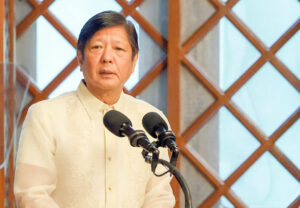
PRESIDENT Ferdinand R. Marcos, Jr. on Sunday criticized China’s decision to sanction Defense Secretary Gilberto C. Teodoro, Jr., calling the move “very unhelpful” and saying it raises tensions instead of helping manage disputes in the South China Sea. “The declaration by Beijing of Secretary Teodoro as persona non grata… is very unhelpful, in my view,” Mr. Marcos said in a livestreamed media briefing from Vancouver at the end of his official visit to Canada on Sunday, Manila time. He said the sanctions do little to advance efforts to resolve maritime disputes and instead increase the risk of miscalculation, adding that while China has the prerogative to make such decisions, the Philippines will continue keeping communication channels with Beijing open. Mr. Marcos said cutting off communication between the two countries’ defense establishments is counterproductive, although Manila remains committed to maintaining dialogue through government, commercial and people-to-people exchanges. He also expressed concern that future Philippine administrations could adopt a different approach to defending the country’s maritime claims after his term ends in 2028. “If you’re asking me if I’m worried that the policy of the Philippines will change after I leave office, of course I am,” he said. “It’s almost an existential issue for us.” The remarks came ahead of the 10th anniversary of the July 12, 2016 arbitral ruling, in which an international tribunal constituted under the United Nations Convention on the Law of the Sea voided China’s sweeping claims over most of the South China Sea and affirmed the Philippines’ maritime entitlements in the West Philippine Sea. Beijing has rejected the ruling, while Manila continues to invoke it in asserting its maritime rights. Separately, the Stratbase Institute called on the government to accelerate the modernization of the Armed Forces of the Philippines (AFP), saying the country should complement its legal victory with stronger defense capabilities. “The arbitral award gave the Philippines legal standing; the next decade must deliver strategic strength,” Stratbase Institute President Victor Andres “Dindo” C. Manhit said in a statement. He said the government should fully implement the comprehensive archipelagic defense concept by developing a technologically capable multi-domain military able to operate across land, sea, air, cyber and information domains. Mr. Manhit also said protecting the country’s interests requires a whole-of-society approach involving the government, civil society, academia, the private sector, religious groups, media and international partners. The institute cited a 2025 Pulse Asia survey showing that strengthening the AFP and Philippine Coast Guard ranked as Filipinos’ top priority in defending the country’s maritime rights, ahead of expanded security partnerships, joint patrols and military exercises with allies. It also cited a May 2026 survey showing that 86% of Filipinos support the government’s efforts to defend the West Philippine Sea alongside like-minded countries in line with the 2016 arbitral ruling. “The survey results show that Filipinos understand that defending the West Philippine Sea requires more than legal arguments and diplomatic statements,” Mr. Manhit said. — Erika Mae P. Sinaking and Pexcel John Bacon
多角的分析
中国による国防相への制裁は、直接的な経済的影響は限定的であるものの、フィリピン経済の安定性に対する間接的なリスクを高める可能性がある。特に、フィリピン経済は海外からの投資や貿易に依存しており、地政学的な緊張の高まりは投資家のセンチメントを悪化させ、資本流出を招く恐れがある。また、南シナ海における緊張は、漁業や海上輸送といった関連産業にも影響を与えうる。
投資家にとって、今回の制裁措置はフィリピンの地政学リスクの増大を示すシグナルと捉えられる。特に、南シナ海問題は、フィリピンが依存する地域経済の安定性に直結するため、投資判断において慎重な姿勢を促すだろう。将来的には、軍備近代化への投資が増加する可能性もあるが、それ以上に、対話の維持と緊張緩和に向けた外交努力が、投資環境の改善に不可欠となる。
国防相への制裁は、フィリピン国民の愛国心を刺激し、中国に対する警戒感を一層強める可能性がある。西フィリピン海における海洋権益の防衛は、国民の関心が高い課題であり、政府の対応が国民の支持を得る上で重要となる。ストリートベース・インスティテュートの調査が示すように、国民は軍備強化と国際協調の両方を求めており、政府はこうした国民の期待に応える必要がある。特に、地方の漁業コミュニティなど、直接的な影響を受ける人々にとっては、安全保障と生活の安定が切実な問題となる。
今回の中国による制裁は、フィリピン国民の愛国心を刺激し、中国に対する不信感を一層強める可能性があります。特に、西フィリピン海(南シナ海)の権利を守ることは、多くのフィリピン人にとって国家の尊厳に関わる問題です。ストリートベース・インスティテュートの調査で、国民が軍備強化と国際的な連携を重視していることが示されているように、政府には国民の安全保障への関心の高さを理解し、それに応える政策が求められています。地方の漁師や海上輸送に関わる人々にとって、南シナ海の安定は生活に直結するため、この問題の行方は彼らの生活に大きな影響を与えます。
背景・歴史的文脈
フィリピンと中国の間で、南シナ海(フィリピンでは西フィリピン海と呼ばれる)における海洋権益を巡る対立は長年続いている。特に、中国が一方的に主張する「九段線」は、国際法上の根拠がなく、フィリピンを含む周辺国の権益を侵害するものとして、国際社会から批判を受けている。2016年の仲裁判断は、フィリピンにとって法的な勝利であったが、中国はこの判断を拒否し、物理的な実力行使を続けている。フィリピンは、米国との安全保障条約に基づき、米国からの支援を受けているが、国内では軍備近代化や外交戦略の強化が喫緊の課題となっている。今回の国防相への制裁は、こうした複雑な背景の中で、両国関係がさらに緊張する一因となっている。
原文ソース
BusinessWorld Nation