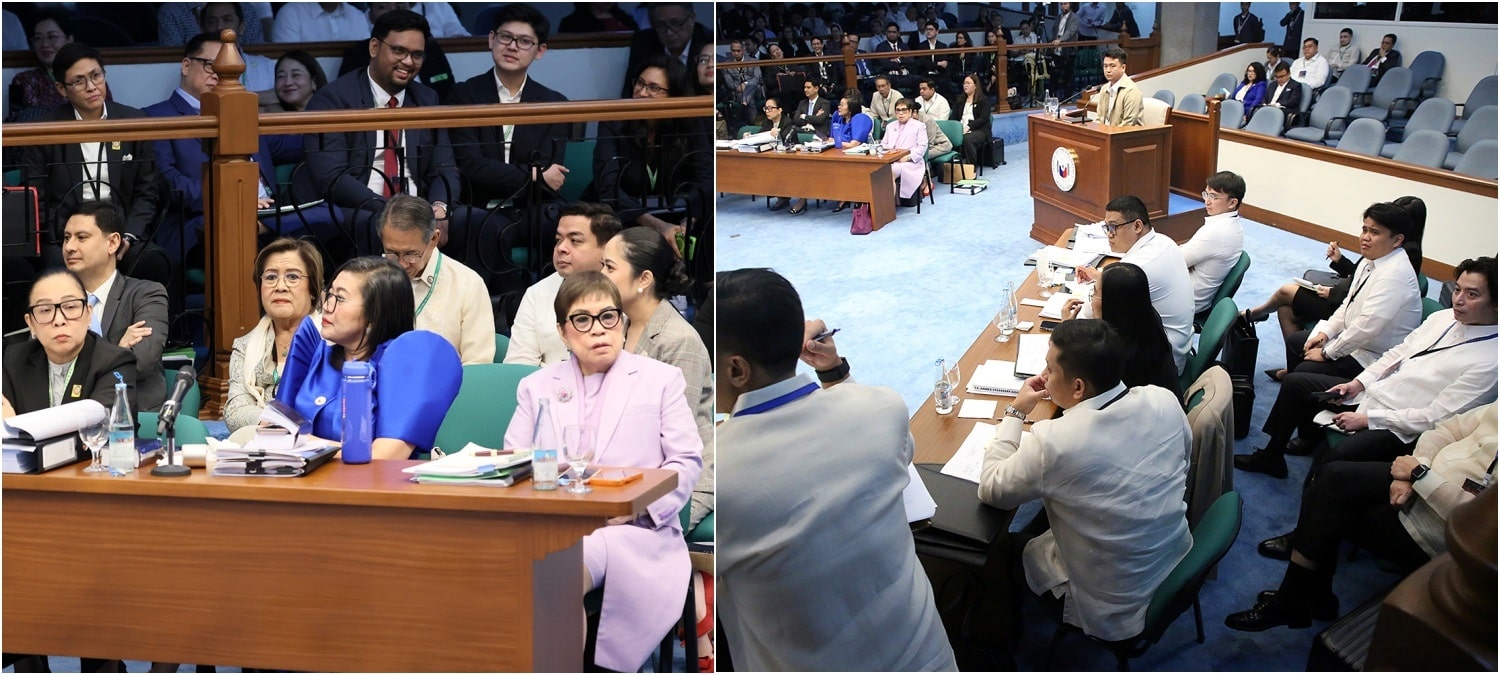
Impeachment trial of VP Sara Duterte enters evidentiary phase over alleged plot to kill Marcos
Politics
2026年7月8日
7
Inquirer NewsInfo

Impeachment trial of VP Sara Duterte enters evidentiary phase over alleged plot to kill Marcos

AI サマリー

The impeachment trial of Philippine Vice President Sara Duterte has entered its evidentiary phase, with prosecutors presenting a witness to support allegations of "grave threats," including an alleged plot to assassinate President Marcos. Prosecutors also plan to summon Duterte herself as a "hostile witness."

MANILA, Philippines — The impeachment trial of Vice President Sara Duterte entered its evidentiary phase on Tuesday as House prosecutors presented their first witness to support allegations that she issued grave threats against President Marcos. They also disclosed plans to summon Duterte herself as a “hostile witness.” Day 2 of the proceedings before the Senate impeachment court was mostly spent hearing from National Bureau of Investigation Senior Agent John Mark Calilung, whose testimony drew repeated objections from Duterte’s defense over his credentials and the documents and video evidence he was made to verify. House prosecutors opened their case under Article IV of the four articles of impeachment, which accuses Duterte of culpable violation of the Constitution by issuing grave threats and plotting the assassination of President Marcos, first lady Liza Araneta-Marcos and former Speaker Martin Romualdez. In his opening statement, House prosecutor and Iloilo Rep. Lorenz Defensor said the panel opted to begin with the grave threats charge for being the strongest allegation against the Vice President. READ: Sara Duterte’s ‘kill threat’ video clip presented in impeachment trial “The words and actions of the Vice President should not be considered as a simple crime under the law, but an outright violation of the Constitution,” Defensor told the senator-judges, stressing that the threats carried greater constitutional significance because they came from the country’s second highest official. Calilung, a cybercrime investigator at the NBI, testified on the bureau’s investigation into Duterte’s Nov. 23, 2024, online press conference that she held at the height of congressional inquiries into her alleged misuse of confidential funds. READ: Duterte’s lead counsel Sheila Sison called out twice for rule violation He explained how the NBI collected, preserved and authenticated the video recordings and related digital evidence. Prosecutors played a two-minute excerpt from Duterte’s more than two-hour online press conference, originally streamed through former presidential spokesperson Harry Roque’s Facebook page. In the video, Duterte declared that she had instructed someone to kill President Marcos, the first lady and Romualdez should she herself be assassinated. She said in the video: “Don’t worry about my security because I already spoke with someone. I told him if I get killed, kill BBM, Liza Araneta and Martin Romualdez. No joke. No joke. I already gave the order. If I die—I said, ‘Don’t stop, okay? Until you kill them,’ and he said ‘yes.’” Another video presented in court showed Duterte during an Oct. 18, 2024, press conference saying she imagined cutting off the President’s head and threatening to exhume the remains of former President Ferdinand Marcos Sr. and throw them into the West Philippine Sea. Calilung testified that both statements referred to President Marcos and reflected the worsening relationship between the Marcos and Duterte camps months before the November press conference. Private prosecutor Amando Virgil Ligutan said the videos were not being offered solely to prove a criminal offense but to establish Duterte’s intent and state of mind. “These statements prove one thing: there was already a plan, a system, and knowledge on the part of the Vice President of what she wanted to do to the President,” Ligutan said. He maintained that prosecutors were relying on established rules of evidence allowing a person’s statements and utterances to demonstrate intent. Throughout the presentation, however, Duterte’s defense team repeatedly challenged both the witness and the prosecution’s evidence, resulting in lengthy exchanges. Defense lawyer Carlo Joaquin Narvasa first sought to disqualify Calilung, arguing that the NBI agent was not among those identified in the original Saballa and Cabrera complaints that formed the basis of the impeachment proceedings and was likewise absent from the transmitted articles of impeachment. Narvasa also cited a pending petition before the Supreme Court questioning the prosecution’s authority to present evidence allegedly outside the original complaints. Ligutan countered that the complaints had already served their purpose and that Calilung had been properly identified in the prosecution’s pretrial submissions. Presiding officer Sen. Francis “Chiz” Escudero denied the motion, citing the Supreme Court ruling in Enrile v. Sandiganbayan, which allows prosecutors to present evidence disclosed during pretrial even if it was not specifically identified in the original complaint. “The court, in general, will not shackle the prosecution by limiting it to the evidence mentioned in the information and/or the articles, especially if it has been mentioned in the pretrial brief,” he ruled. Narvasa likewise objected to the presentation of only selected portions of Duterte’s Nov. 23 press conference, insisting the entire two-hour-and-26-minute recording should be played for proper context. “Precisely why we’re asking to watch the video because we don’t know what the contents of that video is. We don’t know if it’s any different or the same with our video,” he argued, adding that the defense would seek to play the full recording during cross-examination. Escudero nevertheless allowed prosecutors to present the excerpt for identification purposes, saying the defense could later introduce the complete recording during cross-examination. The defense continued raising objections as prosecutors questioned Calilung about both video recordings, repeatedly challenging the relevance, completeness and admissibility of the digital evidence. The presentation also prompted questions from senator-judges. Sen. Risa Hontiveros asked whether the videos actually established impeachable conduct, noting that Duterte’s statements did not prove she had hired or contracted an assassin. Ligutan acknowledged the recordings did not conclusively prove that an assassin had been engaged but argued they formed part of a series of statements demonstrating Duterte’s intent. Escudero observed that the exchange already touched on the central issue the impeachment court would ultimately resolve, whether Duterte’s acts constituted impeachable offenses. Sen. Pia Cayetano sought to strike portions of Ligutan’s response from the record, saying it resembled a closing argument, although Escudero later tabled the motion. The day’s proceedings took another significant turn when private prosecutor Lorna Kapunan informed the impeachment court that the prosecution intends to compel Duterte’s appearance during the presentation of evidence on Article IV. “One of the key witnesses, albeit hostile, would be the Vice President,” Kapunan said. She said prosecutors would file a written motion asking the Senate to require Duterte’s attendance while reserving the right to call her later in the proceedings. The move signaled the prosecution’s intention to confront Dute

多角的分析

経済的影響

副大統領の弾劾裁判という政治的不安定さは、国内および外国からの投資家の信頼を損なう可能性がある。特に、大統領暗殺計画という重大な疑惑は、フィリピンの政治リスクを一層高め、経済成長の見通しに影を落とす。政策決定の遅延や、将来的な政治的混乱への懸念から、資本逃避や新規投資の抑制につながる可能性がある。

投資家心理

今回の弾劾裁判は、フィリピンの政治リスクを直接的に示す兆候である。投資家は、このような政治的混乱が続けば、経済政策の安定性や法制度の信頼性に疑問を抱くようになる。特に、副大統領という要職にある人物に対する疑惑は、政権基盤の脆弱性を示唆し、長期的な投資判断において慎重な姿勢を促すだろう。為替レートや株式市場への短期的な影響も懸念される。

社会的影響

副大統領に対する暗殺計画という疑惑は、国民の間に深刻な不安と分断をもたらす。特に、公職にある人物がこのような発言をしていたという事実は、政治への信頼を揺るがし、社会的な緊張を高める。国民は、政治指導者の言動の責任と、それが社会に与える影響について、改めて問われている。また、このような状況は、将来の公職者候補者や政治参加に対する人々の意欲にも影響を与える可能性がある。

市民の声

副大統領の弾劾裁判、特に暗殺計画という疑惑は、マニラ首都圏の一般市民に大きな衝撃を与えている。日々の生活に直接影響する経済問題や治安問題に加えて、国家のトップレベルでのこのような深刻な疑惑は、政治への不信感を募らせる。SNS上では、この件に関する様々な意見が飛び交い、国民の間でさらなる分断を生む可能性も指摘されている。市民は、政治の安定と、より建設的な議論を求めている。

背景・歴史的文脈

フィリピンでは、過去にも政治指導者に対する弾劾手続きが幾度か行われてきた。2001年にはジョセフ・エストラーダ大統領、2011年にはレナ・デ・リマ法務長官(当時)が弾劾手続きに直面している。これらの事例は、フィリピンの政治がしばしば激しい権力闘争と国民の強い関心事となることを示している。特に、副大統領サラ・ドゥテルテ氏は、前大統領ロドリゴ・ドゥテルテ氏の娘であり、その政治的影響力は大きい。今回の弾劾裁判は、現職大統領フェルディナンド・マルコス・ジュニア氏とその政権、そしてドゥテルテ派閥との間の複雑な政治力学を反映している。

原文ソース

Inquirer NewsInfo

原文を読む