Can Tho City Faces Structural Labor Market Challenges
Society
2026年7月16日
5
Nhan Dan

Can Tho City Faces Structural Labor Market Challenges

AI サマリー

Can Tho City, Vietnam, is facing structural mismatches between job seekers and openings, leading to a shortage of unskilled labor. This is attributed to changing youth values and a disconnect between educational institutions and market needs.

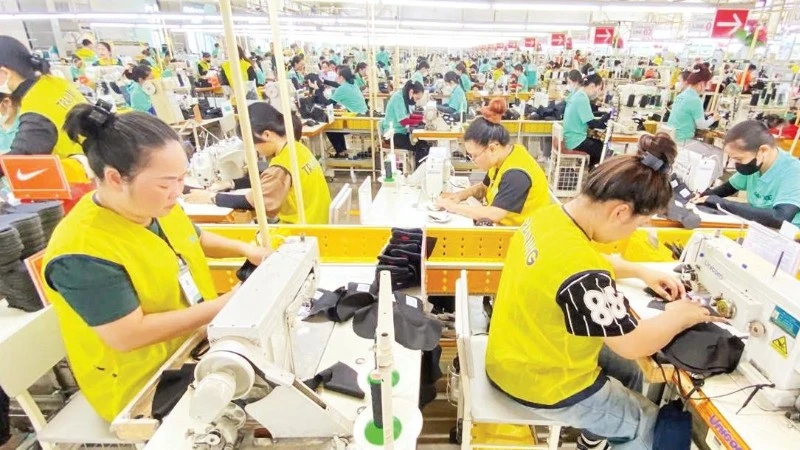
Can Tho City in southern Vietnam is facing structural challenges in its labor market, despite efforts to connect supply and demand. A significant mismatch exists between job seekers and available positions, particularly a shortage of unskilled labor. This is exacerbated by changing youth values and a disconnect between educational institutions and market needs. According to the Department of Home Affairs, in the first half of 2026, Can Tho City created employment for 54,656 workers, achieving 56.93% of the annual plan. Among these, over 1,500 workers went abroad under contract, signaling positive efforts in local employment. Surveys of over 1,900 businesses in the city indicate that over 213,000 workers are stably employed, with women constituting over 25%. This success is largely attributed to businesses maintaining their production and business pace, playing a vital role in ensuring worker incomes. To bridge the gap between businesses and job seekers, the City Employment Service Center (Department of Home Affairs) has implemented a comprehensive range of connection channels, involving hundreds of activities. These include 56 job exchange sessions reaching down to communes and wards, two large job fairs, 12 fixed consultation points, and notably, 33 "job coffee" sessions—a flexible approach designed to remove psychological barriers for job seekers. Beyond local efforts, Can Tho has pioneered successful online job exchanges linking with Ho Chi Minh City and other Mekong Delta provinces, expanding job opportunities. However, Can Tho's labor market reveals existing inadequacies. The segment of untrained labor and workers without formal qualifications (unskilled labor) represents a large proportion of both supply and demand (53% and 47%, respectively). Business recruitment needs are concentrated in roles such as food processing, woodworking, garment, footwear, and general labor, accounting for nearly 35% of demand. Conversely, job seeker preferences align similarly. Despite this, many businesses in the city struggle to find enough unskilled workers. The primary reason is that today's youth prioritize jobs with flexible environments and stable incomes, causing direct production sectors (factories, industrial workshops) to gradually lose their appeal. While the city has a considerable number of university and college graduates, a low percentage chooses to stay and work in Can Tho, leading to a severe shortage of high-quality labor needed for digital transformation and automation. Furthermore, there is a disconnect between the training programs offered by vocational education institutions and the actual needs of the market. The information system is also fragmented and has not yet reached remote areas. Need for Policies to "Retain" Workers Currently, TKG Taekwang Can Tho Co., Ltd., a South Korean investor specializing in high-quality shoe processing in Hung Phu 2B Industrial Park, needs to recruit 900 workers per month but can only hire about 600. From now until the end of the year, the company requires 3,000 additional workers for sole and shoe upper assembly to meet production expansion demands, offering attractive income and welfare benefits. Ms. Duong Ngoc Khanh, Head of Planning at TKG Taekwang Can Tho Co., Ltd., stated that the current recruitment difficulty stems from young workers' reluctance to work shifts and their aversion to the regulated hours and industrial work discipline. Additionally, the number of candidates from local areas is decreasing as they tend to move to larger cities. The company hopes the city leadership will enhance connections and share recruitment information with job seekers, and survey and gather unemployed individuals to facilitate direct information sharing and consultation based on the "3T" principle (Create local opportunities, Local consultation, Local recruitment) to meet the company's expansion needs. Given the labor-intensive nature of the seafood processing sector, especially the need for seasonal workers to meet orders, Mr. Tran Van Pham, Chairman of the Board of Directors of Soc Trang Seafood Joint Stock Company, proposed that besides enhancing labor connections and supply, Can Tho City should establish mechanisms to support businesses using seasonal labor, ensuring compliance with legal regulations while safeguarding the rights of all parties. He also emphasized the need to focus on building worker housing and schools in industrial zones to help workers feel secure and committed to their employers long-term. To fundamentally address this issue, the Can Tho City People's Committee needs to shift its focus to "retaining" workers by encouraging businesses to improve incomes, commit to social security conditions, enhance social welfare, and implement sustainable housing policies. Education and vocational training must transition towards "training on demand" and direct orders from businesses. Training programs should be firmly positioned according to key economic sectors, priority fields, and aligned with the Master Plan for Socio-Economic Development of Can Tho City until 2030, with a vision towards 2050. Concurrently, the city must upgrade its labor market by building a multi-dimensional and synchronized information system. It should focus on aggressively exploiting the National Job Exchange and optimizing digital communication channels (portals, social media, radio, television) combined with a network of grassroots collaborators to ensure a smooth and transparent flow of employment information. THANH TAM Article and Photos Editor-in-Chief: Le Quoc Minh Head Office: 71 Hang Trong - Hanoi. Tel: (84) 24 382 54231/382 54232 Fax: (84) 24 382 55593. E-mail: [email protected]

多角的分析

経済的影響

カントー市の労働市場における構造的ミスマッチは、経済成長の持続可能性に影響を与えうる。特に、製造業やサービス業における単純労働者不足は、生産能力のボトルネックとなり、投資誘致や輸出競争力にも間接的な影響を及ぼす可能性がある。教育機関と産業界の連携強化は、将来的な労働力供給の安定化に不可欠であり、これはベトナム全体の経済構造の高度化という文脈で捉える必要がある。政府による職業訓練への投資や、企業へのインセンティブ付与が、この課題解決の鍵となるだろう。

投資家心理

カントー市における労働力不足、特に単純労働者の不足は、製造業や労働集約型産業への投資を検討する投資家にとって重要なリスク要因となる。特に、韓国系企業が直面している採用難は、外国人投資家がベトナム、特に地方都市での事業展開を評価する上で、労働力供給の安定性に関する懸念を増幅させる可能性がある。投資家は、人材確保のための企業の努力や、政府による労働市場改善策の進捗を注視する必要がある。長期的な視点では、自動化や技術導入への投資が、労働力不足を補うための代替策として注目されるだろう。

社会的影響

若年層の労働観の変化は、ベトナム社会における価値観の多様化と都市化の進展を反映している。カントー市で単純労働者の採用が困難になっている背景には、都市部への人口流出や、より良い労働条件・生活環境を求める若者の意向がある。企業が労働者の定着を図るためには、単なる賃金だけでなく、住居、教育、医療といった生活全般の支援策が重要となる。これは、地方都市における社会インフラの整備と、地域経済の活性化という broader な課題とも関連している。

市民の声

カントー市で単純労働者の採用が困難な状況は、直接的には企業経営に影響を与えるが、間接的には市民、特に若年層のキャリア選択や生活設計にも影響を及ぼす。一部の若者は、より魅力的とされる都市部での就職を優先するかもしれないが、地元での安定した雇用機会があれば、地域に留まる選択肢も増える。また、労働条件の改善や、労働者宿舎の整備は、現地の労働者の生活の質向上に直結する。市民は、自身のスキルアップや、地域経済の発展に貢献できる機会を求めている。

背景・歴史的文脈

ベトナムでは、1986年のドイモイ政策以降、市場経済化が進み、急速な経済成長を遂げてきた。特に製造業は、安価な労働力を背景に輸出産業として発展し、多くの雇用を創出してきた。しかし、経済成長に伴い、労働者の価値観も変化し、都市部への人口集中と地方からの労働力流出が顕著になっている。また、教育システムが産業界のニーズに十分に応えられていないという構造的な課題も指摘されており、これが労働市場におけるミスマッチの一因となっている。カントー市における単純労働者不足は、こうしたベトナム全体が抱える課題の地方における一事例と言える。

原文ソース

Nhan Dan

原文を読む