Taiwanese Parties Clash Over Drone Budget in Defense Spending Debate
Politics
2026年7月2日
8
The Diplomat Indonesia

Taiwanese Parties Clash Over Drone Budget in Defense Spending Debate

AI サマリー

Taiwan is witnessing a fierce debate between the ruling DPP and opposition KMT and TPP parties over a special budget for drone development and procurement. The opposition has proposed its own bills, but disagreements on scale and process with the ruling party are impacting broader defense spending discussions.

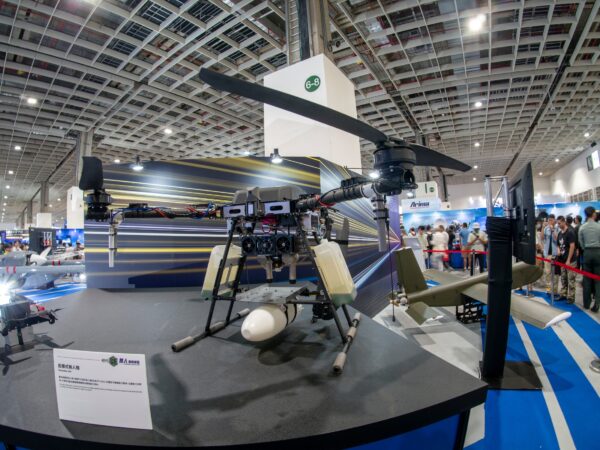
Read The Diplomat, Know The Asia-Pacific Funding for drones became much more hotly discussed in the wake of KMT chair Cheng Li-wun’s trip to the United States last month. Various drones, missiles and weapons on display at the Taipei International Aerospace and Defense Industry Exhibition at the Nangang Exhibition Center in Taipei, Taiwan, Sep. 20, 2025. Defense spending has become a contentious issue in Taiwan. The Kuomintang (KMT) and Taiwan People’s Party (TPP), which together control the legislature, continue to be at odds with the ruling Democratic Progressive Party (DPP) over the issue. In particular, the pan-Blue and pan-Green camps are now in conflict over a NT$210 million (US$6.6 million) special budget for drones that President Lai Ching-te hopes to pass. The Lai administration had hoped to purchase 208,200 coastal attack drones, 1,446 coastal reconnaissance drones, and 1,320 uncrewed surface vessels using the special budget. This seems to indicate rising interest in maritime drones; there was relatively more discussion of unmanned aerial vehicles in the past. This proposal, however, was blocked by the KMT and TPP. Their legislators did not allow the bill to proceed to committee review. Instead, the KMT and TPP eventually produced their own version of bills that would provide spending on drones. The KMT’s version of the bill would divide NT$240 million in spending over six years, while requiring any procurement above NT$100 million to include a written report to the legislature with details on progress and implementation. The bill also specified local content for drones at 50 percent in two years and 80 percent in four years. The TPP’s version of the bill, on the other hand, puts drone funding under the annual budget but does not have any overall cap. Both versions of the bill have supply chain checks, as well as other oversight measures. The Lai administration has criticized both bills reducing funding for drones, in that the KMT and TPP’s bills are subject to the annual budget process and therefore also subject to the national debt ceiling. It has also suggested that funding drone procurement through the annual budget would result in less money for education, welfare, and other social services. Instead, the Lai administration has instead argued that special budgets would provide for more flexibility in developing Taiwan’s capacity in a rapidly changing field. More broadly, the Lai administration has criticized the KMT and TPP for again attempting to claim powers over budgeting from the Executive Yuan, Taiwan’s executive branch of government. Indeed, both the TPP’s and the KMT’s bills would subject further spending to approval by the legislature, as has also occurred with other defense spending passed by the legislature. For its part, the KMT has argued that funding the drone industry through the legislature indicates commitment to long-term development, while asserting that the Lai administration’s use of special budgets is only a temporary fix. The Taiwan Unmanned Vehicle Alliance has been among the industry groups to voice support for the Lai administration’s special budget. In an event in Taipei at the end of June, the organization suggested that funding drone development through the legislature would lead to competing funding streams from the government, constraints on funding, and less spending overall. Partisan fighting between the pan-Blue and pan-Green camps over drones is the latest version of Taiwan’s ongoing debate about defense. Funding for drones became much more hotly discussed in the wake of KMT chair Cheng Li-wun’s trip to the United States last month. Together, the KMT and its ally, the TPP, blocked defense spending for over six months – until May. That month, the two parties passed a budget greenlighting NT$780 billion out of the NT$1.25 trillion special defense budget originally sought by the Lai administration. It is probable that the KMT passed this spending with an eye to Cheng’s U.S. trip. Cheng wanted to depict her party as not opposed to defense spending but instead concerned about what that spending would consist of, and wanting oversight over the DPP. Indeed, Cheng’s trip was largely a charm offensive aimed at mediating her pro-China image. She has stoked controversy in Taiwan many times, including by suggesting that she one day hoped to see Taiwanese proud to call themselves Chinese, and through controversial comments during her meeting with Chinese President Xi Jinping in Beijing in April. Cheng has also suggested Ukraine provoked Russia’s invasion by getting too close to NATO – and that Taiwan could suffer a similar fate by becoming too close with the United States. Against that backdrop, Cheng was hoping to tone down the perception in the United States that the KMT has become overly skeptical of relations with the U.S. in recent years. Passing a special budget for defense – albeit on much reduce from the Lai administration’s request – was a bid to help counter criticisms that Cheng and the KMT are tilting too far toward China. However, the DPP said that the KMT-TPP version of the special budget effectively cut domestic defense capabilities, such as drones, while putting most of the funding toward arms purchases from the United States. The criticism was that this ran counter to the KMT’s previous claims that arms purchases from the U.S. should be evaluated with greater oversight. It has become a recurring refrain of KMT politicians that Washington simply foists useless weapons onto Taiwan through arms sales in order to financially profit. The Lai administration indicated that it would continue to pursue measures aimed at securing funding for what was cut – apart from drones, that also includes the Lai administration’s “T-Dome” missile defense system. This was not the first time that drone funding had been cut by the KMT and TPP either. The budget passed by the two parties in 2025 amounted to the largest set of budget cuts in Taiwanese history, slashing one-third of the government’s operational budget. Among the casualties was funding to a drone industry cluster in Chiayi. It is notable, then, that both the KMT and the TPP were rather quick to propose their own version of spending on drones – especially when the two parties delayed for over half a year on the Lai administration’s previous special defense budget. As both the KMT’s and TPP’s proposed versions of the drone bill contain measures aimed at boosting local content, it may be that both parties are wary of criticism from the DPP that they have simply signed off on arms purchases from the United States while not benefiting local manufacturers. Jaw Shaw-kong, the KMT’s vice presidential candidate in 2024 – usually considered a hardliner, if an astute political analyst and media commentator – has suggested in comments that opposing drone spending would be “political suicide” for any KMT politician. Drones are increasingly in focus not only within the legis

多角的分析

経済的影響

台湾のドローン産業は、防衛費の議論において重要な経済的側面を持つ。野党案に含まれる国内調達率の引き上げ目標は、国内製造業の育成とサプライチェーンの強化を目指すものであり、長期的な経済成長に貢献する可能性がある。しかし、現政権が指摘するように、特別予算による柔軟な資金調達が、技術革新のスピードに対応し、国際競争力を維持するために不可欠である。年次予算への組み込みは、予算の制約や政治的駆け引きによって、産業の発展が阻害されるリスクをはらんでいる。

投資家心理

投資家にとって、台湾のドローン産業への投資は、地政学的なリスクと成長の機会という二面性を持つ。野党案の国内調達率目標は、国内企業への投資妙味を高める可能性がある。一方で、現政権の特別予算案は、より迅速な調達と技術開発を可能にし、関連技術を持つグローバル企業への投資機会をもたらすかもしれない。しかし、政治的な不確実性、特に与野党間の予算編成を巡る対立は、投資判断を難しくする要因となる。投資家は、最終的な予算配分と、それが国内産業と国際調達のバランスにどう影響するかを注視する必要がある。

社会的影響

ドローン予算を巡る政治的対立は、台湾社会に直接的な影響を与える可能性がある。現政権が懸念する通り、年次予算への組み込みは、教育や福祉といった社会サービスへの予算を圧迫する可能性がある。これは、市民生活の質に影響を与え、社会的不満を高める要因となりうる。また、防衛産業の発展が国内雇用創起や技術力向上に繋がる一方で、その恩恵が一部の地域や産業に偏る可能性も指摘されている。例えば、嘉義のドローン産業クラスターへの資金削減は、地域経済に打撃を与えうる。

市民の声

市民の視点からは、防衛費の議論は、自分たちの生活にどう影響するかという点で重要である。現政権が主張するように、ドローン開発・購入のための特別予算が、教育や福祉といった社会サービスを圧迫するのであれば、市民は生活の質の低下を懸念するだろう。一方、野党が主張する国内産業の育成や調達率の向上は、長期的な経済成長や雇用創起に繋がる可能性があり、将来への期待感も生まれる。しかし、政治的な駆け引きによって、これらの予算が削減されたり、遅延したりすることは、市民の不安を増大させる。

背景・歴史的文脈

台湾における防衛費、特にドローン関連予算を巡る与野党の対立は、台湾の防衛政策における長期的な課題を反映している。過去、台湾は米国からの兵器購入に大きく依存してきたが、近年は国内防衛産業の育成や、より自律的な防衛能力の構築が模索されている。国民党(KMT)は伝統的に中国との関係改善を重視する傾向があり、防衛費の増額や特定の兵器調達に対して慎重な姿勢を示すことがある。一方、民進党(DPP)は、中国の脅威に対抗するため、防衛力の強化を強く主張し、米国との連携を深める傾向がある。今回のドローン予算を巡る対立は、こうした政党間のイデオロギーの違い、そして台湾の防衛戦略の方向性を巡る根本的な意見の相違に根差している。

原文ソース

The Diplomat Indonesia

原文を読む