General articles are free for 24 hours after publish.
Vietnam Eyes Breakthroughs in Plant Biotechnology Amid Tech Push
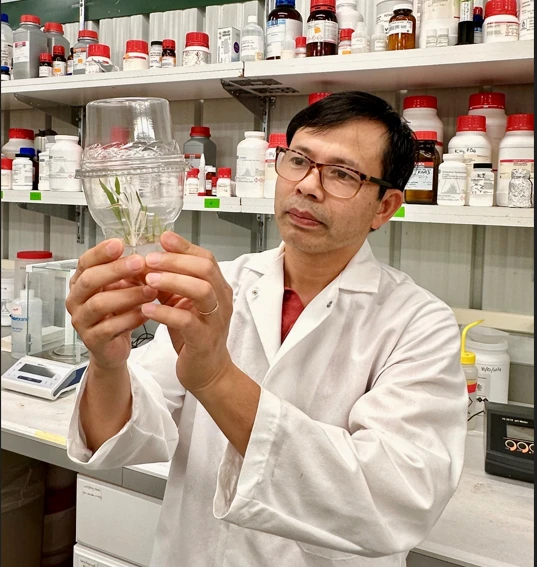
Vietnam is aiming for breakthroughs in science and technology, particularly in plant biotechnology, as part of its strategy to accelerate the transition to high-value industries and drive economic growth. International cooperation and human resource development are seen as key.
Vietnam is pushing for breakthroughs in science and technology, with a particular focus on plant biotechnology, as a key driver for economic growth and a transition to high-value industries. This strategic push comes amid rising demand driven by increasing incomes, an aging population, and lifestyle-related diseases, coupled with growing healthcare spending due to a rising per capita GDP. Korean firms, for instance, are actively establishing local subsidiaries and seeking product approvals through clinical trials in Vietnam to capitalize on these opportunities. In Ho Chi Minh City, science, technology, and innovation are identified as crucial drivers for the new development period, with biotechnology seen as a sector capable of generating high added value and promoting a greener growth model. International cooperation is also a significant aspect of Vietnam's strategy. The country is exchanging experiences in science and technology, innovation, startup ecosystems, and human resource development with France. Student participation in international contests, such as Global HackAtom in Russia, offers opportunities to compete with peers from leading institutions and enhance their capabilities. In the realm of artificial intelligence (AI), Vietnam wishes to collaborate with China and ASEAN member states to build a safe AI future for the benefit of the region's people and prosperity. However, challenges persist. Experts note that in the Mekong Delta region, valuable information collected by government agencies, universities, businesses, and communities is scattered across different locations and formats, hindering effective access, comparison, and utilization. This fragmentation can impede data-driven policymaking and innovation. The rapid growth of electric vehicles (EVs) also presents new infrastructure challenges for cities, requiring careful planning of charging networks based on travel demand, power supply capacity, and available urban space. While the Political Bureau's Resolution No. 57-NQ/TW allows for pilot schemes and accepts risks in science, technology, and innovation, concerns over these risks and responsibilities remain. Furthermore, Vietnam needs to step up semiconductor workforce training to meet growing market demand and enhance its participation in the global technology value chain. Experts emphasize the importance of closely linking training with businesses, production, and technological research, highlighting this as a strategic move to bolster technological self-reliance, national security, and economic competitiveness amid intense global technological competition. Source: VietnamPlus English
Original source
VietnamPlus English