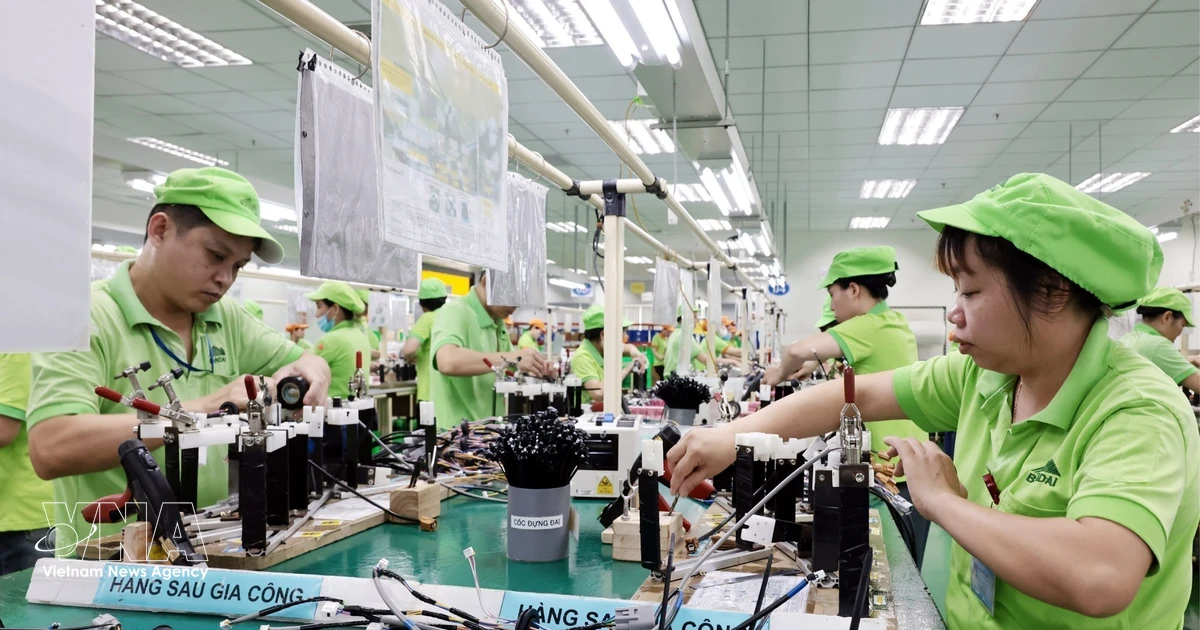
Vietnam's H1 FDI Disbursement Hits 5-Year High Amid Growth Momentum
Vietnam's foreign direct investment (FDI) disbursement reached a five-year high in the first half of 2026, signaling accelerated economic growth. Investment is particularly active in manufacturing and services, with the government strengthening its long-term FDI development policies.
Vietnam's foreign direct investment (FDI) disbursement reached a five-year high in the first half of 2026, underscoring the country's robust economic growth and its increasing importance as a hub in global supply chains. According to the General Statistics Office (NSO), FDI disbursement saw significant growth in the first half of the year. Investment has been particularly active in manufacturing, services, and infrastructure. For instance, Samsung plans to invest an additional US$1 billion in Vietnam this year, advancing its expansion plans across electronics, display manufacturing, and electro-mechanics. Da Nang City's total social investment in the first six months exceeded VND 50.98 trillion (approximately US$1.94 billion), up 31.5% year-on-year, reflecting growing investor confidence in the city's business environment and investment promotion policies. Services remained a key growth driver, expanding 8.89% in the first six months. Transport recorded the strongest performance with growth of 13.68%, followed by trade and finance. However, the real estate sector continued to face difficulties. The Communist Party of Vietnam has consistently signaled its policy of encouraging the foreign-invested sector as an integral component of the national economy. Politburo's Resolution No. 10-NQ/TW sets ambitious targets for the 2026–2030 period, aiming to attract US$200–300 billion in registered FDI and disburse US$30–40 billion annually. This resolution sends a clear message that Vietnam treats foreign investors on an equal footing and expects them to work alongside domestic sectors to achieve national development goals. Beyond policy support, Vietnam's strong growth, resilience to global economic fluctuations, and its drive to attract high-value manufacturing, research and development, and technology investments are steadily reshaping the country from a low-cost factory base into a critical link in the world's industrial value chains. This signifies that supporting industries are no longer merely auxiliary sectors but have become the foundation for enhancing industrial self-reliance, increasing localization, improving competitiveness, and enabling deeper integration into regional and global supply chains. Tourism also shows a recovery, with the country welcoming around 10.6 million international visitors in the first five months of 2026, up nearly 15% year-on-year. Singapore remained one of Vietnam’s fastest-growing source markets during the period. Under Vietnam's one-party system, economic growth is a paramount priority, with FDI viewed as a crucial source for development and technology transfer. While economic interdependence with China remains significant, Vietnam is increasingly seen as an alternative destination amidst global efforts to diversify supply chains. The increase in FDI disbursement is likely linked to these geopolitical shifts. Source: VietnamPlus English
多角的分析
上半期のFDI実行額の増加は、ベトナム経済の底堅さを示す重要な指標である。特に、サービス業(運輸、貿易、金融)の堅調な成長は、国内消費の回復とサプライチェーンの再構築が進んでいることを示唆している。一方で、不動産セクターの低迷は、国内の投資環境や金融政策における課題を示唆しており、今後の政策動向が注目される。また、サムスンによる追加投資や、航空インフラ分野での国際基準導入に向けた動きは、ベトナムが単なる製造拠点から、より高度な技術とサービスを提供するハブへと進化しようとしている兆候と捉えられる。
FDI実行額の過去5年での最高水準は、ベトナムが国際的な投資家にとって魅力的な市場であり続けていることを示している。特に、政府が外国投資セクターを国家経済の不可欠な一部と位置づけ、長期的な発展を奨励する明確な政策(決議第10号)を打ち出していることは、投資家にとって安心材料となる。目標とされる年間300億~400億ドルの実行ベースFDIは、野心的ではあるが、現在の成長軌道と政策支援を考慮すると、達成可能な範囲内にあると考えられる。ただし、不動産セクターの困難さや、国際経済の不確実性は、一部のセクターへの投資リスクとして残るだろう。
FDIの増加は、雇用創出と所得向上に繋がり、国民生活の改善に寄与すると期待される。特に、高付加価値製造業や技術分野への投資拡大は、より質の高い雇用を生み出す可能性がある。しかし、都市部への人口集中とインフラ整備の遅れ、そして地方と都市部の経済格差は依然として社会的な課題である。ダナン市のような地方都市での投資増加は、地域経済の活性化に繋がる一方、インフラ投資(例: 交通網、物流ハブ)の更なる強化が、経済成長の恩恵を全国民に行き渡らせるために不可欠となる。また、環境基準や労働条件の国際標準への適合も、持続可能な発展のためには重要視されるべき点である。
ベトナム国民にとって、FDIの増加は、より多くの雇用機会と、それに伴う所得の向上が期待される。特に、サムスンのような大手企業の追加投資は、関連産業への波及効果も大きく、経済全体の活性化に繋がるだろう。しかし、インフレ率が依然として上昇傾向にある(6月のCPIは前年同月比4.69%上昇)ことは、国民生活に直接的な影響を与える可能性がある。特に、ガソリン価格の引き下げは、運輸コストの抑制に貢献するが、物価上昇圧力は依然として注意が必要だ。また、都市部への人口流入とそれに伴う住宅問題や交通渋滞は、市民生活の質に影響を与える課題として残る。
背景・歴史的文脈
ベトナムにおけるFDIは、1986年のドイモイ(刷新)政策導入以降、経済発展の重要な柱となってきた。当初は、安価な労働力を活用した製造業が中心だったが、近年は高付加価値産業、サービス業、IT分野への投資が拡大している。政治的には、共産党による一党支配体制が維持されており、経済政策は国家の長期的な発展目標と社会主義市場経済の原則に基づき決定される。対中関係においては、経済的な結びつきは強いものの、地政学的なリスクを考慮し、サプライチェーンの多様化や他国との関係強化も進めている。今回のFDI実行額の増加は、こうした長年の経済開放政策と、近年の地政学的な変化が複合的に作用した結果と考えられる。
原文ソース
VietnamPlus English