Ho Chi Minh City to Build Underground Metro Stations at Tan Son Nhat Airport
Infrastructure
2026年7月26日
5
VnExpress

General articles are free for 24 hours after publish.

Ho Chi Minh City to Build Underground Metro Stations at Tan Son Nhat Airport

Share
AI Summary

Ho Chi Minh City has announced plans to build underground metro stations connecting Terminals T1, T2, and T3 at Tan Son Nhat International Airport. This initiative aims to improve airport accessibility and reduce reliance on road transport.

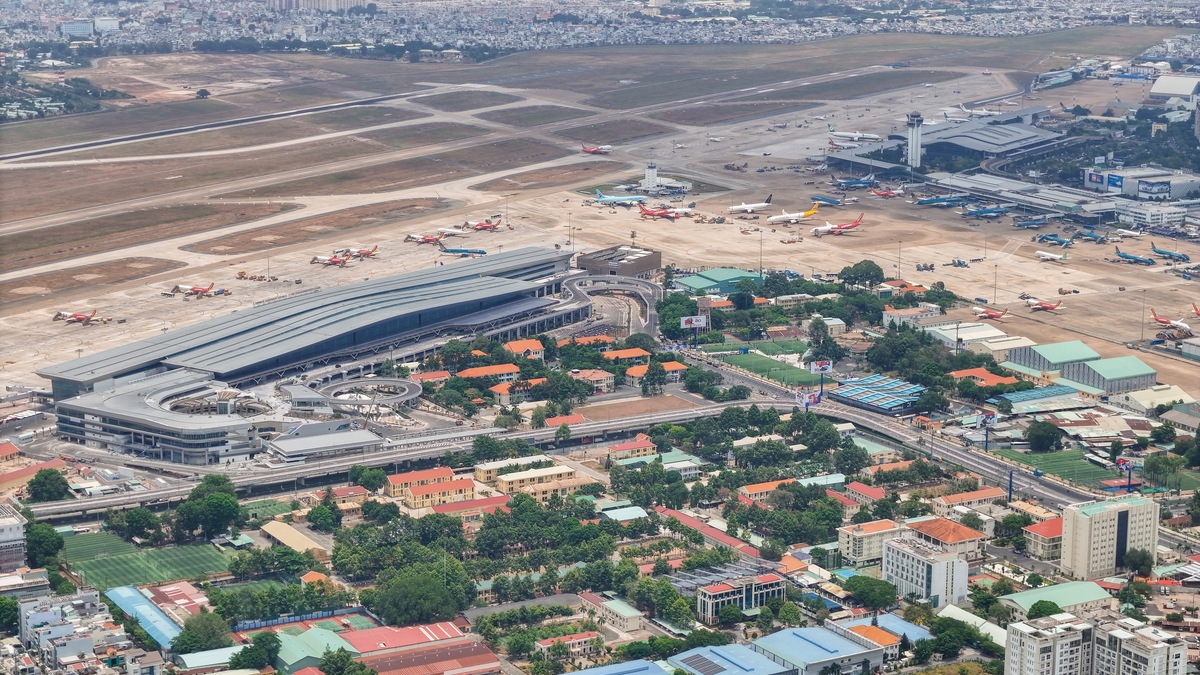
Ho Chi Minh City's Urban Railway Management Board has submitted a plan for the first phase of Metro Line 6, connecting Tan Son Nhat Airport to Phu Huu, to relevant authorities for review and coordination. The project, slated for completion by 2030, aims to expand the city's metro network to approximately 200 km. The planned route spans nearly 23 km, with about 19 km running underground. It will feature 17 stations in total, comprising 13 underground and 4 elevated stations. The depot is designated for the Binh Trieu area. Key adjustments have been made to the route and station locations compared to previous plans to ensure infrastructure synchronization and optimize investment and operation. The line begins at Ba Queo Station (ST01), near the Tan Ky Tan Quy - Truong Chinh intersection, connecting with the Ben Thanh - Tham Luong metro. From Ba Queo, the railway turns east, going underground towards Tan Son Nhat Airport. Station ST02 is planned west of Terminal T3, featuring two underground levels and a total area exceeding 12,500 square meters. The route through the airport area has been straightened, and the station location moved closer to the passenger terminal for better accessibility. Station ST02 is formed by merging two previously planned stations that were only about 1 km apart but distant from T3, leading to overlapping service areas and limited connectivity. This consolidation aims to improve efficiency. Leaving Terminal T3, the metro will continue underground beneath the aircraft apron towards the T1 and T2 terminal areas. Station ST03 is proposed in the parking lot between these two terminals, near the Truong Son - Hong Ha intersection overpass. This station is envisioned as a transfer point with Metro Line 4 (Dong Thanh - Hiep Phuoc Industrial Park). Therefore, ST03 is planned with three underground levels and an area of approximately 18,600 square meters, making it larger than ST02. With this plan, stations ST02 and ST03 will connect the entire cluster of Tan Son Nhat's T1, T2, and T3 terminals, enabling passengers to access the airport via metro and reducing reliance on road transport. After exiting the airport, the line will run along Hong Ha Street, with station ST04 located near the Nguyen Thai Son - Nguyen Kiem intersection. The metro will then shift to Pham Van Dong Avenue, with stations sequentially placed near the North-South Railway, and the Phan Van Tri and Nguyen Xi intersections. The line will continue underground across the Saigon River, returning to the Pham Van Dong axis, and heading towards the Thu Duc area. At Vo Nguyen Giap Avenue, station ST12 will connect with the Ben Thanh - Suoi Tien metro. From the Ring Road 2 area, the line will gradually transition from underground to elevated, passing through the Vo Chi Cong intersection, Phu Huu Bridge, and Lien Phuong Street. After station ST16, the railway will split into two branches: one leading to the final station ST17, and the other connecting to the Thu Thiem - Long Thanh railway. The consulting firm proposes using technical standards similar to Metro Line 2 (Tham Luong - Ben Thanh - Thu Thiem). Trains will operate at a maximum speed of 80-110 km/h depending on the section. Initially, trains will consist of three cars, with the possibility of increasing to six cars later. Metro Line Tan Son Nhat - Phu Huu is oriented as a corridor connecting Tan Son Nhat Airport with the eastern part of Ho Chi Minh City. When linked with the Thu Thiem - Long Thanh railway, the line will create a high-capacity transport corridor between the two airports, facilitating passenger transfers and reducing road traffic pressure. Source: VnExpress

0

Original source

VnExpress

原文を読む