General articles are free for 24 hours after publish.
Cambodia Achieves Record Budget Transparency Score, But Public Participation Lags
Cambodia has achieved its highest-ever score of 54 in the Open Budget Survey (OBS) for budget transparency. However, public participation in budget decisions remains a significant challenge, with NGOs urging the government to expand opportunities for citizen involvement.
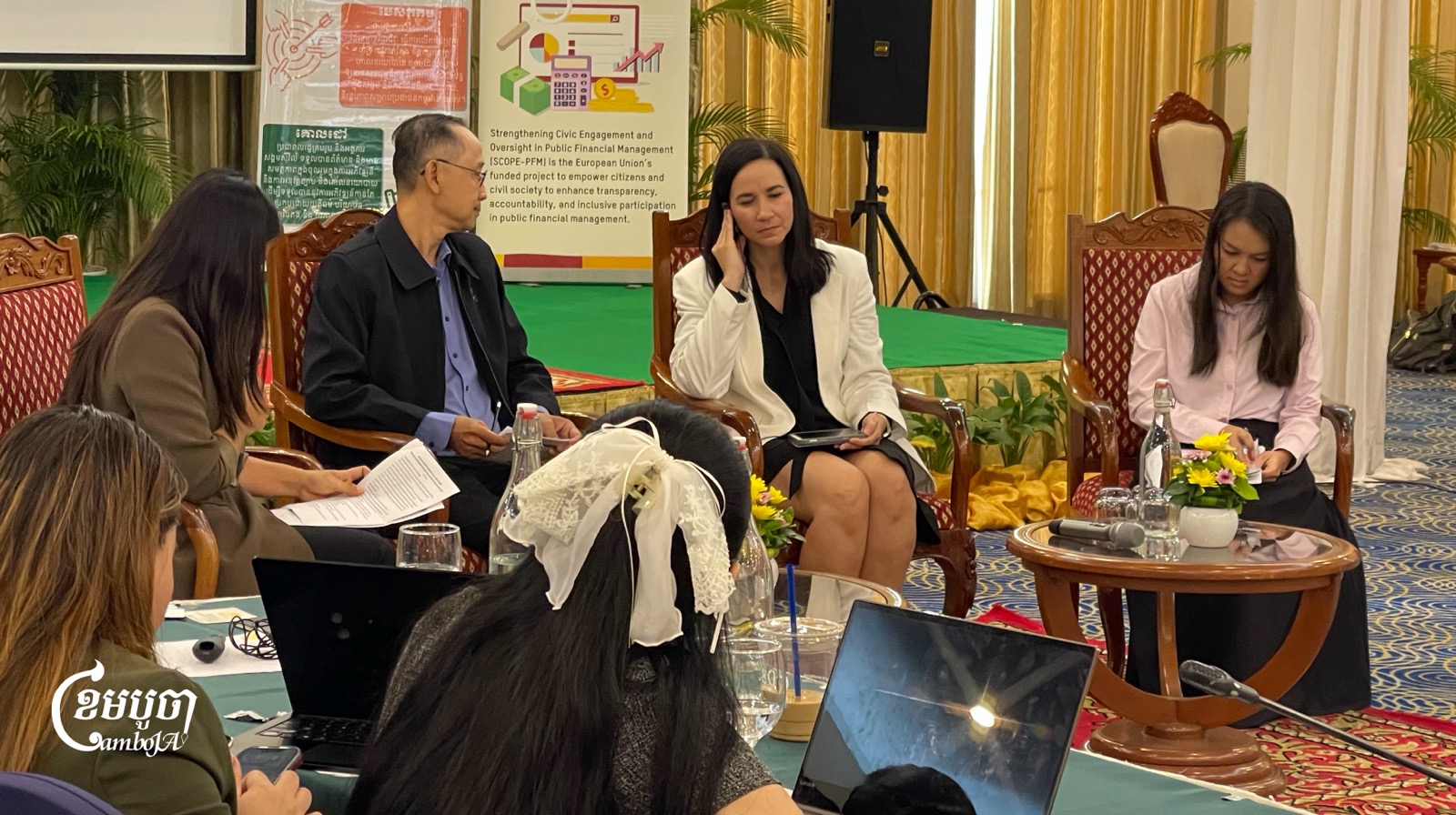
Cambodia has achieved its strongest result to date in the Open Budget Survey (OBS), scoring 54 out of 100 for budget transparency, an improvement from 43 in 2023 and surpassing the global average of 45. This marks a significant rise over the decade, with Cambodia's transparency score increasing from just eight in 2015 to 54 in 2025. However, progress remains limited for public and civil society groups to participate in contributing to budget decisions. The OBS assesses about 100 countries across three key areas: budget transparency, public participation, and budget oversight. While Cambodia’s transparency score rose to 54, its public participation score remained at a low 2, highlighting a gap between access to budget information and citizens’ ability to influence the budget process. NGO Forum Cambodia and the International Budget Partnership organized a dialogue on OBS on Tuesday, urging the government to allow public participation in the budget process, including expansion to sub-national levels. "We urge the government to create opportunities for citizens to participate in the national budget process, including sub-national levels," said Soeun Saroeung, executive director of NGO Forum Cambodia. Ou Chenda, a senior specialist with the General Secretariat of the Public Financial Management Reform Program (GSC) at the Ministry of Economy and Finance, acknowledged that the public participation score was "low" for Cambodia, and globally. "Currently, we do not have specific measures in place to allow the public to participate in the budget process, but the management will consider this in the future," she said during a panel discussion. She added, however, that "citizens have attended public forums on the budget, where macroeconomic issues were discussed and the budget law was disseminated after it was enacted." Ros Chhorvivorn, Executive Director of local NGO Village Support Group, who attended the OBS dialogue session, stated that the public should be given more opportunities to participate in the budget process because government spending directly affects people’s daily lives. "When the public cannot participate in the budget process, it affects their daily livelihood and their ability to make decisions. People have the right to know about the budget because they pay taxes and want to know how the state spends public money," she said. She also mentioned past instances where several development projects did not adequately address local communities’ needs. Laura Castillo Cabral, program officer of International Budget Partnership, echoed the sentiment, emphasizing that the mechanism should be opened and not restrict anyone wishing to participate. "The public should be informed ahead of the process of the scope, what is going to be discussed, and the outcome that is expected of the engagement," she said. The 2025 OBS assessed 18 countries in Asia, including nine in East Asia and the Pacific: Cambodia, China, Indonesia, Malaysia, Mongolia, Papua New Guinea, the Philippines, Thailand, and Vietnam. Meas Soksensan, secretary of state at the Finance Ministry, said the government has already taken steps to disseminate information about the budget process through information boards, aiming to improve budget transparency and public participation. "The government has done this, and we do not care whether we receive a score or not because we have paid attention to our communes. Some communes have also increased their budgets," he said. Nevertheless, past incidents, such as the Interior Ministry uncovering funding irregularities described as "systematic collusion and misuse of commune funds" in commune development projects nationwide, underscore ongoing challenges.
Original source
CamboJA News