General articles are free for 24 hours after publish.
Xi Jinping Skips UNGA for US Summit: What It Means
Chinese President Xi Jinping will skip the UN General Assembly during his US visit, a move that contrasts with China's rhetoric on the UN's importance and may reflect Beijing's stance in US-China relations. Vice President Han Zheng will attend in his stead.
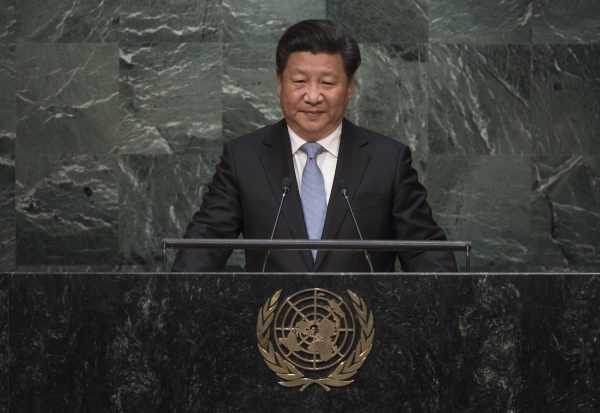
Chinese President Xi Jinping's upcoming visit to the United States for a summit with President Donald Trump has drawn significant attention, particularly due to his decision to skip the United Nations General Assembly (UNGA) currently underway in New York. This absence is notable, given China's consistent rhetoric emphasizing the importance of the UN, and may signal strategic considerations within the US-China relationship. Xi Jinping's itinerary prioritizes his meeting with President Trump in Washington D.C. Meanwhile, Vice President Han Zheng will represent China at the UNGA, attending events such as those related to China's "Global Development Initiative." Xi's attendance at the UNGA has been rare; his last in-person appearance was for the UN's 70th anniversary in 2015. China's official stance, as outlined in its June 2026 "White Paper on Global Governance," positions the UN as the "core" of the international order and advocates for strengthening its role. However, Xi's absence from the UNGA appears to diverge from this narrative. Notably, he also skipped last year's 80th-anniversary UNGA, opting instead for domestic events. Furthermore, China has recently established its own international frameworks, such as the Global Development Initiative and the World Artificial Intelligence Cooperation Organization (WAICO), indicating a trend towards expanding influence through platforms where it holds greater leadership. This suggests that while China espouses the UN's "core role," it prioritizes arenas where it can exert more control, especially as the US reduces its UN funding. Some analysts interpret Xi's UNGA absence as an attempt to project China as an equal to the United States. The focus on the bilateral US-China relationship, rather than interactions with a multitude of leaders in New York, could amplify this message. This highlights a pragmatic approach where China, despite advocating for a multipolar world, emphasizes bilateral ties and its own-led initiatives. Source: The Diplomat Indonesia
Original source
The Diplomat Indonesia