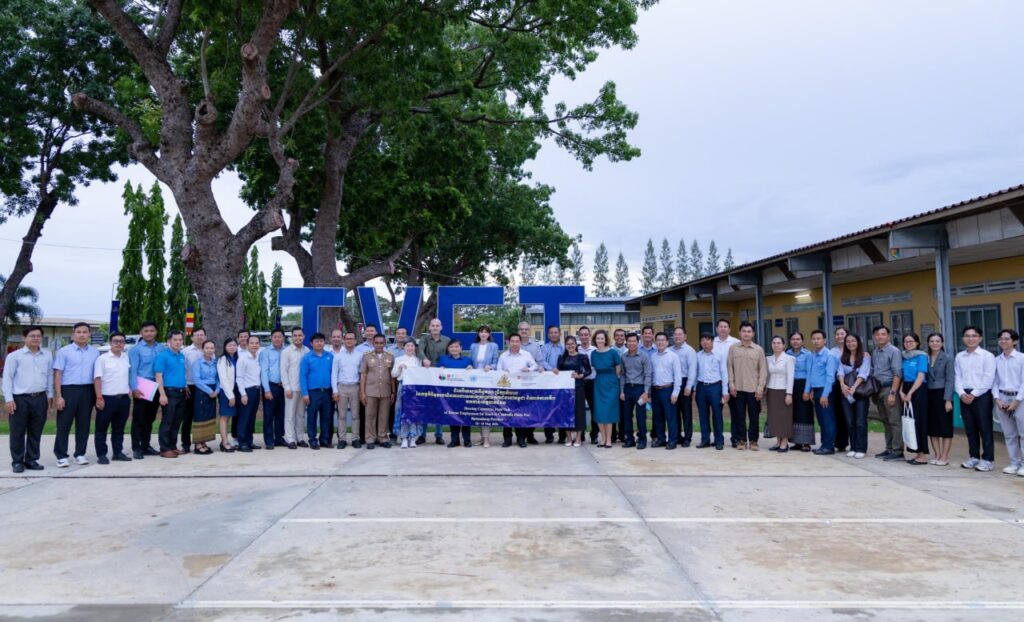
Cambodia to Enhance Vocational Training Quality with 16 Chinese Occupational Standards
Technology
2026年7月3日
5
Kampuchea Thmey Local
Relations
🇰🇭Cambodia🇨🇳China🇯🇵Japan🌐United Nations / ASEAN

Cambodia to Enhance Vocational Training Quality with 16 Chinese Occupational Standards

AI サマリー

Cambodia's Ministry of Labour and Vocational Training has unveiled 16 occupational standard packages received from China, aimed at enhancing the quality of vocational training and aligning it with international standards. This initiative seeks to meet labor market demands and prepare for future technological investments.

The Ministry of Labour and Vocational Training has revealed 16 types of "Chinese Occupational Standard Packages" provided by China through its embassy, aimed at supporting the standardization of vocational skills and enhancing the quality of the Technical and Vocational Education and Training (TVET) system to meet labor market demands and international standards. On June 15, 2026, Chinese Ambassador to Cambodia, Wang Wenbin, handed over the "Chinese Occupational Standard Packages" to Minister of Labour and Vocational Training, Heng Sour, signifying the close friendship between Cambodia and China. The 16 specialized fields covered by these books include: 1. Bricklaying, 2. Processing and Installation of Construction Reinforcement Steel, 3. Road Construction, 4. Bridge and Tunnel (or Underground Road) Construction, 5. Machining of Parts by Milling Machine, 6. Machining of Parts by Lathe Machine, 7. Internet System Installation, 8. Installation and Maintenance of Telecommunication Cable Networks, 9. Installation and Maintenance of Elevators and Escalators, 10. Installation and Maintenance of Refrigeration and Air Conditioning Systems, 11. Maintenance of Household Electronic Appliances, 12. Installation and Maintenance of Electrical and Electronic Systems, 13. Maintenance and Repair of Motorcycles, 14. Automobile Maintenance, 15. Installation and Maintenance of Solar Power Systems, and 16. Household Services (Housekeeping). These books meticulously document the skills and evaluations for numerous occupations, playing a crucial role in strengthening national labor market standards in Cambodia. They also serve as a new blueprint for in-depth reforms in vocational and technical training education. Sun Mesa, spokesperson for the Ministry of Labour and Vocational Training, stated that the books received from China are highly significant for reforming the technical and vocational training provided to Cambodian citizens and youth. He added that in the near future, Cambodian youth will possess clear, standardized, and high-quality skills comparable to those in China, enabling them to participate in the labor sector within Cambodia and the region. This is particularly crucial for preparing Cambodia to receive new technology companies planning to invest in the country. "On behalf of the Ministry of Labour, we express our gratitude to our Chinese friends for donating these valuable books. We will utilize them to supplement our shortcomings and update our specialized fields to align with labor market demands and global technological changes," he emphasized. It is recalled that China's Ministry of Human Resources and Social Security has published "Chinese Occupational Standards," compiled with the participation of labor sector experts from over 50 Chinese state institutions. These standards focus in detail on the preparation and evaluation of occupations, clearly categorized by type and different skill levels. Source: Kampuchea Thmey Local

多角的分析

経済的影響

中国から提供された職業標準パッケージは、カンボジアの労働力育成における質的向上と国際競争力強化を目指す経済政策の一環と見られる。特に、建設、製造、IT、インフラ関連の分野に重点が置かれており、これらはカンボジアの経済発展において重要なセクターである。これらの標準が国内の職業訓練プログラムに効果的に導入されれば、労働者のスキルレベルが向上し、生産性向上や新たな産業分野への進出を促進する可能性がある。しかし、その導入と実施には、訓練施設の整備、教材の翻訳・改変、訓練士の養成といった多大な投資と計画が必要となる。中国との連携は、技術移転と資金援助の機会を提供する一方で、カンボジア国内の既存の教育システムとの整合性や、技術の陳腐化リスクも考慮する必要がある。

投資家心理

この動きは、カンボジアで事業を展開する、または進出を検討している国内外の投資家にとって、労働力の質向上という点でポジティブな兆候となり得る。特に、製造業や建設業、ITサービス分野への投資を検討している企業は、より訓練され、国際標準に準拠した労働力を期待できるだろう。中国の標準が導入されることで、特定の技術分野における労働者のスキルレベルが標準化され、採用プロセスが効率化される可能性がある。しかし、投資家は、これらの新しい標準が実際の労働市場にどれだけ迅速かつ効果的に浸透するか、また、訓練された労働者が期待される生産性や品質基準を満たせるかを見極める必要がある。中国との経済的結びつきが強まる中で、中国企業がカンボジアに進出する際の労働力確保が容易になる可能性も考えられる。

社会的影響

職業訓練の質向上は、カンボジアの若者にとって、より良い雇用機会と収入向上につながる可能性を秘めている。特に、これまで機会が限られていた分野での専門スキル習得は、社会経済的格差の是正に貢献しうる。16種類の職業標準には、建設、機械加工、IT、インフラ、さらには家庭サービスまで含まれており、多様なキャリアパスが開かれることが期待される。しかし、これらの訓練が全国的に均等に提供されるか、また、経済的に恵まれない層でもアクセス可能かが課題となる。都市部と農村部での教育機会の格差、そして新しい技術への適応能力が、社会全体の恩恵を最大化するための鍵となるだろう。また、家庭サービスのような分野の標準化は、労働条件や待遇の改善にもつながる可能性がある。

市民の声

カンボジア市民、特に若者にとっては、この職業標準の導入は、将来のキャリアパスを考える上で重要な意味を持つ。これまで曖昧だった職業スキルが明確な標準として定義されることで、どのような訓練を受ければ市場で求められる人材になれるのかが分かりやすくなる。例えば、建設現場で働く人々は、煉瓦積みや鉄筋加工といった基本的な技術から、より高度な橋梁建設やトンネル工事まで、段階的なスキルアップの道筋が見えるようになる。また、ITや太陽光発電といった新しい分野の標準化は、将来性のある職種への挑戦を後押しするだろう。しかし、これらの訓練が全国の若者に行き渡り、経済的な負担なく受講できる環境が整うかどうかが、市民一人ひとりの生活に直接影響を与えることになる。

背景・歴史的文脈

カンボジアは長年、経済発展の原動力として、特に建設業や製造業における労働力不足とスキルギャップに直面してきた。ASEAN地域における経済統合が進む中で、国際基準に適合した質の高い労働力の育成は、国内産業の競争力強化と海外からの投資誘致のために不可欠な課題となっている。中国は、一帯一路構想の下、インフラ投資だけでなく、人材育成支援を通じてもカンボジアとの関係を深化させており、今回の職業標準パッケージの提供も、その一環と位置づけられる。過去にも、日本や他の国際機関がカンボジアの職業訓練分野への支援を行ってきたが、中国からの大規模な標準提供は、今後のカンボジアの技術・職業教育の方向性に大きな影響を与える可能性がある。

原文ソース

Kampuchea Thmey Local

原文を読む