Electronic Copies as Evidence: Supreme Court Rules on Evidence Amendments Spark Clash
A clash over the presentation of electronic evidence erupted during Vice President Sara Duterte's impeachment trial at the Senate, highlighting the Supreme Court's 2019 amendments to the Rules on Evidence, which may allow duplicates and electronic copies to be admitted as proof.
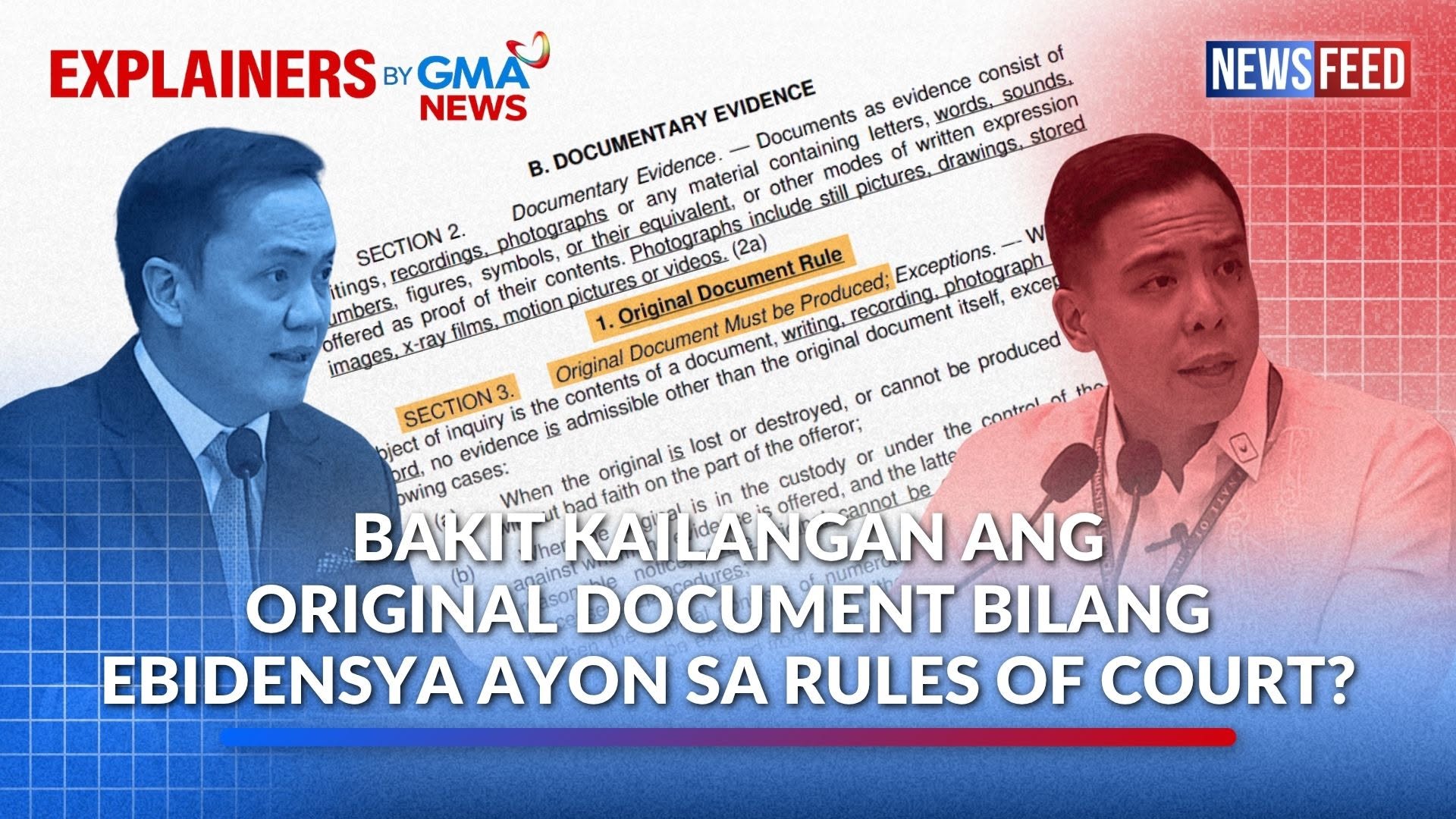
Lawyers for both the prosecution and the defense clashed on Tuesday over the presentation of documents detailing digital evidence related to Vice President Sara Duterte's 2024 remarks threatening to kill President Ferdinand Marcos Jr., First Lady Liza Araneta Marcos, and former House Speaker Martin Romualdez. On the second day of Duterte's impeachment trial at the Senate, Atty. Carlo Narvasa, one of her lawyers, objected to the presentation of the affidavit authenticating the digital evidence executed by National Bureau of Investigation (NBI) agent John Mark Calilung, who was among those tasked with investigating the Vice President's remarks. "This is not an original copy of his affidavit. This is not electronic evidence," Narvasa said. "If you look at the affidavit, even the appendages, which supposedly consist of USB and CD, there is no USB, there is no CD. Even the signatures are not wet signatures." The defense also challenged the authenticity of a copy of the preservation request Calilung had submitted to Meta concerning the video containing Duterte's statements. Narvasa claimed that the prosecution and the defense had agreed during pretrial that original documents would be presented during the trial proper. "We agreed to expedite the proceedings and now what is happening is photocopies of documents that we want to peruse and see are being presented. So, we object to this, Your Honor," he said. Private prosecutor Amando Ligutan disputed the claim, saying no such agreement had been reached. Ligutan also argued that the 2019 Amendments to the Rules on Evidence allow duplicates, including photocopies and electronic copies, to be admitted as evidence. "A photocopy is now considered an original," Ligutan said. "This is an electronic copy. The rules on electronic evidence say a printed version of an electronic copy is an original." Narvasa countered that a photocopy must be "an accurate and exact reproduction of the original." What the 2019 Amended Rules on Evidence say Section 2, Rule 130 of the Supreme Court's 2019 Amendments to the 1989 Revised Rules on Evidence defines documentary evidence as writings, recordings, photographs, or any material containing letters, words, sounds, numbers, figures, symbols, or their equivalent, offered as proof of their contents. As a general rule, only the original document is admissible as evidence, subject to the following exceptions: The Rules define a duplicate as a counterpart produced by the same impression as the original, from the same matrix, or by photography, mechanical or electronic re-recording, chemical reproduction, or other equivalent techniques that accurately reproduce the original. A duplicate is admissible to the same extent as an original unless a genuine question is raised about the authenticity of the original or admitting the duplicate instead of the original would be unjust or inequitable. The Rules also provide that if data is stored on a computer or similar device, any printout or other output that accurately reflects the data and is readable by sight or other means qualifies as an original. During the hearing, Presiding Officer Senator Francis "Chiz" Escudero said the impeachment court recognizes the exceptions to the Original Document Rule and will apply them accordingly. "However, if it does not fall under the Original Document Rule exceptions, then to save the court's time, the party presenting the document should present the original during trial. Perhaps the next time you present a witness, counsel for the prosecutors and counsel for the respondent," Escudero said. — VBL, GMA News
多角的分析
このニュースは直接的な経済的影響を論じていないが、法制度における証拠の定義は、企業活動における契約、通信記録、取引履歴などの電子文書の法的有効性に直結する。証拠規則の解釈の明確化は、フィリピン国内でのビジネス取引の信頼性を高め、電子商取引の促進に寄与する可能性がある。一方で、証拠の真正性を巡る争いは、訴訟リスクを増大させ、特に海外からの投資家にとっては、法制度の予測可能性に対する懸念材料となり得る。
投資家にとって、証拠規則の解釈は、訴訟リスクと法制度の安定性に関わる重要な要素である。2019年の証拠規則改正により、電子証拠の受容性が高まったことは、デジタル化が進む現代において、ビジネス取引の効率化に繋がる可能性がある。しかし、今回の弾劾裁判での攻防は、証拠の真正性を巡る争いが依然として存在することを示唆しており、投資判断において法的な不確実性や訴訟リスクを慎重に評価する必要があることを浮き彫りにしている。
フィリピン社会において、法廷での証拠の扱い、特に電子証拠の真正性は、司法の公平性と透明性に対する国民の信頼に直接影響を与える。今回の裁判で、弁護側が「ウェットシグネチャー」の欠如や原本でないことを理由に証拠提出に異議を唱えたことは、伝統的な証拠の形式を重視する層からの疑問を反映している可能性がある。一方で、改正された証拠規則は、デジタル化社会における証拠のあり方を模索する動きを示しており、市民は、司法が現代社会のニーズに対応しつつ、公平性を保てるのかを注視している。これは、日々の生活における契約や個人間のやり取りにおいても、電子的な証拠の有効性への関心を高める要因となり得る。
今回の弾劾裁判における証拠提出を巡る攻防は、フィリピン国民にとって、司法の公正さと法制度の信頼性に対する疑問を投げかけている。特に、電子証拠がどこまで証拠として認められるのか、その基準は明確なのかという点は、多くの市民が関心を寄せるだろう。副大統領という高位の人物が関わる裁判で、証拠の形式が争点となることは、一般市民が日常で直面する、例えば不動産取引や雇用契約における契約書の有効性といった問題にも関連してくる。市民は、裁判所が現代のデジタル社会に適応しつつ、公平な判断を下せるのかを見守っている。
背景・歴史的文脈
フィリピンにおける証拠規則は、長らく「原本主義」が原則であった。しかし、デジタル化の進展に伴い、電子文書や複製物の証拠能力が問われるようになり、最高裁は2019年に証拠規則を改正した。この改正は、写真、機械的・電子的記録による複製物、コンピュータに保存されたデータからの印刷物などを、一定の条件下で原本と同等に扱うことを認めるものだ。今回の弾劾裁判で、この改正規則がどのように適用されるかが焦点となっている。これは、フィリピンの法制度が、現代社会の技術的変化にいかに対応していくかという、より広範な課題の一端を示している。
原文ソース
GMA News Philippines