Vietnam Updates Infectious Disease List to Enhance Public Health Management
Health
2026年7月6日
3
Bao Chinh Phu
Relations
🇻🇳Vietnam🇨🇳China

Vietnam Updates Infectious Disease List to Enhance Public Health Management

AI サマリー

Vietnam's Ministry of Health has updated its list of infectious diseases categorized into Groups A, B, and C, aiming to strengthen disease management and surveillance. New additions like COVID-19 and mpox reflect an effort to enhance public health response adaptability.

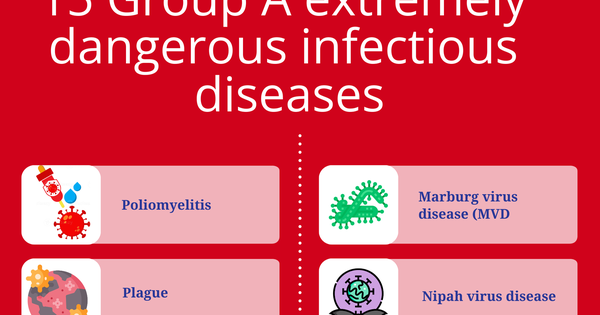
The Ministry of Health of Vietnam has updated its list of infectious diseases to enhance the effectiveness of disease management and epidemiological surveillance. This update aims to enable the implementation of prevention and control measures that are better aligned with the actual public health situation. Specifically, the updated list includes 15 Group A extremely dangerous infectious diseases, 47 Group B dangerous infectious diseases, and 19 Group C less dangerous infectious diseases. Group A means diseases that are capable of spreading very rapidly and widely, have a high fatality rate, or are caused by pathogens that have not yet been clearly identified. Group B comprises dangerous communicable diseases that are capable of spreading rapidly and may cause death. This category has undergone the most extensive revisions in the latest update. This group includes many common communicable diseases, such as diphtheria, influenza, rabies, tuberculosis, HIV/AIDS, pertussis (whooping cough), measles, rubella, mumps, malaria, dengue fever, hand, foot and mouth disease, chickenpox (varicella), cholera, typhoid fever, tetanus, and viral hepatitis A, B, C, D and E, as well as numerous other diseases caused by bacteria, viruses and parasites. The Ministry of Health also added a number of newly emerging diseases or those that have become increasingly prevalent in recent years, including COVID-19, mpox (monkeypox), Hantavirus disease, Nocardiosis, Zika virus infection, trachoma, Legionnaires' disease, Japanese encephalitis, and acute Coxsackievirus bronchitis. In addition, the names of several diseases have been standardized, their classifications have been clarified, and some diseases have been reclassified from Group A to Group B./.

多角的分析

経済的影響

ベトナムの一党体制下では、公衆衛生政策は国家主導で推進される。今回の感染症リスト更新は、公衆衛生システム全体の効率化と、経済活動への影響を最小限に抑えるための戦略的な一環と考えられる。新たな感染症の追加や分類の見直しは、迅速な対応体制の構築を目指すものであり、特に国際的なサプライチェーンにおけるベトナムの役割を考慮すると、疾病の発生を管理し、国際的な信頼を維持することは経済的安定に不可欠である。

投資家心理

投資家にとって、公衆衛生管理の強化は、事業継続性(BCP)のリスク低減につながる。感染症の拡大は、労働力の確保、生産活動、物流に直接的な影響を与える可能性があるため、政府による明確なリスト更新と管理強化の姿勢は、投資環境の安定化に寄与すると見られる。特に、製造業や観光業など、人の移動や集まる活動に依存する分野への投資判断において、公衆衛生リスクの評価は重要な要素となる。

社会的影響

感染症リストの更新は、国民の健康と安全に直接関わる。COVID-19やエムポックスなどの指定は、これらの疾患に対する公衆衛生上の警戒レベルと対応策の重要性を示唆している。ベトナムでは、都市部への人口集中が進んでおり、集団感染のリスクが高まる可能性がある。リストの明確化と管理強化は、医療機関の対応能力向上、国民への啓発活動、そして社会全体の感染症に対する意識向上に貢献することが期待される。

市民の声

感染症リストの更新は、国民一人ひとりの健康意識に影響を与える。特に、新たに指定されたCOVID-19やエムポックスといった疾患は、過去の経験から国民に警戒を促す。ベトナムでは、都市部を中心に人々の移動が活発であり、公共交通機関や人が集まる場所での感染リスクが懸念される。リストの更新は、個々人がどのような感染症に注意すべきか、また、どのような予防策を講じるべきかの指針となり、日常生活における衛生習慣の見直しにつながるだろう。

背景・歴史的文脈

ベトナムは社会主義共和国であり、共産党による一党体制が敷かれている。この体制下では、国家が公衆衛生政策を主導し、中央集権的に推進する。特に、中国との長い国境線を持つベトナムにとって、国境を越える感染症の管理は国家安全保障上の重要な課題であった。近年の経済成長とグローバル化の進展は、人々の移動を活発化させ、都市部への人口集中を加速させた。これにより、感染症の伝播リスクが増大し、公衆衛生システムの強化と監視体制の拡充が喫緊の課題となっていた。COVID-19パンデミックは、その重要性を改めて浮き彫りにした。今回のリスト更新は、こうした背景を踏まえ、より効果的な疾病管理と公衆衛生対策の実施を目指すものと見られる。

原文ソース

Bao Chinh Phu

原文を読む