General articles are free for 24 hours after publish.
Indonesia's Simultaneous Volcano Eruptions: Experts Point to Coincidence
Multiple volcanoes across Indonesia experienced eruptions in early September 2026, including Anak Krakatau and Semeru. Experts, however, attribute this clustered activity not to a common trigger, but to the coincidental alignment of individual volcanic cycles.
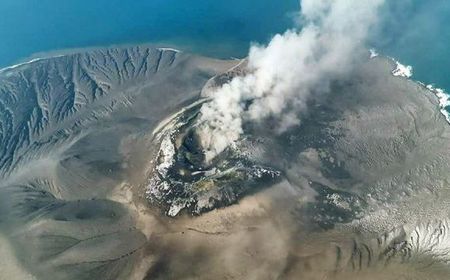
Multiple volcanoes across Indonesia experienced eruptions in close proximity in early September 2026, including Mount Anak Krakatau, Semeru, Ili Lewotolok, Ibu, Lewotobi Laki-laki, and Sinabung. This phenomenon has raised questions about whether these eruptions are interconnected or triggered by a common factor. Data from the Geological Agency indicates that 11 active volcanoes have erupted throughout 2026. Five of these are at Alert Level III (Warning), while six are at Warning Level II. Mount Anak Krakatau has recorded 243 eruptions, and Mount Ibu has shown significantly higher activity with 25,556 eruptions. The Geological Agency attributes Indonesia's high volcanic activity to its location on the Pacific Ring of Fire. However, they emphasize that a large number of volcanoes erupting within a short period does not necessarily mean they are all connected. Indranova Suhendro, a lecturer at Gadjah Mada University's Faculty of Geography, explained that each volcano possesses distinct characteristics, magma systems, and activity cycles. Therefore, some mountains can erupt at close intervals without a direct relationship. "In my opinion, this is more a matter of timing," Suhendro stated. He noted that while volcanoes like Semeru and Anak Krakatau have high eruption frequencies, others may experience longer resting periods before becoming active again. The apparent simultaneous eruptions occur when these individual activity cycles coincide. Suhendro also highlighted the importance of geographical distance. The volcanoes that erupted in early September are spread across Sumatra, Java, the Sunda Strait, Nusa Tenggara, and Maluku, making it highly improbable for them to "wake each other up." This aligns with the explanation from Rita Susilawati, Head of the Geological Agency's Center for Volcanology and Geological Hazard Mitigation (PVMBG). She stated that Indonesia has at least 127 active volcanoes, making simultaneous eruptions plausible. However, she reiterated that each volcano has its own magma system, or "kitchen," and the processes leading to eruption differ. "We have not found evidence of a geological process that triggers all the eruptions simultaneously," Susilawati said. External factors, such as earthquakes, can influence volcanic activity. Suhendro cited the increase in seismic activity at Mount Lewotolok and Lewotobi Laki-laki following the Flores earthquake as an example, explaining that seismic shocks can affect the internal magma and gas systems under certain conditions. However, this mechanism cannot explain all the September eruptions. In conclusion, there is no evidence that the multiple volcanic eruptions were triggered by a common cause. The phenomenon is best understood as the coincidental alignment of individual volcanic activity cycles within Indonesia's geologically active landscape. The public is advised to continue following the recommendations of PVMBG, as each volcano retains its own potential dangers. Source: VOI English
Original source
VOI English