General articles are free for 24 hours after publish.
Climate Reporting Training Uses Infrastructure Projects as Learning Sites
A climate reporting workshop in Mindanao utilized the Samal-Davao Bridge construction site and Davao City's sanitary landfill as practical learning grounds. Student journalists interviewed stakeholders to understand the environmental and social impacts of development projects.
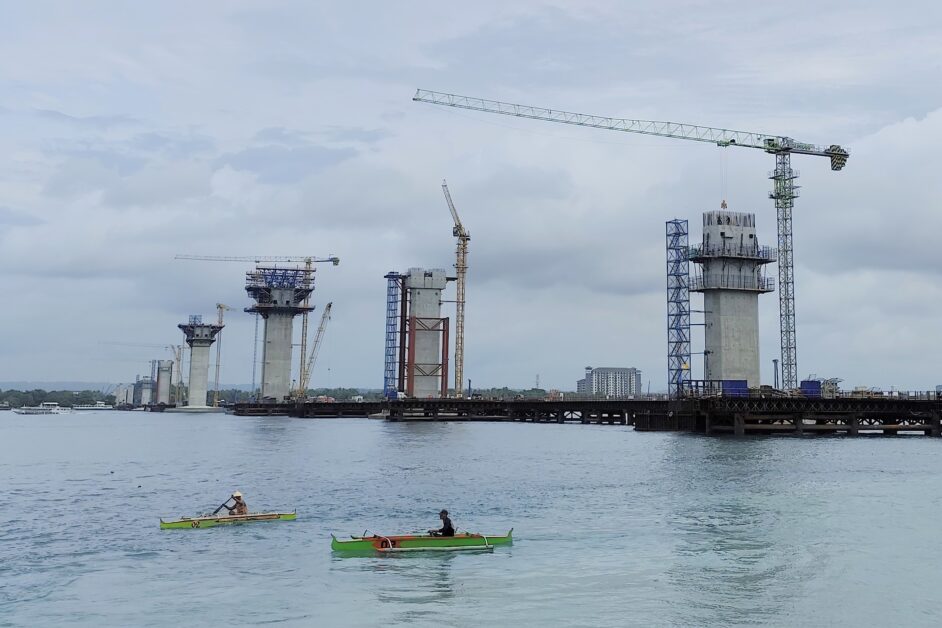
DAVAO CITY (MindaNews / July 17, 2026) – The second batch of MindaNews’ Climate Reporting Workshop saw student journalists from five Mindanao regions engaging with controversial infrastructure projects as their practical learning sites. The Samal-Davao Bridge and Davao City’s sanitary landfill served as laboratories for the July 10-13 training. Participants interviewed stakeholders and residents at the Samal Island bridge site and the landfill in Barangay New Carmen, producing articles for future publication on MindaNews' platforms. Prior to fieldwork, lawyer Mark Peñalver, executive director of Interfacing Development Interventions for Sustainability, provided an overview of both projects. Peñalver highlighted concerns about the Samal-Davao Bridge's impact on the island's marine ecosystem, particularly coral reefs, noting that JICA had proposed less destructive alternative landing sites. He also raised questions about Samal Island's preparedness for the projected 25,000 daily vehicles post-completion and the waste generated by increased tourism. Regarding Davao City's landfill, Peñalver described the failure to implement source segregation and other solid waste management measures mandated by Republic Act 9003 as a "failure of governance." Training officer Jill Villanueva Palarca instructed participants to incorporate the five elements of MindaNews’ Climate Reporting Toolkit into their stories: signal, impact, evidence, governance, and audience. She emphasized that "signal" can be gathered from various sources beyond fieldwork. During site visits, participants noted that officials from the City Environment and Natural Resources Office and Assistant City Administrator’s office were evasive when questioned about the bridge's impact on marine resources, often deferring to national agencies like the Department of Public Works and Highways or the Department of Environment and Natural Resources. At the Davao landfill, participants gained firsthand insights into the city's solid waste disposal problem, witnessing hundreds of garbage trucks waiting to unload. The landfill had been in the news following a May 20 landslide that killed two people, leading to a temporary closure order and suspension of garbage collection. On July 12, Robert Cahapon, co-founder of Salumayag Youth Collective for Forests, shared Indigenous Peoples' perspectives on conservation, emphasizing the link between culture and biodiversity. He lamented the lack of recognition for community members' contributions to academic research. Despite time constraints and some residents' reluctance to be interviewed, participants utilized online resources, including MindaNews articles, to enhance their reporting. This workshop is part of the three-year "Media Impact Philippines" project implemented by MindaNews (Mindanao Institute of Journalism) with International Media Support (IMS), co-funded by the European Union (EU) and Danish International Development Agency (DANIDA). Information Source: MindaNews Philippines (GN)
Original source
MindaNews Philippines (GN)