General articles are free for 24 hours after publish.
Thailand's New 'Small Favor' Scams Target Tourists with Psychological Tactics
Sophisticated scams are on the rise in Thailand's tourist spots and malls, where perpetrators pose as helpful individuals to steal cash or illicitly obtain personal and financial data. These schemes exploit tourists' desire to be helpful and avoid conflict.
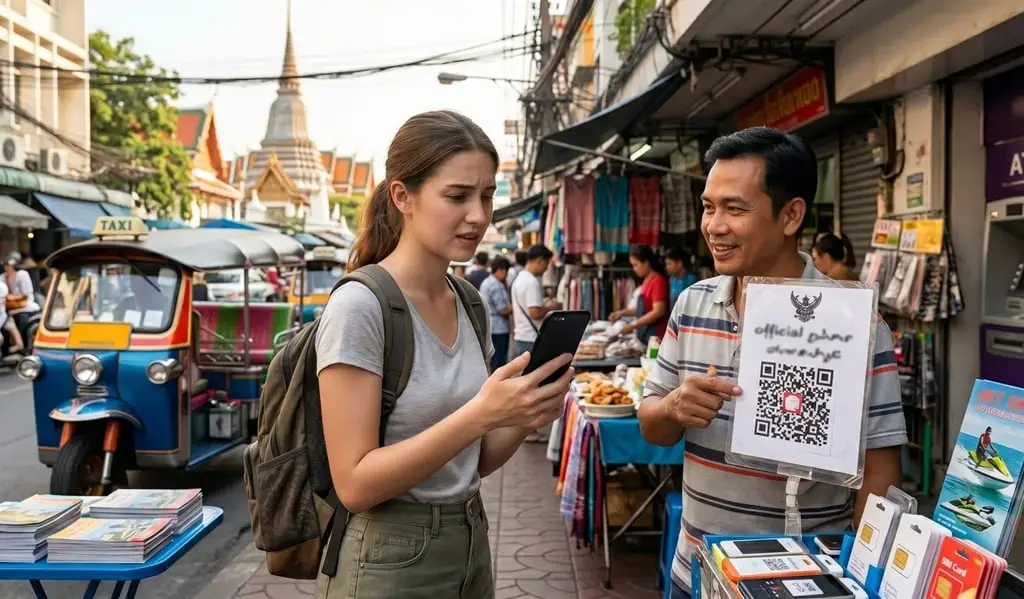
BANGKOK – You are sitting in a bustling shopping mall in Bangkok, Thailand, enjoying a quiet coffee after a long day of exploring. The cool air-conditioning provides a very welcome escape from the intense tropical heat outside. Suddenly, a well-dressed, friendly stranger approaches your table with a warm and highly disarming smile. They apologize politely for interrupting your rest and ask if you could do them a very quick, seemingly harmless favor. It might be a simple request to check out your home country’s currency out of sheer curiosity. Perhaps they urgently need you to scan a digital QR code because their phone battery just died. This innocent interaction is actually the opening move of a highly sophisticated new scam sweeping across Thailand. Before you even realize what is happening, you could be quickly stripped of your physical cash or sensitive digital data. Old travel scams used to be incredibly easy to spot from a mile away. Tuk-tuk drivers would confidently tell you the Grand Palace was closed for a random public holiday. Then, they would whisk you away to an overpriced gem store to earn a shady commission. Today, the landscape of deception has evolved into something far more subtle, psychological, and personal. Scammers have realized that modern travelers are heavily guarded against aggressive sales pitches and obvious tourist traps. Therefore, they have aggressively shifted their tactics to exploit our natural human desire to be helpful. When a polite, smiling person asks for a tiny bit of assistance, our mental defenses naturally drop. We are heavily conditioned to be polite, especially when visiting a beautiful place known globally as the Land of Smiles. This entirely new breed of fraud relies exclusively on creating a completely false sense of security. The thieves do not look like hardened criminals; they almost always pose as fellow tourists or working expatriates. They carry expensive shopping bags, wear designer clothes, and speak excellent English to blend in perfectly. By the time you notice something is wrong, the psychological trap has already snapped firmly shut. One of the most rapidly growing variations of this scam specifically targets your physical wallet. You might be resting on a bench near a major transit hub or a popular, crowded mall. A friendly family or a solo traveler approaches you to ask for simple, routine directions. After a brief chat, they mention they are from a different country and love collecting foreign banknotes. They will enthusiastically ask if they can see what the money from your home country looks like. It feels exactly like a genuine, innocent moment of cultural exchange between two fellow world travelers. You pull out your wallet and hand them a low-value bill to look at together. However, this is nothing more than a highly rehearsed, mathematically precise distraction technique. While you are entirely focused on the person holding your money, a secondary action is happening. They might ask for another bill, smoothly placing their fingers near or inside your open wallet. In some cases, an accomplice will distract your travel partner by asking them to take a quick photo. Before you know it, they have subtly extracted high-value bills from your wallet using expert sleight of hand. According to recent discussions on travel safety platforms, the “show me your currency” trick is a growing threat in busy areas. Victims often do not realize their money is totally missing until hours later when they try to pay for dinner. Human brains are simply not wired to process multiple complex focal points at the same time. When the friendly stranger engages you in lively conversation, they intentionally overload your limited attention span. They make strong eye contact, ask engaging questions, and create a very fast-paced social interaction. This sensory overload makes it incredibly easy for them to perform their hidden sleight of hand. Furthermore, immense social pressure plays a massive role in why tourists comply with these strange requests. We do not want to appear rude, xenophobic, or unhelpful to a seemingly nice, normal person. We actively ignore the tiny voice in our head that says the situation feels slightly abnormal. Scammers absolutely count on your ingrained politeness to keep you frozen in place while they execute their plan. If someone asks to see your money, you must completely shut the conversation down immediately. There is absolutely no legitimate reason for a stranger to inspect your cash in a public place. Real travelers can easily look up pictures of foreign currency on the internet if they are truly curious. Simply smile, say no thank you, and confidently walk away from the uncomfortable situation. While the currency trick targets physical cash, a second dangerous variation specifically targets your digital banking apps. Thailand has proudly become an incredibly cashless society over the past few highly developmental years. Almost every street food vendor, café, and major retailer accepts digital payments via the PromptPay system. Unfortunately, scammers have found a way to weaponize this modern convenience against well-meaning tourists and expats. You might be standing patiently in line at an airport coffee shop or a busy local food court. A flustered stranger taps your shoulder and urgently explains that their phone has completely died. They claim they desperately need to pay for their food or a waiting taxi immediately. They will hold out a handful of cash and ask if you can scan a QR code for them. The basic premise is that you pay their digital bill, and they give you the physical cash. It seems like a perfectly fair and incredibly helpful exchange between two strangers in a bind. However, scanning an unknown QR code with your phone can lead to immediate financial disaster. The code might direct you to a fraudulent payment gateway that drains your linked bank account. In some advanced cases, the QR code does not just process a single, simple payment. It might secretly direct your phone to a malicious website that quietly downloads harmful tracking software. This malware can easily capture your keystrokes, steal your passwords, and compromise your personal data. What started as a tiny, helpful favor ends up causing a massive digital security breach. Another tricky version involves a scammer accidentally transferring a small amount of money into your account. They will then aggressively track you down or call you, pleading for you to send the money back. According to legal experts at Siam Legal, participating in these unknown transfers can be incredibly risky. The initial funds may come from a stolen credit card, meaning you are unknowingly helping them launder money. If you send the money back, the original stolen transfer will eventually be reversed by the actual bank. You will permanently lose the money you sent, and you might get flagged for suspicious banking activity. Never act Information Source: Chiang Rai Times
Original source
Chiang Rai Times