Vietnam Accelerates War Martyr Identification Through DNA Testing
Culture
2026年8月4日
4
VietnamPlus English

General articles are free for 24 hours after publish.

Vietnam Accelerates War Martyr Identification Through DNA Testing

Share
AI Summary

Vietnam is accelerating the identification of war martyrs by employing DNA testing technologies for remains, fulfilling a historical responsibility and addressing national sentiment. The initiative aims to bring closure to families and honor fallen soldiers.

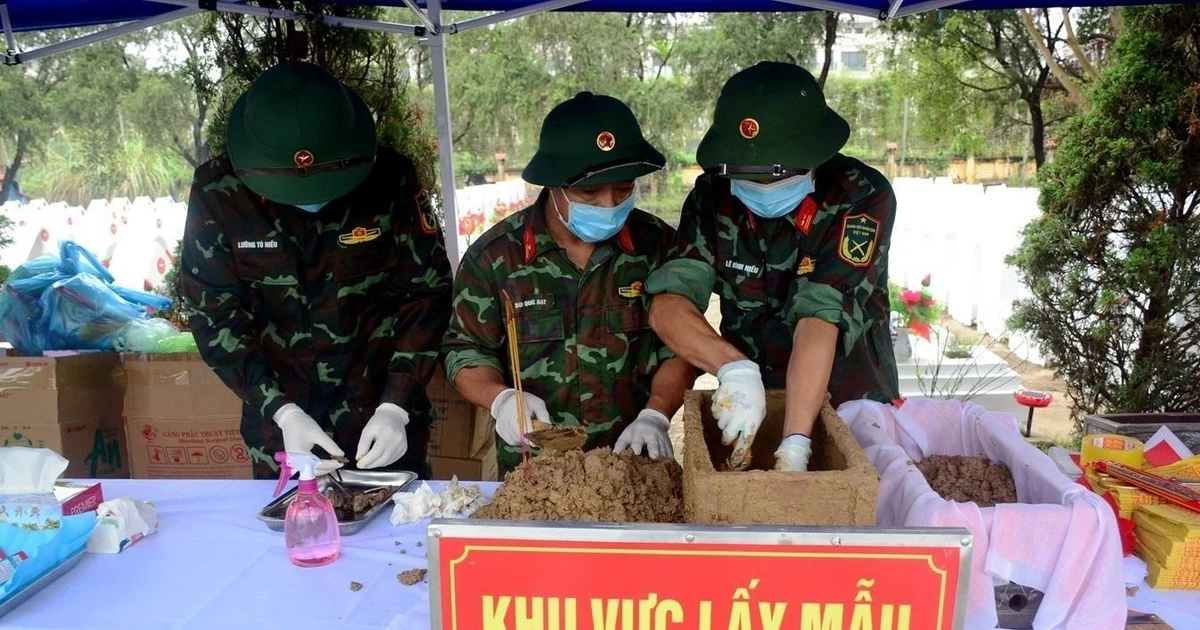
Vietnam is accelerating the identification of war martyrs by fully employing advanced DNA testing technologies for the remains of fallen soldiers. This initiative is garnering significant public attention as it fulfills the nation's historical responsibility and addresses the long-held wishes of bereaved families. Currently, DNA testing has commenced for over 1,000 unidentified remains of war martyrs at the Ham Rong cemetery in Thanh Hoa province. This signifies the Vietnamese government's strong commitment to leveraging scientific and technological advancements for the commemoration of war victims and the restoration of dignity to their remains. In particular, next-generation gene sequencing technologies enable highly accurate identification even from degraded DNA samples, opening new avenues for previously challenging identification processes. For many years, Vietnam has been engaged in the collection and identification of remains of soldiers lost in past wars, notably the Vietnam War. To date, a total of 1,563 sets of remains have been recovered from Vietnam, Laos, and Cambodia, with 1,488 repatriated to Vietnam. However, many remains are severely degraded, posing significant identification challenges. The introduction of DNA testing is expected to overcome these obstacles. This type of initiative can be seen as an example of the state's governance capacity and its ability to address historical issues under Vietnam's one-party system. Accurately identifying and commemorating war martyrs serves as a symbol of national unity and strengthens the state's legitimacy. Furthermore, alongside economic growth, the emphasis on addressing social issues and historical legacies is a key pillar of Vietnam's domestic policy. The identification process through DNA testing is not merely a scientific procedure; it also serves to convey a message to both domestic and international audiences that the nation remembers and respects the lives and sacrifices of each individual citizen. This will also play a role in Vietnam's engagement with the international community, demonstrating a sincere approach to confronting its past.

0

Original source

VietnamPlus English

原文を読む