General articles are free for 24 hours after publish.
Sky-high power bills push Pinoys to go solar
Soaring electricity bills in the Philippines are straining household budgets, prompting a growing number of Filipinos to consider solar power. Despite high upfront costs, the long-term savings and increased energy freedom are driving interest. However, challenges with net metering processes, including delays and alleged corruption, persist.
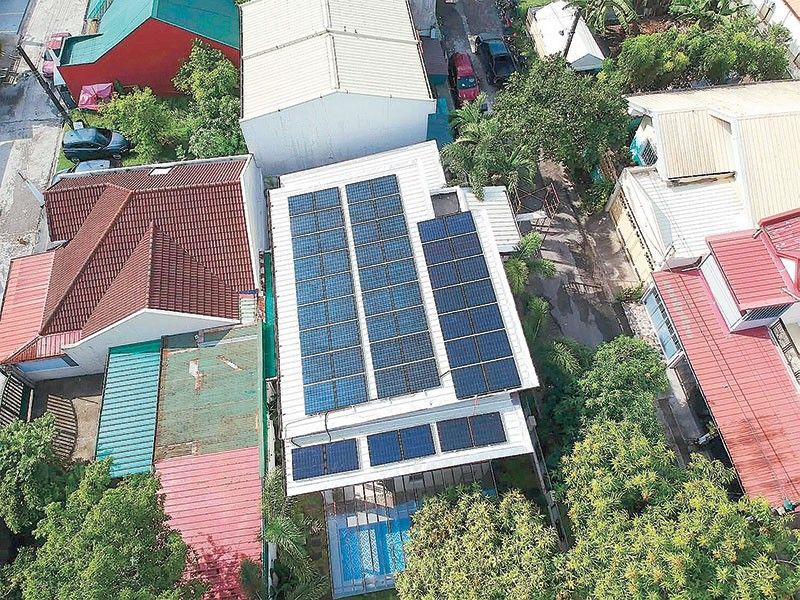
For many Filipino families struggling to make ends meet, the monthly electricity bill serves as a stark reminder of the rising cost of living. As power rates continue to climb, households are forced to make difficult choices, often postponing essential purchases or children's school needs to keep up with bills. In response to this growing burden, a significant number of Filipinos are turning to their rooftops for a solution: solar power. Mariano Lerit, a 64-year-old retired overseas Filipino worker, has seen his monthly electricity expenses slashed from nearly P12,000 to virtually zero after installing an 8-kilowatt-peak (kWp) solar system. He managed to keep the P350,000 cost significantly lower than the initial P500,000 quote by sourcing equipment himself and handling the installation, utilizing his SSS lump-sum benefit and savings. "So now, for almost two years, our billing has been zero. During the rainy season, when the solar system cannot harvest as much energy, we pay P1,000 to P2,000," Lerit told The STAR. The savings have allowed his family to enjoy previously unaffordable comforts, such as using air conditioning and electric heaters more freely. Manuel Catanduanes, 42, from Cabuyao, Laguna, also experienced a dramatic reduction in his electricity bill, from P7,000-P8,000 to P1,900, after installing a 5.8-kWp solar system. His family took out a loan to cover the over P200,000 cost, with the savings from reduced power bills now going towards loan repayment. "It is more acceptable to pay the loan than to pay the utility provider," he stressed. However, maximizing the benefits of solar power, particularly through net metering – a program allowing households to send excess solar power back to the grid for credits – involves bureaucratic hurdles. While the Department of Energy (DOE) has ordered power utilities to process net metering applications within 10 working days and local government units (LGUs) within three, Catanduanes faced a four-month delay due to LGU approval and utility requirements. Energy Secretary Sharon Garin acknowledged that adjustments are needed for utilities and LGUs to comply with the new timelines, stating that capacity building is underway. "And what the DOE is doing is some capacity building for each and every LGU. So, there is some resistance because it is new," the energy chief said. Net metering itself is not new in the Philippines, as the program is already provided for under Republic Act 9513, or the Renewable Energy Act of 2008. As early as 2013, the Energy Regulatory Commission had adopted rules enabling the net metering program. Despite net metering being established under the Renewable Energy Act of 2008, anecdotal evidence from online forums suggests persistent delays and, in some cases, alleged demands for "padulas" (grease payments) to expedite the process. "If you have a contact inside the city engineering office, the process is quick as long as you give a grease payment," one Facebook user shared. Lerit, who later founded El Solaris Solar Solutions to install solar panels for others, has also encountered these challenges, describing instances where he believed payments were expected to speed up approvals. "There were many instances when I experienced having to go back and forth just to get the documents approved… which, in my interpretation, often seemed like they just wanted a grease payment to accelerate the approval," Lerit said. He noted that some approval processes have taken as long as six months. Information Source: Philstar Business
Original source
Philstar Business