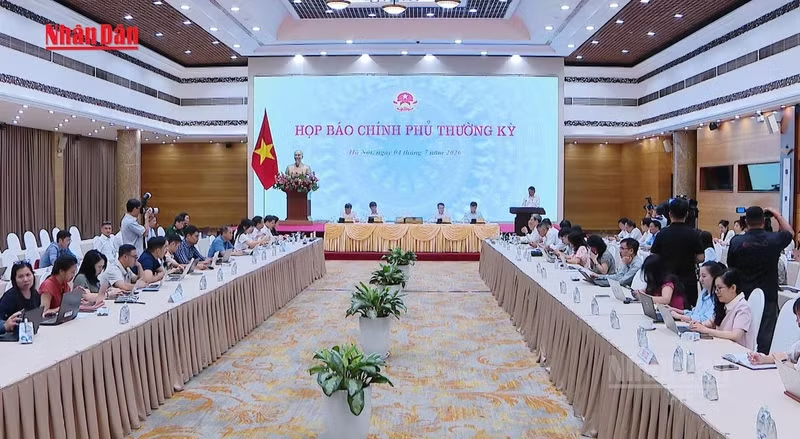
Vietnam Focuses on Power Supply Stability Amid Record Demand Due to Heatwave
Vietnam is working to stabilize power supply amidst soaring demand driven by a record heatwave. The government emphasizes minimizing impacts on daily life and economic activities through energy security and strategic technology product development.
Vietnam is intensifying efforts to ensure a stable power supply as record-breaking heatwaves push electricity consumption to consecutive all-time highs. At the regular government press conference on June 4th, representatives from ministries and agencies addressed key public concerns, including measures for electricity supply during the hot season and the development roadmap for strategic technology products. Driven by rapid economic growth and urbanization, Vietnam's electricity demand has been increasing annually. The summer peak, in particular, sees surges in demand from industrial production, commercial activities, and residential cooling, placing significant strain on the power grid. The current heatwave intensifies this pressure. The government prioritizes power supply stability for national energy security. Reported considerations include maximizing existing generation capacity, promoting renewable energy, and potential electricity imports. Long-term discussions on nuclear power continue, with safety, environmental, and public acceptance as critical factors. Additionally, the development of strategic technology products, aligned with government directives, was highlighted. This is part of Vietnam's strategy to evolve from a manufacturing hub to a leader in high value-added technology. International cooperation and domestic R&D in AI, semiconductors, and biotechnology are expected. Stable electricity is vital for public life and economic activities, especially manufacturing and services. Shortages can halt production and hinder growth. The government seeks balanced policies to minimize impacts on daily life while ensuring sustainable economic expansion. Source: Nhan Dan
多角的分析
ベトナム経済は製造業と輸出に大きく依存しており、電力供給の不安定さは生産活動に直接的な打撃を与える。特に、猛暑による冷房需要の増加は、産業用電力の確保をより困難にする。政府は、短期的な供給能力の増強と、長期的なエネルギーミックスの見直し(再生可能エネルギー、場合によっては原子力)を並行して進める必要がある。これは、エネルギーコストの上昇リスクと、国際的なサプライチェーンにおける信頼性の維持という二重の課題に直面していることを意味する。戦略的技術製品の開発は、経済の多角化と高付加価値化を目指す上で重要だが、安定した電力供給がその基盤となる。
電力不足は、ベトナムに進出する外国企業、特に製造業にとって大きなリスク要因となる。生産ラインの停止は、納期の遅延やコスト増につながるため、投資家は電力供給の安定性について政府の具体的な対策と実行能力を注視している。再生可能エネルギーへの投資は、ESG投資の観点からも注目されるが、インフラ整備や送電網の課題も大きい。戦略的技術分野への投資も進む中、安定した電力インフラは、これらの分野の成長を支える不可欠な要素である。
記録的な猛暑とそれに伴う電力不足は、一般市民の生活にも直接的な影響を与える。家庭での冷房使用制限は、特に高齢者や子供にとって健康上のリスクとなりうる。また、電力不足が経済活動に影響し、雇用や所得に波及する可能性も懸念される。政府は、電力供給の安定化と同時に、国民の健康と生活の質を維持するための対策も講じる必要がある。例えば、公共施設の空調管理や、熱中症対策への啓発活動などが考えられる。戦略的技術製品開発の恩恵が、社会全体に公平に分配されるかも問われる。
猛暑で電力消費が記録を更新し、電力供給が逼迫している状況は、ハノイやホーチミンといった大都市の市民にとって、日々の生活に直結する問題だ。冷房が使えない、あるいは制限されることは、特に高温多湿な気候下では耐え難い苦痛となり、健康への懸念も生じる。また、電力不足が慢性化すれば、経済活動への影響を通じて、物価の上昇や雇用の不安定化にもつながりかねない。政府が発表する電力供給安定化策の実効性と、戦略的技術分野への投資が、自分たちの生活水準向上にどう繋がるのか、市民は具体的な成果を期待している。
背景・歴史的文脈
ベトナムは、1986年のドイモイ(刷新)政策以降、市場経済化を進め、目覚ましい経済成長を遂げてきた。この成長は、製造業の発展と輸出の拡大に支えられており、電力需要の急増は、その経済活動の活発化を反映している。しかし、急速な工業化は、電力インフラへの負荷を増大させ、供給能力の不足という課題を顕在化させた。特に、夏季のピーク需要への対応は、長年の課題であり、政府は発電能力の増強、送電網の整備、そして再生可能エネルギーの導入拡大といった対策を講じてきた。今回の記録的な猛暑は、既存のインフラの脆弱性を露呈させ、より抜本的な対策の必要性を浮き彫りにしている。また、戦略的技術製品の開発は、ベトナムが経済構造を高度化し、国際競争力を高めるための重要な戦略であり、安定した電力供給はその実現に向けた不可欠な基盤となる。
原文ソース
Nhan Dan