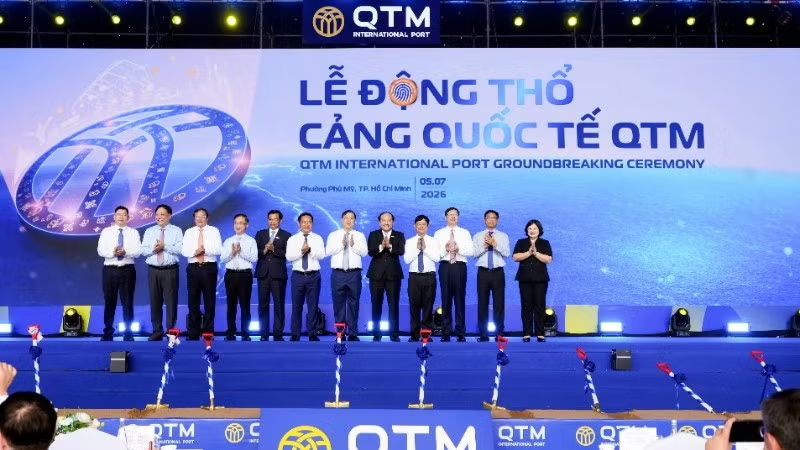
Vietnam Breaks Ground on $280 Million Cai Mep-Thi Vai International Port
Construction has begun on the QTM International Port in Vietnam, a project valued at VND 6.9 trillion (approximately $280 million). This initiative is part of Vietnam's economic growth strategy aiming to become a logistics hub and enhance international competitiveness. The groundbreaking ceremony was attended by the Deputy Prime Minister, underscoring its strategic national importance.
On the morning of July 5th, at the Cai Mep-Thi Vai port area in Phu My City, Ba Ria-Vung Tau Province, QTM Port Investment Joint Stock Company held a groundbreaking ceremony for the construction of QTM International Port. Comrade Pham Gia Tuc, Member of the Politburo, Secretary of the Central Committee, and Standing Deputy Prime Minister of the Government, attended the ceremony and delivered a directive speech. This project represents a crucial step in Vietnam's economic growth strategy, particularly its ambition to solidify its position as a logistics hub. Cai Mep-Thi Vai Port is recognized as one of the primary international gateways in southern Vietnam, an area that has witnessed significant infrastructure development in recent years. The construction of QTM International Port is designed to modernize and expand Vietnam's port infrastructure. It is anticipated to enhance the nation's international container handling capacity and improve the efficiency of its supply chains. Consequently, this development is expected to facilitate greater access for Vietnamese products to global markets, thereby stimulating import and export activities. Within Vietnam's single-party system led by the Communist Party, economic growth is a paramount objective for the government, which actively pursues foreign investment and infrastructure development. Especially considering the strong economic ties with China, the enhancement of port infrastructure can be viewed as a strategic maneuver aimed at diversifying supply chains and reducing reliance on any single market, thereby increasing engagement with a wider array of international trade partners. Recent years have seen a surge in large-scale infrastructure projects across Vietnam. Notable examples include the construction of the Ho Tram-Long Thanh expressway, which will connect to the Long Thanh International Airport near Ho Chi Minh City, and the development of a container port in Da Nang. These initiatives collectively form part of a national endeavor to position Vietnam as a preeminent logistics hub within Southeast Asia.
多角的分析
6.9兆ドン(約280億円)規模のQTM国際港建設は、ベトナムが目指す物流ハブ化戦略の具体化であり、経済成長を加速させるための重要な投資である。カイメップ・ティバイ港は、ベトナム南部における主要な国際ゲートウェイとして、コンテナ取扱能力の向上とサプライチェーンの効率化を通じて、輸出入の活性化に貢献する。これは、ベトナムの国際競争力を高め、グローバルバリューチェーンにおける同国の地位を強化する狙いがある。過去のインフラ投資の成功事例(例:ホーチミン市の港湾拡張)を鑑みると、このプロジェクトも経済成長の触媒となる可能性が高い。
この港湾プロジェクトは、ベトナムの物流インフラへの長期的な信頼を示すものであり、国内外の投資家にとって魅力的な機会を提供する。港湾の近代化と拡張は、海上輸送コストの削減とリードタイムの短縮に繋がり、ベトナムに拠点を置く製造業や輸出入関連企業にとって大きなメリットとなる。特に、中国プラスワン戦略やサプライチェーン再編の恩恵を受けるベトナムにとって、このような大規模インフラ投資は、さらなる外国直接投資(FDI)を呼び込む要因となり得る。投資家は、港湾運営会社や関連物流企業の株式、あるいはインフラ債券などを通じて、この成長機会にアクセスすることを検討するだろう。
QTM国際港の建設は、直接的には港湾労働者や建設作業員に雇用機会をもたらす。また、物流ハブ化の進展は、関連産業の発展を促し、地域経済の活性化に寄る。しかし、大規模開発に伴う環境への影響や、地域住民の生活への影響(例:交通渋滞の増加、騒音)も懸念される。ベトナム政府は、経済発展と環境保護のバランスを取りながら、地域社会との調和を図る必要がある。港湾周辺のインフラ整備(道路網、鉄道網)の遅れは、物流効率を阻害する可能性があり、社会的な不満に繋がるリスクも存在する。
QTM国際港の建設は、ベトナム市民、特に南部地域に住む人々にとって、経済成長の恩恵を受ける機会と、生活の変化の両方をもたらす。雇用機会の増加は歓迎される一方、開発に伴う環境負荷や、交通インフラの整備が追いつかない場合の混雑などが、日々の生活に影響を与える可能性がある。例えば、フーミー市や周辺地域での交通渋滞の悪化は、通勤時間や物流コストの増加に直結する。また、港湾開発が地域経済に活気をもたらすことで、物価の上昇や生活コストの増加を招く可能性も指摘されている。
背景・歴史的文脈
ベトナムは、1986年のドイモイ(刷新)政策以降、市場経済化を進め、経済成長を最優先課題としてきた。特に、製造業の誘致と輸出経済の拡大に注力しており、その戦略の根幹をなすのが物流インフラの整備である。カイメップ・ティバイ港は、ホーチミン市近郊に位置し、メコンデルタ地域へのアクセスも良好なため、ベトナム南部における主要な国際ゲートウェイとしてのポテンシャルが高い。2010年代以降、政府は、この港湾エリアの拡張と近代化に多額の投資を行っており、今回のQTM国際港建設はその延長線上にある。これは、中国との経済的結びつきが強い一方で、サプライチェーンの多様化を目指すベトナムの外交・経済戦略とも連動している。
原文ソース
Nhan Dan