General articles are free for 24 hours after publish.
IDAI Urges Government to Map Influenza Surges and Spread Patterns
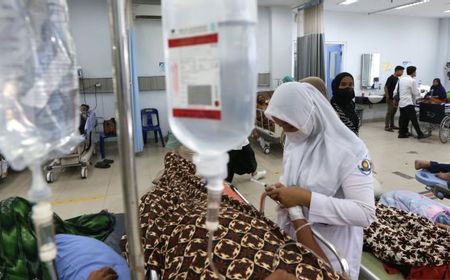
The Indonesian Pediatric Association (IDAI) urges the government to identify areas experiencing a surge in influenza cases, particularly Influenza A, and to map the virus's spread patterns. This is crucial for understanding the impact on at-risk groups, especially children, and ensuring appropriate medical responses.
The Indonesian Pediatric Association (IDAI) is urging the government to identify areas experiencing a surge in influenza cases and to map the virus's spread patterns. IDAI Secretary General Dr. Dr. Hikari Ambara Sjakti, Sp.A, Subsp. H. Onk (K), stated in an online discussion, "We feel the need to know more about the surge in cases and cases of influenza, especially influenza A which is certainly dangerous for some at-risk groups." Dr. Sjakti noted that he has observed an increase in cases in several pediatric treatment rooms in major cities, though specific locations and numbers were not disclosed. Dr. Sjakti emphasized that mapping is crucial for medical personnel to provide appropriate treatment based on patient symptoms and severity. Influenza is a disease that requires attention due to its potential to cause serious complications, particularly in vulnerable groups like children. Prof. Dr. Anggraini Alam, Sp.A, Subsp. IPT(K), a member of IDAI's Tropical Disease Infection Coordination Unit (UKK), cited data from the WHO Regional Office for Western Pacific (WHO WPRO) as of September 10, 2026, indicating an increase in influenza cases in several Southeast Asian countries. Singapore has seen fluctuating influenza positivity rates between 24% and 37% in recent weeks, coinciding with high COVID-19 case numbers. Brunei reported a 28% positivity rate, Malaysia 19-20%, and Vietnam saw an increase from 7% to 20%. However, Prof. Alam stated that based on data from the Ministry of Health, there has been no "alarming spike" in influenza cases in Indonesia thus far. "Compared to September 2026 to September last year, we did not see a high spike as shown by our neighboring countries," she added. Despite this, Prof. Alam urged the public, especially children, to remain vigilant. She pointed out that Indonesia's numerous airports serve as entry and meeting points for international travelers, necessitating anticipation of virus spread risks. Children are identified as a vulnerable group, with influenza incidence higher than in adults. Five percent of children exposed to influenza require hospitalization, with 80% of these cases occurring in children under two years old, and 50% of them under six months. Children under five years of age face a higher risk of death from influenza. Information Source: VOI English
Original source
VOI English