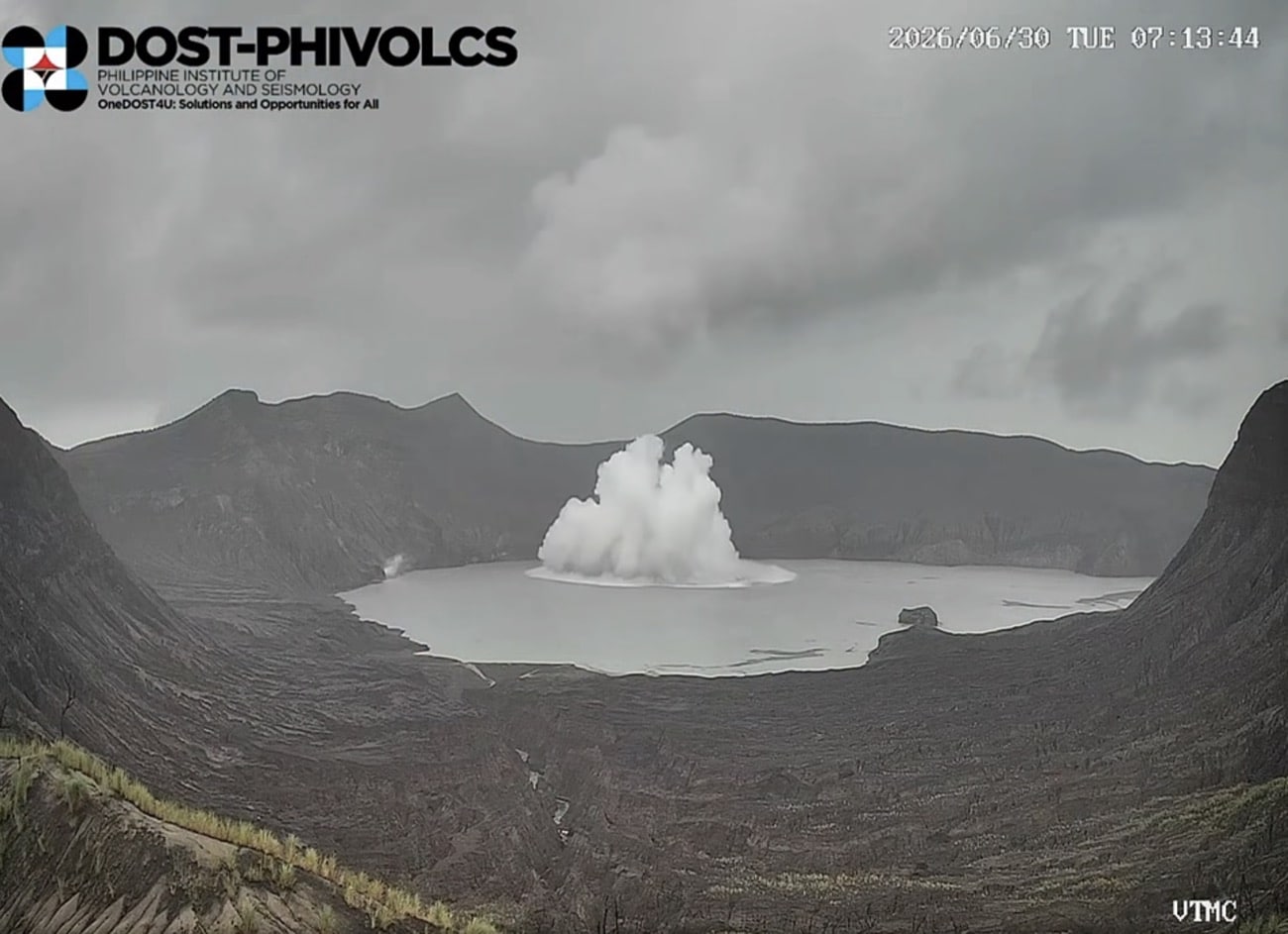
Taal Volcano Seismic Activity Surges Post-Eruption, Alert Level 1 Remains
Taal Volcano in the Philippines has seen a surge in seismic activity following two eruptions. The Philippine Institute of Volcanology and Seismology (Phivolcs) maintains Alert Level 1, prohibiting entry to the volcano island.
Taal Volcano in Batangas showed renewed signs of volcanic unrest after recording a sharp increase in seismic activity over the past 24 hours, following two short-lived phreatomagmatic eruptions on Tuesday, the Philippine Institute of Volcanology and Seismology (Phivolcs) said. In its Wednesday morning bulletin, Phivolcs reported 19 volcanic earthquakes and five episodes of volcanic tremor lasting from two to 10 minutes. The increase marked a significant change from the previous day’s monitoring, when no volcanic earthquakes were recorded. On June 29, the agency detected only one volcanic earthquake, while two were logged on June 28 and none on June 27. Phivolcs explained that volcanic earthquakes are generated by magma-related processes occurring beneath or near an active volcano. On the other hand, volcanic tremors are continuous low-frequency seismic signals that may persist for more than a minute. The heightened seismic activity followed two phreatomagmatic eruptions recorded on June 30, bringing the total number of such eruptive events at Taal Volcano to five last month. The first eruption occurred at 7:13 a.m. and lasted four minutes, producing a plume that rose about 450 meters above the main crater. A second eruption followed at 2:24 p.m. and lasted four and a half minutes. Consisting of three pulses, it generated dark gray ash jets and steam-rich plumes that rose about 1,200 meters above the crater. Phivolcs also recorded similar phreatomagmatic eruptions on June 4, which lasted two minutes; June 5, four minutes; and June 6, one minute. A phreatomagmatic eruption occurs when rising magma comes into explosive contact with water. It differs from a phreatic eruption, which is steam-driven and occurs when groundwater or surface water is rapidly heated by magma, lava, or hot rocks. During the latest monitoring period, Taal Volcano also emitted 881 metric tons of sulfur dioxide. The gas plume rose about 1,200 meters, an activity classified by Phivolcs as a moderate emission. No volcanic smog (vog) or upwelling of hot volcanic fluids in the main crater lake was observed during the monitoring period. Despite the increased activity, Taal Volcano remains under Alert Level 1, indicating low-level volcanic unrest. Phivolcs emphasized that the alert status does not mean volcanic unrest has ended or that the possibility of hazardous activity has disappeared. The agency reiterated that entry into Taal Volcano Island, locally known as “pulo” which sits in the middle of Taal Lake, boating on Taal Lake, and flying aircraft close to the volcano remain strictly prohibited because of the continuing risk of sudden steam-driven or phreatomagmatic eruptions, volcanic earthquakes, minor ashfall, and hazardous volcanic gas emissions./coa
多角的分析
タール火山の活動活発化は、直接的な経済的影響は限定的であるものの、観光業への間接的な影響が懸念される。特に、火山の景観を売りにする地域では、一時的な観光客減少やイベントの中止などが考えられる。しかし、フィリピン経済全体への影響は、活動の規模と継続期間に左右されるだろう。過去の事例では、大規模な噴火がない限り、経済への長期的な打撃は少ない傾向にある。
短期的な投資家は、タール火山周辺の観光関連企業への投資を避ける可能性がある。しかし、フィリピンの主要な市場はマニラ首都圏に集中しており、タール火山の活動が直接的に市場全体に大きな影響を与える可能性は低い。長期的な視点では、フィリピン経済の成長見通しがより重要な要因となるだろう。インフラ投資やBPO産業など、火山の活動とは無関係なセクターへの投資は継続されると見られる。
タール火山周辺の住民にとって、警戒レベル1であっても、常に噴火のリスクが伴う生活は精神的な負担となる。特に、火山の島への立ち入り禁止は、漁業や農業に依存する一部のコミュニティの生計に影響を与える可能性がある。また、過去の噴火で避難を経験した住民にとっては、今回の地震活動の増加は不安を増幅させる要因となりうる。フィリピンでは、火山活動が生活の一部となっている地域が多く、防災教育と避難計画の重要性が改めて浮き彫りになる。
タール火山の活動活発化は、周辺住民の日常生活に直接的な不安をもたらしている。警戒レベル1は「低レベルの火山活動」を示すが、突然の噴火や地震のリスクは常に存在するため、住民は常に注意を払わなければならない。特に、タール火山島への立ち入り禁止は、漁業や観光業に依存する人々の生計に影響を及ぼす可能性がある。また、過去の噴火で被災した経験を持つ人々にとっては、今回の地震活動の増加は、将来への懸念を一層深めるものとなっている。フィリピンでは、火山活動が身近な問題であり、防災体制の強化と住民への情報提供が引き続き重要である。
背景・歴史的文脈
タール火山は、フィリピンのルソン島バタンガス州にある活火山であり、世界で最も小さな火山島の一つである。その美しい景観から観光地としても知られるが、活発な火山活動は歴史的に繰り返されてきた。特に、1749年、1911年、1965年の噴火は甚大な被害をもたらした。2020年初頭の噴火では、首都マニラにも火山灰が降り積もり、広範囲に影響が出た。今回のマグマ水蒸気爆発は、地下水とマグマの接触によって発生するもので、予測が難しい場合がある。Phivolcsは、継続的な監視を通じて、住民の安全確保に努めている。
原文ソース
Inquirer NewsInfo