General articles are free for 24 hours after publish.
Vietnam Enhances Local Medical Capacity Through Strengthened Healthcare Connectivity
Vietnam is strengthening the connectivity of expertise and resources among medical facilities, primarily centered in Ho Chi Minh City, to enhance the capacity for advanced medical services at local healthcare centers. This allows patients to reduce long-distance travel and receive quality treatment closer to home.
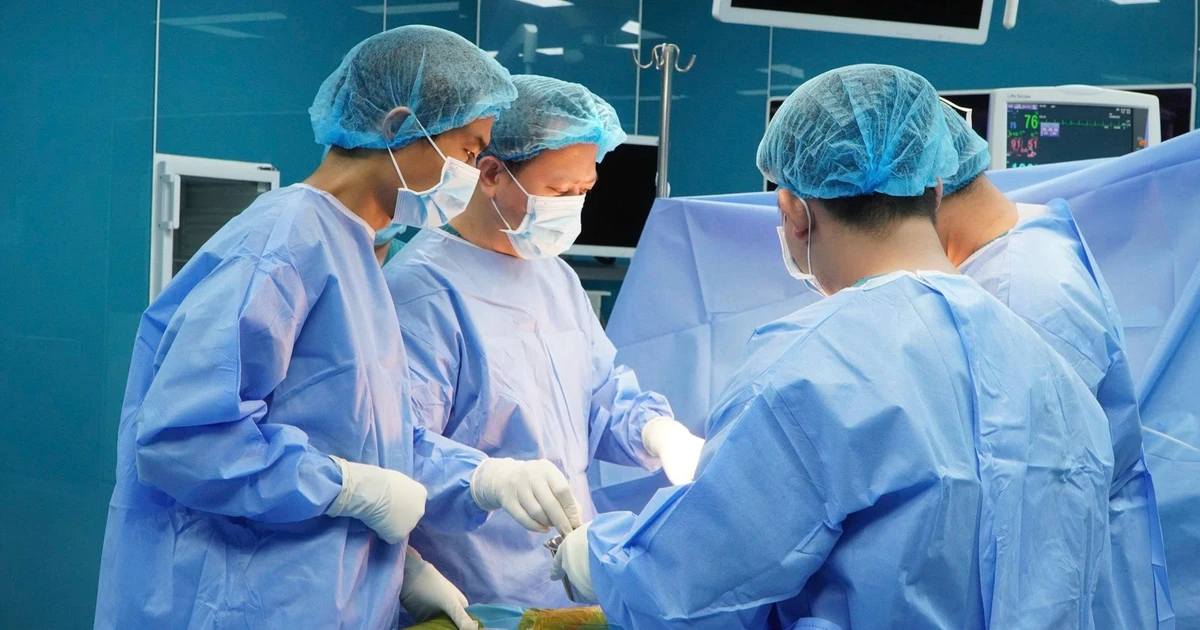
In Ho Chi Minh City, the strategy of multi-layered, multi-polar, and multi-centric development is creating a new structure, contributing to the improvement of the healthcare system's quality as the connection of professional resources has spread strongly to each facility and closer to the people. On August 8, Vung Tau General Hospital successfully performed a partial hip replacement surgery with direct support from Cho Ray Hospital. Patient N.P.H. was admitted after a fall, diagnosed with a fractured right femoral neck on a background of osteoporosis. After consultation, doctors agreed on surgical intervention. The surgery lasted over an hour, and the patient was stable post-operation and is continuing to be monitored. According to Dr. Tran Binh Duong, Head of Orthopedics Department at Cho Ray Hospital, partial hip replacement is a common method for elderly patients with fractured femoral necks, helping to reduce pain, facilitate early mobility, and limit complications from prolonged immobility. Doctors advise elderly individuals who have fallen and experience hip pain, are unable to stand or walk, have a shorter affected leg, or abnormal leg rotation, to seek medical attention promptly. The successful partial hip replacement surgery marks another step forward in the cooperation, professional support, and technical transfer between Cho Ray Hospital and Vung Tau General Hospital, contributing to the enhancement of local treatment capabilities. Beyond the successful execution of specialized techniques, the greater value lies in the process of reception, support, and transfer, enabling local hospitals to gradually master these techniques. Patients gain more opportunities for treatment within their locality, and specialized expertise is no longer concentrated solely at top-tier hospitals. Associate Professor, Dr. Tang Chi Thuong, Director of the Ho Chi Minh City Department of Health, noted that for many years, each healthcare facility primarily developed according to its own capabilities. "A hospital may be very strong, but if it operates independently, that strength cannot create maximum efficiency for the entire system." The current development direction is shifting from managing individual units to managing the entire system, where facilities share resources, coordinate professionally, and jointly aim for the health of the people. Following the merger, the Department of Health has connected 68 city hospitals, 12 ministry and sector hospitals, and 20 central hospitals with 168 communes, wards, and special zones. Alongside these are programs for doctor rotation, on-site training, joint consultations, technical transfer, and professional cooperation between top-tier hospitals and regional hospitals, medical centers, and health stations. This organizational approach changes the meaning of a top-tier hospital. A strong hospital must become a hub for disseminating knowledge, techniques, and human resources to facilities needing to enhance their capacity. The hip replacement case at Vung Tau General Hospital clearly illustrates this. A technique that requires specialized experience and expertise is brought to the local level with direct expert support. If the transfer process continues, the technique will evolve from a supported surgery to a routine capability of the hospital. Consequently, people will reduce the need for long-distance travel, local hospitals will increase their handling capacity, and top-tier hospitals will have more resources to focus on more complex cases. Connectivity, therefore, is not a mechanical aggregation of healthcare facilities; it creates new capabilities, bringing specialized services closer to the people that individual units struggle to achieve alone. When doctors are rotated, techniques are transferred, data is interconnected, and hospitals jointly consult, the system's capacity will be more equitably distributed. Source: Nhan Dan
Original source
Nhan Dan