Cambodia Trails ASEAN in Tourism Recovery as Arrivals Plummet
Cambodia has become the biggest tourism underperformer in ASEAN, with international visitor arrivals down 47.8% year-on-year from January to May. While neighboring countries maintained growth or saw only marginal declines, Cambodia's sharp drop in land-border arrivals highlights its lagging recovery.
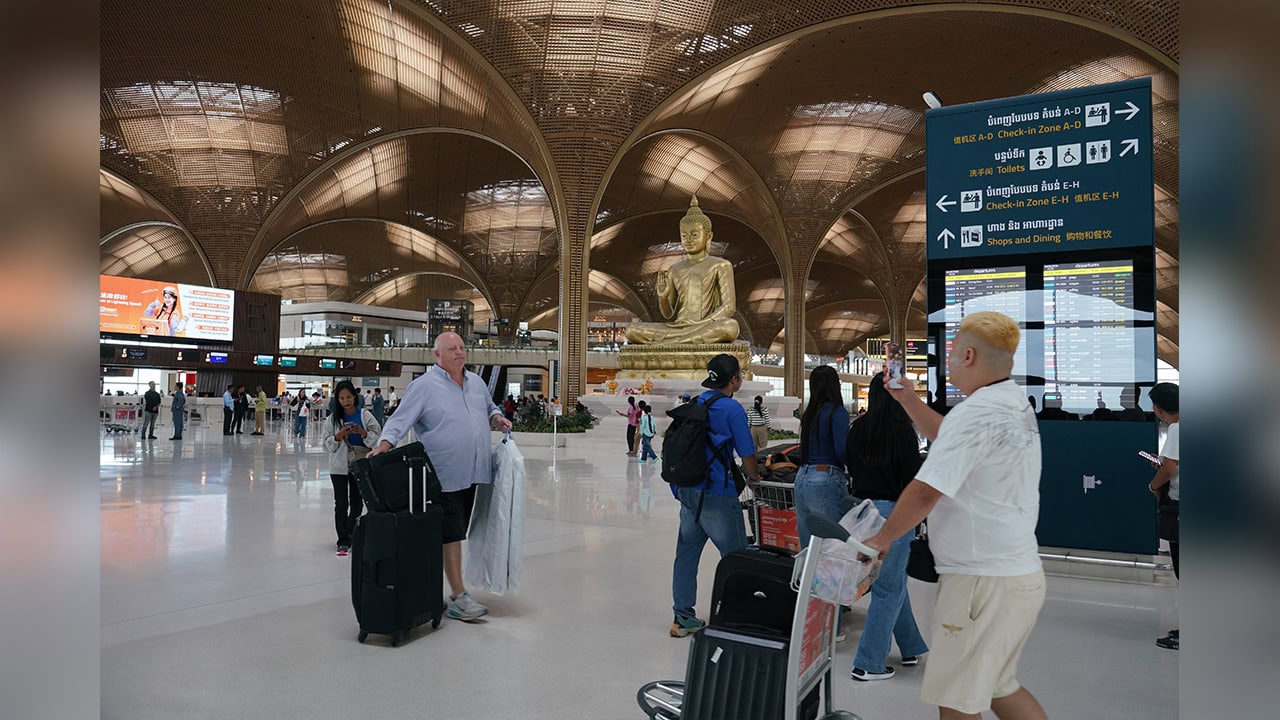
Cambodia has emerged as Southeast Asia’s biggest tourism underperformer, with international visitor arrivals plunging 47.8% year-on-year in the first five months of the year, even as most neighboring countries maintained growth or posted only marginal declines, in spite of geopolitical uncertainty and disruptions to global air travel. The Ministry of Tourism reported that Cambodia welcomed 1.54 million international visitors between January and May, down sharply from the 2.95 million recorded during the same period last year. The decline was driven largely by a collapse in land-border arrivals, which fell 67.5%, while air arrivals dropped a comparatively milder 19.8%. The downturn stands in stark contrast to the broader regional picture. According to tourism data compiled by Travel and Tour World, Vietnam recorded the strongest growth among major ASEAN destinations, receiving 10.6 million visitors, up 14.9% from a year earlier. Indonesia welcomed 6 million visitors, an increase of 7.7%, while Malaysia edged up 1% to 10.6 million arrivals. Thailand, Southeast Asia’s largest tourism market, experienced only a modest decline of 2.3%, receiving 13.8 million visitors, while Singapore slipped just 1.2% to 7 million arrivals. Cambodia, by comparison, recorded the region’s steepest contraction at 47.8%. The figures suggest Cambodia’s tourism sector has been hit by a combination of domestic border disruptions and global travel headwinds that have affected long-haul travel patterns. The ministry’s statistics show the sharpest collapse came from neighboring Thailand, traditionally Cambodia’s largest source market. “Thai arrivals plunged 96.2%, falling from 856,169 visitors during January-May 2025 to just 32,757 this year,” according to the ministry report. “Arrivals from Laos plunged 91.4%, while South Korea fell 59.9%. Visitors from Vietnam declined 25.9%, China 19%, France 16.5% and the UK 14.5%,” it added. The regional tourism landscape has been reshaped by the US-Israeli conflict with Iran, which disrupted one of the world’s busiest aviation corridors. Many European visitors travelling to Southeast Asia rely on Gulf carriers such as Emirates, Qatar Airways and Etihad Airways, transiting through major hubs including Dubai, Doha and Abu Dhabi before connecting to destinations in Southeast Asia. Following the outbreak of the conflict, airspace restrictions, flight cancellations and security concerns forced airlines to reroute services, reduced available seats and pushed up airfares on Europe-Asia routes. Although Gulf carriers have gradually restored operations, the disruption dampened long-haul demand during much of the first half of the year. The impact has been felt across Southeast Asia. Analysts say travellers have increasingly opted for shorter regional holidays instead of long-haul trips, prompting several ASEAN countries to intensify marketing campaigns targeting intra-Asian visitors while reducing reliance on Europe and the Middle East. Cambodia, however, appears to have benefited less from that regional pivot than its neighbours. Despite the collapse in international arrivals, domestic tourism remained resilient. The ministry reported that Cambodian domestic trips reached 20.3 million during the first five months of the year, representing a 54.2% increase from the same period in 2025, although foreign visitor trips within the country declined 14.5%. The figures suggest domestic travel has partially cushioned the tourism industry but has been insufficient to offset the loss of foreign visitors, whose spending generates significantly higher foreign exchange earnings. With Cambodia preparing for the traditional peak travel season later this year, the latest figures highlight the scale of the challenge facing the tourism sector as it seeks to regain competitiveness in an increasingly competitive Southeast Asian market while navigating ongoing geopolitical uncertainty and weaker long-haul demand. The tourism ministry is reportedly preparing to announce a new strategy, aimed at turning the decline around, in the near future.
多角的分析
カンボジアの観光収入は外貨獲得の重要な柱であり、今回の外国人観光客の激減は、外貨準備高の減少や貿易収支の悪化に繋がる可能性がある。特に、陸路国境からの入国者の落ち込みは、周辺国との経済的な結びつきの強さを示すと同時に、その脆弱性も露呈している。国内旅行の増加は一時的な緩和策にしかならず、経済全体の回復には外国人観光客の回復が不可欠である。
観光セクターへの投資家は、カンボジアの現状に強い懸念を抱いているだろう。特に、航空運賃の高騰や地政学的リスクによる長距離旅行需要の低迷は、短期的な回復の見通しを暗くしている。 land-border arrival の依存度の高さも、インフラや手続きの改善の必要性を示唆しており、投資判断においてはリスク要因として注視される。新たな観光戦略の行方が、今後の投資動向を左右する。
外国人観光客の激減は、観光関連産業で働く多くのカンボジア国民の生活に直接的な影響を与えている。特に、シェムリアップなどの観光地では、ホテル、レストラン、土産物店などで働く人々の雇用や収入が不安定化する懸念がある。国内旅行の増加だけでは、失われた雇用や所得を完全に補うことは難しく、社会的な格差の拡大を招く可能性も否定できない。
「外国人観光客が来ないのは、街が静かになって良い面もあるが、商売をしている者にとっては死活問題だ。特に、タイからの観光客がほとんど来なくなったのは痛い。政府には、もっと積極的に海外にカンボジアの魅力をアピールしてほしい。国内旅行も良いが、やはり外国人観光客の収入には及ばない。」(シェムリアップの土産物店経営者)
背景・歴史的文脈
カンボジアの観光産業は、アンコールワットを中心に、長らく経済成長の牽引役を担ってきた。特に中国からの観光客増加に大きく依存してきたが、パンデミック以降、その脆弱性が露呈した。2023年には回復の兆しを見せたものの、今年に入り、地政学的不安や航空便の混乱といった外部要因が重なり、再び深刻な落ち込みに見舞われている。ASEAN諸国の中でも、カンボジアは陸路国境への依存度が高く、近隣諸国の情勢変動の影響を受けやすい構造となっている。
原文ソース
Phnom Penh Post