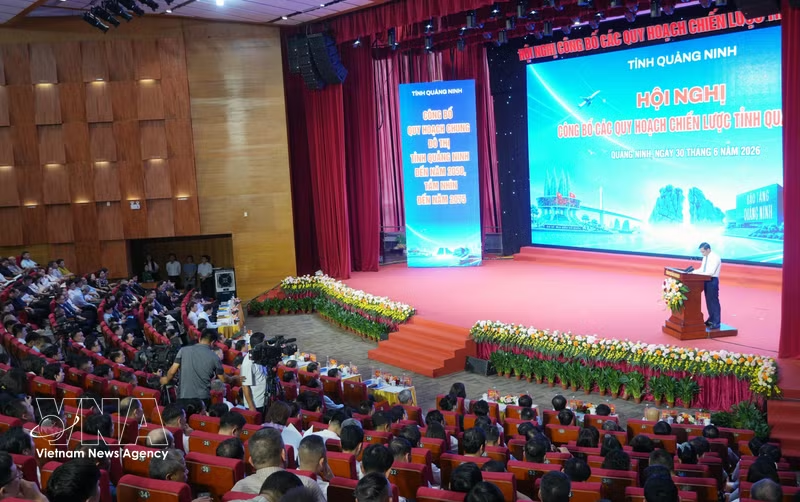
Quang Ninh Unveils Strategic Plans to Become National Urban Hub
Quang Ninh Province in northern Vietnam has announced development plans aiming to become a national urban hub, centered on a multi-core urban model that includes Ha Long Bay. The strategy seeks to balance economic growth with the preservation of cultural heritage.
Quang Ninh Province in northern Vietnam has announced ambitious development plans aiming to become a national urban hub. The strategy adopts a multi-core urban model, with its rich cultural heritage, including Ha Long Bay and the Yen Tu ancient site, at its core. Under the master plan, Quang Ninh's urban development will be organized around three corridors, four socio-economic zones, and five growth centers, including Ha Long, Van Don, Mong Cai, Quang Yen, and the Yen Tu–Ha Long Bay heritage complex. This approach emphasizes placing people and cultural heritage at the center of urban development. The province has welcomed over 10 million visitors in the first five months of the year, highlighting its rich tourism potential. Quang Ninh aims to protect and leverage these valuable natural and cultural heritages while achieving its economic growth targets. Vietnam, under its one-party system, has transitioned from a centrally planned economy to a market economy, achieving remarkable economic growth in recent years. Coastal development, in particular, is crucial for promoting trade and tourism, aligning with the province's strategy and the country's broader development goals. In its relations with its large neighbor China, Vietnam constantly seeks to balance deepening economic ties with safeguarding its sovereignty and national interests. Quang Ninh's development is expected to contribute to Vietnam's overall economic strength and regional influence.
多角的分析
クアンニン省の都市開発戦略は、ベトナムの地方開発における「成長センター」育成モデルを具体化したものと言える。ハロン湾という世界遺産を核に、観光、サービス業、そして将来的な産業誘致を見据えたインフラ整備を進めることで、地域経済の活性化とGDP(域内総生産)の底上げを図る。これは、ベトナム政府が掲げる「製造業中心からサービス・観光業へのシフト」という長期的な経済構造改革とも連動しており、単なる地方都市開発に留まらない、国家経済戦略の一環として位置づけられる。特に、ヴァン・ドン経済特区の発展は、国際的な投資を呼び込むための重要な要素となるだろう。
クアンニン省の戦略は、特に観光、不動産、インフラ分野への投資機会を示唆している。ハロン湾周辺の観光インフラ拡充や、ヴァン・ドン経済特区における商業施設・住宅開発は、国内外からの投資家にとって魅力的なターゲットとなり得る。しかし、ベトナム特有の一党体制下における法規制の変更リスクや、環境保護規制の厳格化による開発コストの上昇なども考慮する必要がある。投資判断にあたっては、省政府の実行力と、国際基準に沿った透明性のある事業運営が鍵となるだろう。
クアンニン省の多中心型都市モデルは、地方の生活水準向上と都市部への人口集中緩和を目指すものだが、その実行には課題も伴う。ハロン湾周辺の観光開発は、地域住民の生活環境への影響や、伝統的な漁業からの生計変更を迫られる可能性も考慮されるべきだ。また、イエン・トゥのような精神的・文化的に重要な地域における開発は、地域社会の価値観との調和が不可欠となる。省政府は、住民参加型の開発プロセスを導入し、文化遺産の保護と地域経済の発展を両立させるための慎重なアプローチが求められる。
クアンニン省の都市開発計画は、住民にとっては生活環境の向上や雇用の創出につながる可能性がある。特に、ハロン、ヴァン・ドンといった地域では、観光客増加に伴うサービス業での仕事が増えることが期待される。一方で、開発に伴う地価の上昇や、自然環境の変化が、地域住民の生活にどのような影響を与えるかは注視が必要だ。イエン・トゥ周辺の住民にとっては、聖地としての静穏な環境が保たれるかどうかが懸念事項となるだろう。若者世代は、新たなビジネスチャンスや都市機能の向上に期待を寄せる一方、伝統文化との調和を重視する声も上がるだろう。
背景・歴史的文脈
ベトナムは1986年のドイモイ政策以降、市場経済化を進め、経済成長を加速させてきた。特に沿岸部の開発は、貿易促進と外国投資誘致の観点から重要視されている。クアンニン省は、ハロン湾という世界遺産を擁し、中国との国境にも近い地理的優位性から、古くから開発の重点地域とされてきた。近年、ベトナム政府は地方の格差是正と地域経済の活性化のため、各省の独自開発戦略を奨励しており、クアンニン省の今回の発表もその一環である。これは、ベトナムが一党体制下で経済発展と社会安定の両立を目指す姿勢を反映している。
原文ソース
VietnamPlus English